
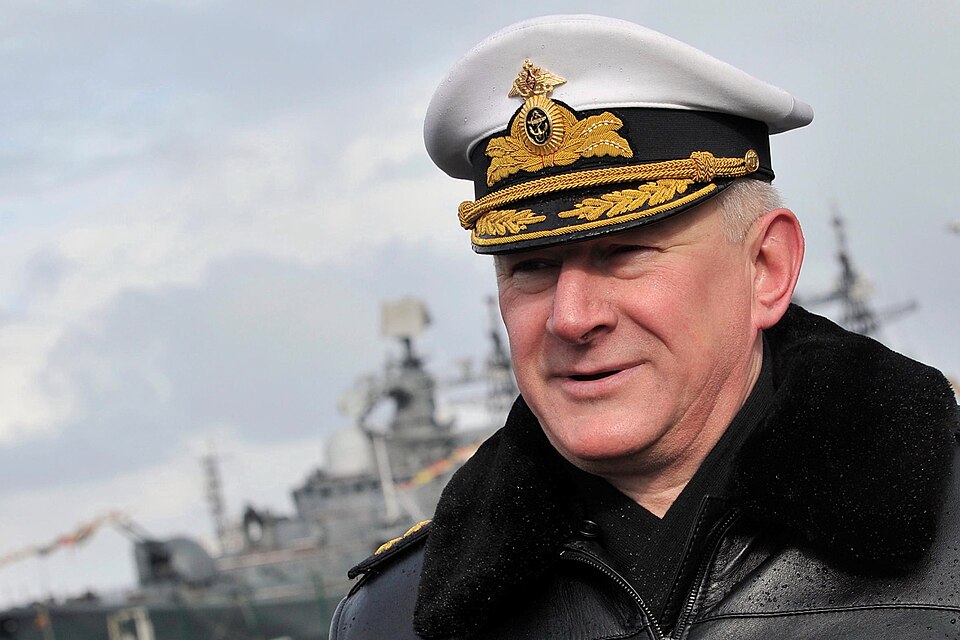
MOSCOW, July 15 — Admiral Nikolai Yevmenov, who has served as Commander-in-Chief of the Russian Navy since May 2019, is at the center of a growing strategic tension between Moscow’s Arctic ambitions and the grinding demands of the war in Ukraine. According to available records, Yevmenov previously commanded the Northern Fleet from 2016 to 2019, a period during which he oversaw the deployment of S-400 air defense systems to Arctic bases and the establishment of the Arctic Joint Strategic Command.
His career, rooted in the elite nuclear submarine service, has made him a key figure in Russia’s bid to secure its northern flank. Born in 1962 in Leningrad, now Saint Petersburg, Yevmenov graduated from the Frunze Naval School in 1984.
He served on nuclear submarines before rising through the ranks. As Northern Fleet commander, he was instrumental in expanding Russia’s military footprint in the Arctic. The creation of the Arctic Joint Strategic Command under his watch signaled Moscow’s intent to treat the High North as a priority theater.
However, since his appointment as Navy chief in 2019, Yevmenov has overseen the redeployment of naval assets and air defense systems to support operations in Ukraine. This shift has raised questions about the sustainability of Russia’s dual-front posture.
According to the source, Yevmenov has publicly stated that the Arctic remains a priority. But satellite evidence contradicts this assertion, suggesting that resources once dedicated to Arctic security have been diverted to the conflict in Ukraine.
Sanctions and Strategic Trade-offs
Yevmenov has been sanctioned by the United States, the European Union, and the United Kingdom since 2022. These measures target his role in directing naval operations that support the war in Ukraine. For the Kremlin, Yevmenov’s leadership embodies the difficult choices imposed by the conflict: maintaining a credible naval presence in the Arctic while sustaining an expeditionary war effort in Ukraine.
Satellite evidence, as cited in the source material, shows a reduction in Russian naval activity at key Arctic bases. The trade-off, according to the source, is that Yevmenov’s leadership is critical to understanding the trade-offs Russia is making between Arctic security and the war in Ukraine.
Background and Career Trajectory
Yevmenov’s career path reflects the Soviet and Russian tradition of grooming submarine officers for top naval commands. After graduating from the Frunze Naval School, he served on nuclear submarines, a formative experience that shaped his understanding of undersea warfare and Arctic operations. His promotion to Northern Fleet commander in 2016 came at a time when Moscow was investing heavily in Arctic infrastructure.
The establishment of the Arctic Joint Strategic Command, which Yevmenov oversaw as Northern Fleet commander, consolidated all Russian military forces in the region under a single command structure.
Looking Ahead
The record shows that Yevmenov’s leadership is critical to understanding the trade-offs Russia is making between Arctic security and the war in Ukraine. As the conflict in Ukraine continues to consume resources, the question of how long Moscow can sustain its Arctic posture remains open. Satellite evidence, as noted, contradicts Yevmenov’s public statements that the Arctic remains a priority.




