
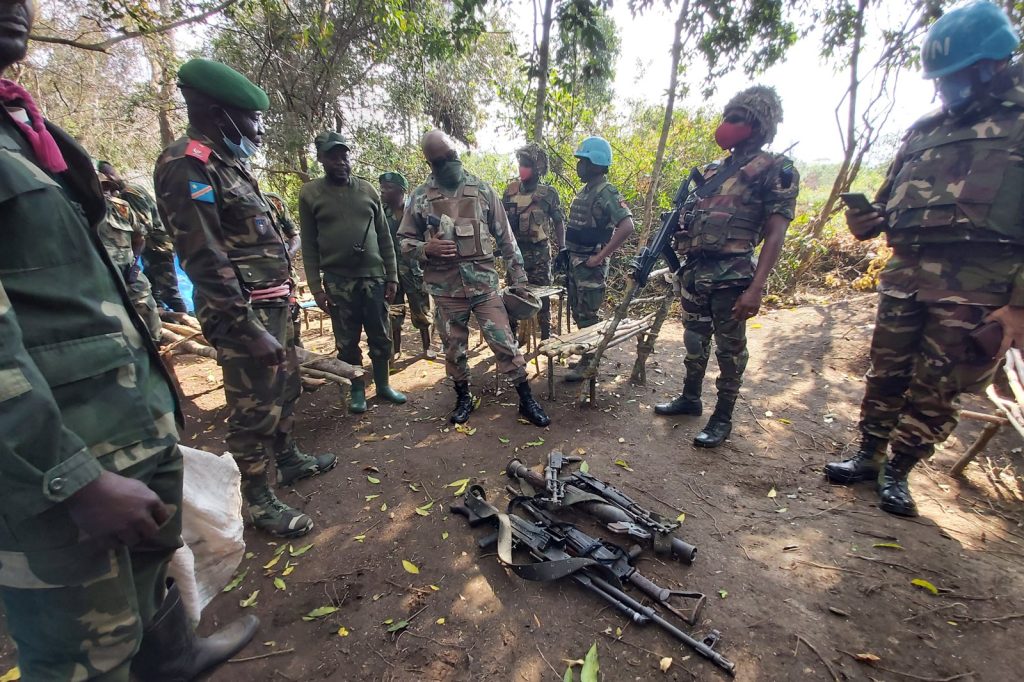
The Allied Democratic Forces have killed nine people in eastern Democratic Republic of Congo. The attack took place March 9, 2025, in Lubero Territory, North Kivu. The dead are civilians.
The ADF is aligned with the Islamic State. This is not new.
The ADF has been killing people in this region for years. What changed, according to reports, was the group’s strategy. In September 2020, the Islamic State – Central Africa Province, known as IS-CAP, shifted its approach.
The shift was a response to the evolving security landscape. It allowed the group to keep operating despite counter-efforts by regional forces.
That shift is worth examining. Because the numbers tell a story. The ADF has been responsible for numerous attacks.
Significant loss of life. Displacement of civilians. The group raids civilian targets.
The goal is to spread fear and instability. That part of the strategy has not changed.
What did change? The report does not specify. It says only that the group adapted.
The adaptation worked. IS-CAP maintains a presence in the area.
Regional forces have not dislodged them. The US government is watching. Officials have expressed concern about the growing threat from extremist groups in the region.
The US is likely to maintain its commitment to supporting regional partners. That is the standard language. What that support looks like on the ground in North Kivu is unclear.
The DRC has faced significant challenges addressing the threat. The report cites the country’s size.
The terrain. The complexity of the conflict. There are many armed groups operating in eastern Congo.
The ADF is one of the deadliest. Nine people dead on March 9.
That is a single incident. It fits a pattern. The pattern is sustained violence against civilians by an armed group with international ties.
The Islamic State connection matters. It means the ADF is not just a local problem. It is part of a broader network.
IS-CAP operates in the DRC, Mozambique, and Uganda. The exact foundation date of IS-CAP is unclear.
Its territorial extent is unclear. But its activities are documented. The ADF has been in eastern Congo for decades.
It originated in Uganda. It moved into the DRC in the 1990s.
For years it was a local rebel group. Then it pledged allegiance to the Islamic State. That changed its status.
It became part of a global jihadist movement. It also changed its tactics. The September 2020 shift was part of that evolution.
The report does not give details on what the shift involved. It does not say whether the group changed its targets.
Or its methods. Or its recruitment. It says only that the shift allowed IS-CAP to maintain a presence.
That is significant. It means the adaptation worked.
The group is still active. It is still killing people. Nine dead in Lubero Territory.
The names are not given. The circumstances are not given. Just the number.
And the affiliation. And the date.
The DRC government has struggled to respond. The military has conducted operations. They have not stopped the attacks.
The UN peacekeeping mission, MONUSCO, has been in the country for years. It has not stopped the attacks either.
The ADF remains one of the most lethal armed groups in the region. The US has designated the ADF as a terrorist organization. It has provided training and equipment to Congolese forces.
The threat persists. The March 9 attack is evidence of that. Nine people.
Dead. In a territory that has seen this before.
The cycle continues. The group adapts. The security forces respond.
The civilians die. The US watches.
The region waits for the next attack.




