
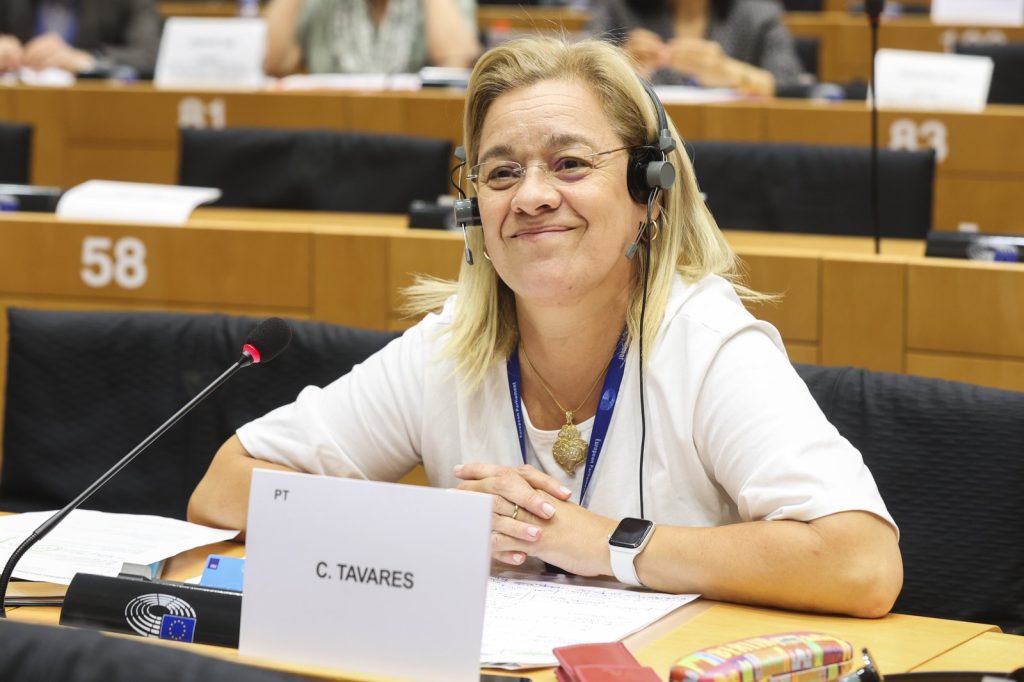
BRUSSELS, October 13 — On October 12, 2026, lead Members of the European Parliament responsible for the EU’s long-term budget reacted critically to the negotiating box presented by the Irish Presidency of the Council of the European Union. The MEPs—Siegfried Mureșan (EPP, Romania) and Carla Tavares (S&D, Portugal), co-rapporteurs on the Multiannual Financial Framework, along with Danuše Nerudová (EPP, Czech Republic) and Sandra Gómez López (S&D, Spain), co-rapporteurs on own resources—issued a joint statement rejecting the Irish Presidency’s proposal as an inadequate starting point for negotiations.
They argued that the proposal includes an 8% cut to the European Commission’s July 2025 MFF proposal, which already maintains the budget at the level of the current period. This reduction, they said, would weaken the EU’s capacity to act on competitiveness, defence, and security at a time when structural challenges demand greater action.
Specific concerns were raised about a 12.8% cut to competitiveness funding and a 17.4% cut to external action, which they warned would leave Europeans less equipped to close innovation and investment gaps, support international partners, respond to crises, and defend EU values amid rising global instability. The MEPs emphasized that the EU budget has not kept pace with national budget growth and has lost 10% of its purchasing power due to high inflation.
They reiterated Parliament’s April 2026 position calling for a budget increase of around 10% compared to the Commission’s 2025 proposal to fund priorities including defence, security, competitiveness, cohesion, and agriculture. To achieve this, MEPs have proposed new own resources—such as a digital services levy, an online gambling levy, and a levy on crypto-asset capital gains—that could generate an additional €30 billion (approximately US$32.4 billion) annually, on top of the Commission’s €57.4 billion (about US$62.0 billion) 2025 proposal, to reduce pressure on national contributions.
They stressed that new own resources are part of the solution, not the problem, and criticized the Irish Presidency for failing to incorporate any of Parliament’s proposals despite positive feedback from many member states. The MEPs affirmed their readiness to negotiate but insisted any deal must be based on ambition, not net-balance logic, and urged member states to decide on a balanced mix of new revenue sources consistent with the basket approach.
They reminded that for the MFF to be adopted, a unanimous decision in the Council and Parliament’s consent by an absolute majority of MEPs are required. They also noted that over 93% of the EU budget directly funds programmes supporting people and projects across member states, while less than 7% covers administrative costs.




