
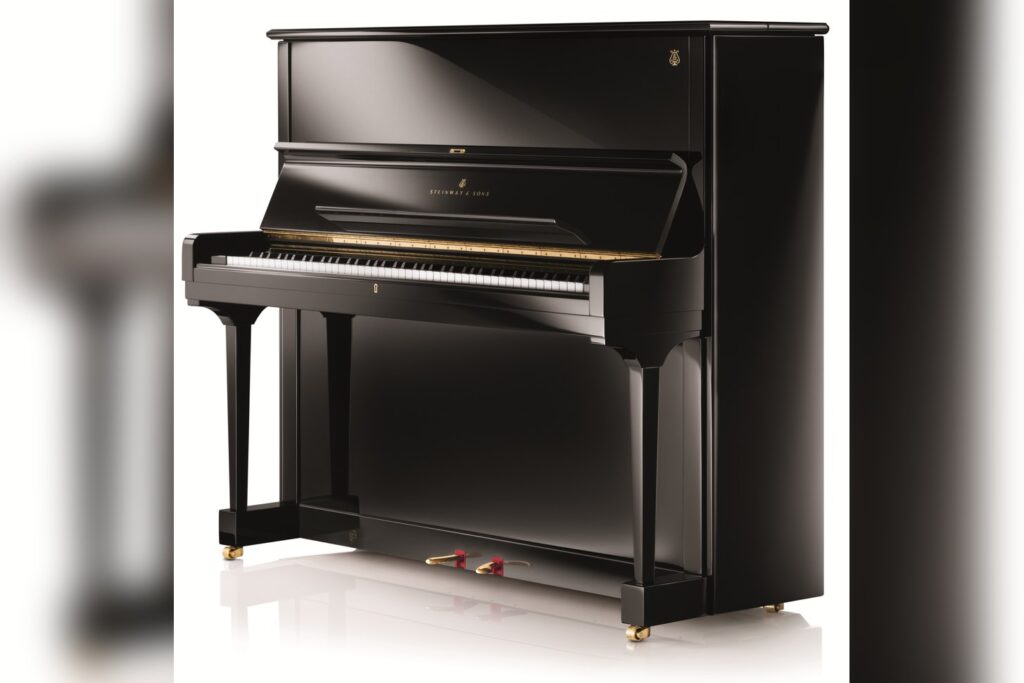
NEW YORK, September 30 — The evolution of film scores spans nearly a century, tracing back to live piano accompaniment in silent-era theaters and advancing through technological shifts that redefined how music shapes cinematic storytelling.
From Live Accompaniment to Original Scores
In the 1890s–1920s, musicians — often pianists or small ensembles — performed improvised or compiled scores in theaters to accompany visual storytelling, as documented in archives from the Museum of Modern Art and the Library of Congress. The release of Warner Bros.’ ‘The Jazz Singer’ in 1927 marked the advent of synchronized sound, transitioning film music from live performance to pre-recorded, composed scores and establishing the original film score as a distinct art form.
Pioneers of the Hollywood Sound
Max Steiner’s 1933 score for ‘King Kong’ is widely regarded as the first fully integrated original film score, pioneering leitmotif and thematic development techniques that became foundational to Hollywood scoring. During the Golden Age of Hollywood (1930s–1950s), composers like Erich Wolfgang Korngold, Bernard Herrmann, and Dimitri Tiomkin established enduring musical identities for genres ranging from swashbuckling adventures to psychological thrillers, with Herrmann’s 1960 score for ‘Psycho’ revolutionizing the use of dissonance and silence in horror cinema.
Popular Music and the Soundtrack Boom
The 1960s and 1970s saw a shift toward integrating popular music, beginning with ‘The Graduate’ (1967), which featured Simon & Garfunkel’s contemporary songs as a narrative device — a practice later embraced by directors like Martin Scorsese and Quentin Tarantino, whose 1994 film ‘Pulp Fiction’ used surf rock, soul, and pop to define character and era. The rise of the compact disc in the 1980s and 1990s fueled a boom in soundtrack album sales, exemplified by ‘The Bodyguard’ (1992), which sold over 45 million copies worldwide, with Whitney Houston’s rendition of ‘I Will Always Love You’ becoming one of the best-selling singles of all time, according to RIAA data.
Streaming Era and Global Influence
In the streaming era, platforms like Spotify and Apple Music have transformed audience engagement with film music, as playlists dedicated to composers such as Hans Zimmer (‘Inception,’ 2010; ‘Dune,’ 2021) and Ludwig Göransson (‘Black Panther,’ 2018; ‘Oppenheimer,’ 2023) amass millions of streams. Original songs like ‘Shallow’ from ‘A Star Is Born’ (2018) have achieved chart-topping success on the Billboard Hot 100. Beyond box office impact, soundtracks influence fashion, language, and music trends — seen in the resurgence of 1980s synth-pop following ‘Stranger Things’ (2016–present) and the global rise of K-pop amplified by ‘Parasite’ (2019), whose soundtrack contributed to the film’s historic Academy Award win for Best Picture in 2020, the first for a non-English language film.




