
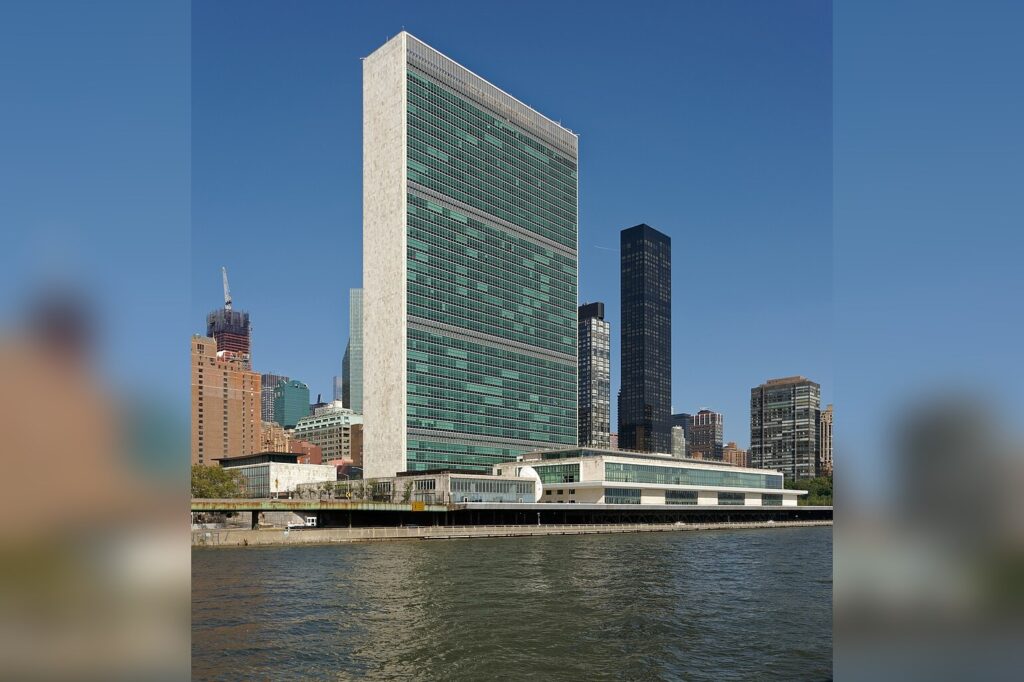
UNITED NATIONS, September 24 — The United Nations General Assembly, the body that opened its first session at Central Hall in London in January 1946, remains the central forum where all Member States debate global challenges, from war and peace to development, climate change and human rights. Ahead of the Assembly’s high-level week, Richard Gowan, Director of UN and Multilateral Diplomacy at the International Crisis Group in New York, spoke with UN News about the Assembly’s enduring role.
His assessment traces a body that the UN’s founders never intended to carry the political weight it now bears.
A chamber built for the margins
Gowan noted that the founders assumed the Security Council would be the center of decision-making in 1945. Cold War divisions among the big powers quickly paralyzed the Council, shifting many political discussions to the General Assembly instead. That displacement gave the Assembly its early tests.
In the 1940s and early 1950s, it drove decisions on the Palestinian question and Korea. When the Security Council became gridlocked over the Korean War, the Assembly led discussions on Korea.
Suez, Hungary and the first peacekeeping mandate
The sharpest test came in 1956, when simultaneous crises erupted over Suez, where Britain and France had intervened, and the Soviet invasion of Hungary. The Assembly mandated the first UN military peacekeeping operation to help end the Suez crisis — a landmark contribution to Cold War crisis management. Against this backdrop, the Assembly’s membership was also being transformed.
During the 1960s it expanded far beyond the founders’ expectations of 80 to 90 countries, as newly independent states joined. It became a platform for former colonies, focusing on apartheid in South Africa.
Throughout the 1960s, the Assembly passed a series of resolutions condemning apartheid, and in the 1970s it suspended apartheid South Africa’s membership altogether, signaling the emergence of the Global South as a force.
What is at stake now
Today, the Assembly remains a vital stage for international diplomacy despite a changing world rife with division. In the corridors of the UN, the wider picture is one of a body that has repeatedly absorbed the functions its founders assigned elsewhere. What to watch next is whether that pattern holds through this year’s high-level week, as Member States return to the same chamber to debate the same categories of conflict, development and rights that have defined its sessions since 1946.




