
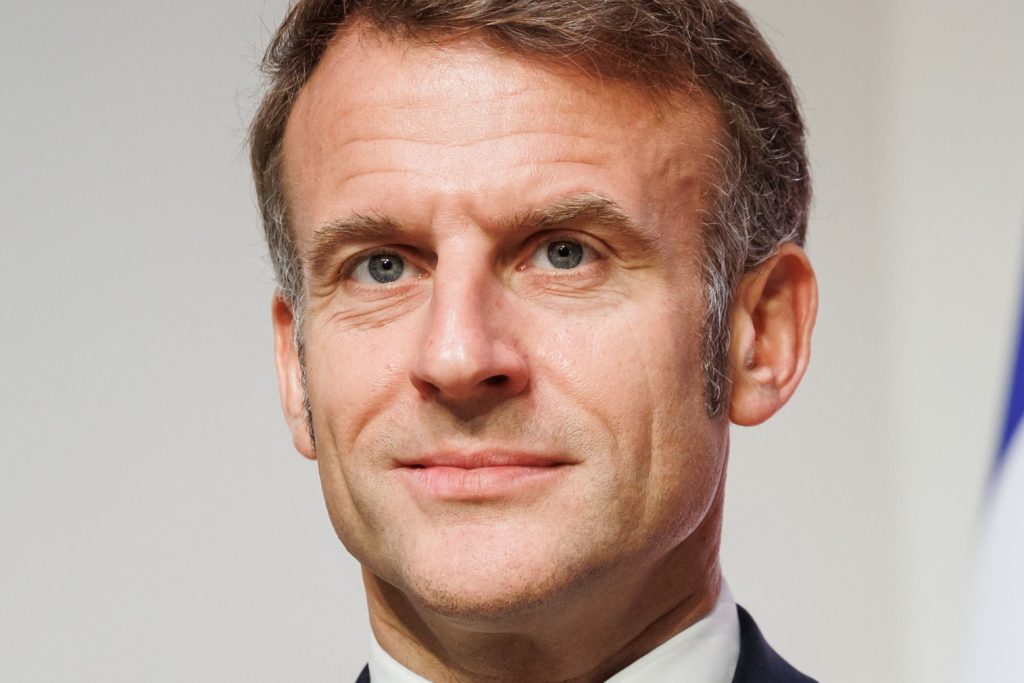
PARIS, September 23 — Days before French voters go to the polls, President Emmanuel Macron has told reporters that the hybrid threat facing France and its European partners has grown sharper in recent weeks, singling out Russia as the source of an intensifying campaign.
His remarks at the Élysée followed the publication, on Tuesday, of a forty-page strategic document from the Haut-Commissariat à la Stratégie et au Plan, the French government’s own planning body, which sketched a 2035 security horizon in which the seabed and outer space join land, sea and air as arenas of state competition.
The HCSP report warns that “critical digital infrastructure, the seabed and outer space will increasingly become areas of strategic confrontation between states, as well as between private and state actors,” adding that “an increasing share of power — and also vulnerabilities — will be concentrated in these spaces, which are largely invisible to citizens.”
A quantitative baseline
The document offers one hard measure of the trend it describes. Between 2022 and 2024, Russia-attributed hybrid warfare operations in Europe rose from fewer than ten instances to nearly fifty. From that trajectory, the authors conclude such actions are bound to multiply across the cyber, economic and information sectors.
Hybrid warfare, as the report defines it, combines methods that fall below the threshold of open military conflict — a characteristic that makes attribution difficult and deterrence harder still. The HCSP does not name adversaries beyond attributing the documented operations to Russia, and it offers no detailed budget or timeline for its recommendations.
What it does offer is a set of prescriptions aimed at both Paris and Europe as a whole. The authors call for fast-tracking the transformation of France’s military model to avert the threat of a major war on the continent, and for Europe to increase military capabilities, reserves and societal resilience ahead of more hybrid attempts and prolonged conflicts. The report frames the coming decade as one in which states must be ready to operate in a “durably degraded” security landscape.
Macron convenes candidates and officials
Macron’s comments came after a meeting at the Élysée attended by presidential candidates alongside senior military, intelligence and energy officials — a gathering that, according to an AFP report, was expected to address the rapid decline in global relations, including the wars in Ukraine and the Middle East, and their implications for French security and energy prices. “In recent weeks, the threat — particularly the Russian hybrid threat — facing Europeans and France has intensified,” Macron told reporters after the meeting. The timing is delicate.
France holds presidential elections on Sept. 28, and Macron cannot run again, having served two mandates. The presence of candidates at a security briefing days before the vote underscores how far the hybrid threat has moved into the centre of French political life.
The report’s emphasis on the seabed reflects mounting concern over undersea communications and energy infrastructure; its focus on outer space points to the growing militarisation and commercialisation of orbital assets. French officials have not publicly detailed specific new measures in response to the document, but its release and Macron’s subsequent remarks signal that Paris expects the pressure to persist. Against this backdrop, the wider picture for Europe is one of blurring lines between peace and war.
The HCSP sets 2035 as a marker for transforming France’s military model and for the continent to bolster collective defences. Whether the next occupant of the Élysée treats that deadline as binding will be the first question to watch.




