
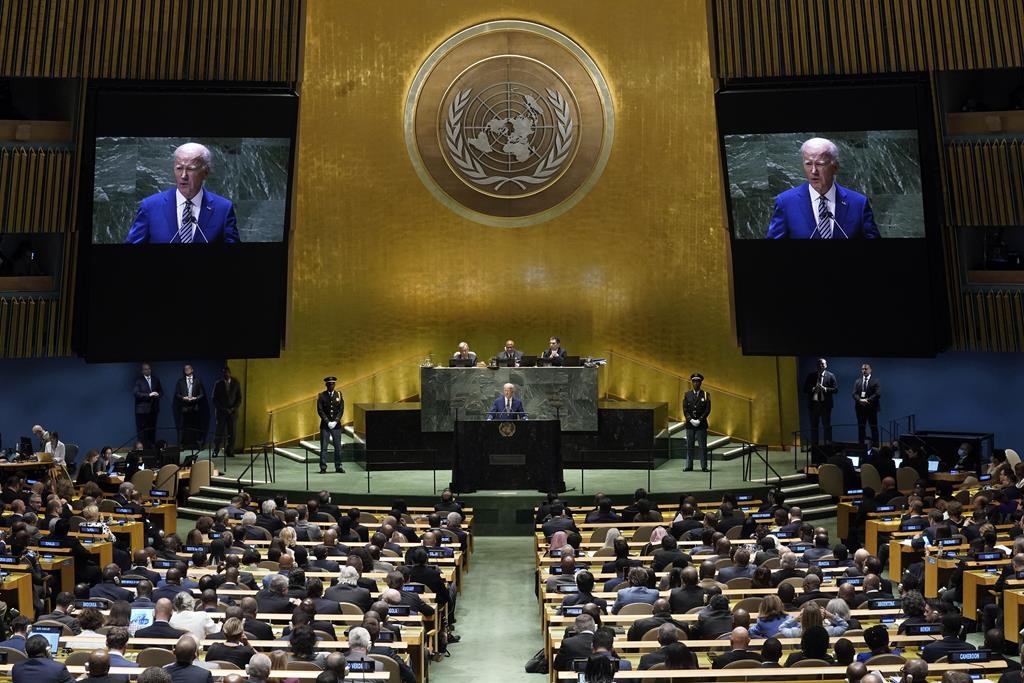
UNITED NATIONS, September 19 — The green marble podium stands ready. Outside the glass-and-steel tower on Manhattan’s East River, motorcades are already stacking up along First Avenue, and by nightfall the flags of every member state will be flying in alphabetical order. The high-level week of the 81st session of the UN General Assembly opens here Saturday with the annual SDG Moment, and the scene is one of a multilateral system under visible strain.
The session is presided over by newly elected Assembly President Khalilur Rahman of Bangladesh, who takes the gavel under a theme that reads almost like a plea: “Restoring trust, managing transformation: A United Nations that delivers for all.”
A week of overlapping crises
Each September, New York becomes the centre of global diplomacy as presidents, prime ministers, ministers and diplomats from around the world gather at UN Headquarters. This year they arrive against a backdrop of mounting geopolitical tensions, growing divisions between countries, and pressure on the multilateral system itself. The centrepiece is the General Debate, which begins on 22 September.
Over several days, presidents, prime ministers and senior representatives of all 193 UN Member States will address the Assembly from that iconic green marble podium. Their speeches provide a global snapshot of national priorities and concerns, with conflicts, economic challenges, humanitarian crises, climate change, development and emerging technologies expected to feature prominently.
Much of the real diplomacy takes place behind closed doors. Hundreds of bilateral and multilateral meetings offer leaders a rare opportunity to meet allies, partners and rivals in one place.
Development goals, and a hard look at the clock
Ahead of the General Debate, leaders gather on 18 September for the annual SDG Moment. In 2015, countries adopted 17 Sustainable Development Goals aimed at tackling challenges ranging from poverty and hunger to education, clean water and access to energy by 2030. With less than five years remaining, the meeting will focus not only on assessing progress but also on highlighting practical solutions that can be expanded and replicated elsewhere.
The UN says that progress on half of all SDG targets is weak and insufficient. Climate moves to the fore on 23 September, when UN Secretary-General António Guterres convenes world leaders for a High-Level Event on Climate Action and the Just Transition.
With global temperatures continuing to rise, discussions will focus on accelerating the shift to renewable energy, expanding climate finance for developing countries and strengthening support for communities already experiencing the impacts of climate change. That same day, another major meeting marks the 40th anniversary of the Declaration on the Right to Development, adopted by the General Assembly in 1986. The declaration established that development is about more than economic growth, emphasizing participation, equality and non-discrimination.
Sea levels, pandemics and the Durban Declaration
The following day, leaders turn their attention to sea level rise, one of the most visible consequences of global warming. For many small island developing States and low-lying coastal communities, rising seas are already threatening homes, infrastructure and freshwater supplies. The meeting aims to strengthen international cooperation and mobilise support for countries most at risk.
On 25 September, Heads of State and Government will revisit the lessons of COVID-19. The pandemic demonstrated how quickly a local outbreak can become a global emergency and exposed major inequalities in access to vaccines, medicines and other essential resources.
Leaders meeting on pandemic prevention, preparedness and response will discuss how to strengthen health systems, improve readiness, and ensure a more equitable international response to future health crises. The week’s agenda also includes the fight against racism, with a meeting scheduled on 24 September to mark the 25th anniversary of the Durban Declaration and Programme of Action, adopted in 2001. The declaration is a comprehensive framework for combating racism, racial discrimination, xenophobia and related intolerance.
As the world’s leaders gather, the high-level week will test whether the multilateral system can deliver concrete results amid overlapping crises. Watch the General Debate speeches beginning 22 September — and whether the closed-door bilaterals produce anything the podium cannot.




