
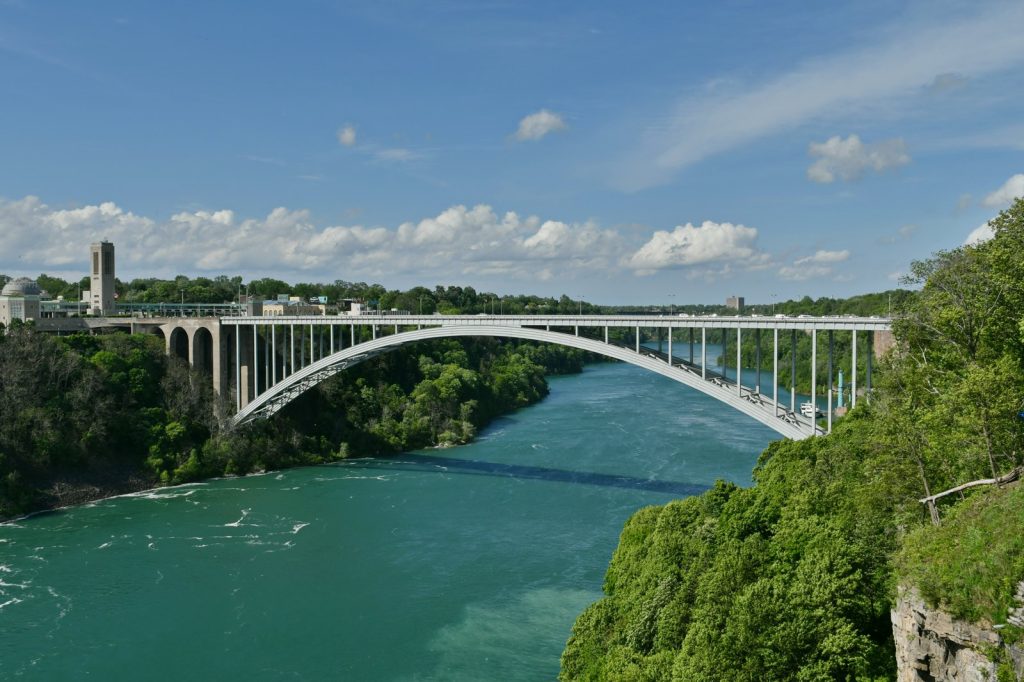
On November 22, 2023, a vehicle detonated on the Rainbow Bridge in Niagara Falls, killing the two occupants and wounding a U.S. Customs and Border Protection agent. The explosion prompted New York state officials to suspend all U.S.–Canada crossings in the western part of the state as a precautionary measure. The abrupt halt has already begun to strain the region’s commerce, just as the holiday shopping season approaches.
The Rainbow Bridge is a critical conduit for trucks carrying produce, gifts and raw materials, as well as for Canadian shoppers who frequent retail districts on the U.S. side. With the bridge closed, those trucks are either parked idle or forced to take longer, costlier detours, while Canadian consumers are unable to cross. Local merchants, many of which rely on the steady influx of cross‑border traffic, are confronting immediate revenue losses. In a market where even a few hours of disruption can translate into thousands of dollars of missed sales and spoiled inventory, the timing could prove especially damaging.
Beyond the commercial impact, the blast raises unsettling questions about security at a site that is normally heavily monitored. The bridge’s checkpoint area is equipped with cameras, barriers and armed personnel, yet an explosive device was able to reach a vehicle close enough to cause a fatal detonation. Federal investigators are now examining the wreckage, the vehicle’s occupants and the surrounding surveillance footage to determine whether the incident resulted from a mechanical failure, an accidental ignition, or a deliberate act. Any identified security gaps could prompt revisions to current border‑control protocols.
The injured border agent was transported to a nearby hospital; the agency has not released details about the agent’s condition. The two people inside the exploding car were pronounced dead at the scene, underscoring the human cost of the event.
Environmental considerations also complicate the recovery effort. The explosion scattered debris, fuel and potentially hazardous substances onto the bridge deck and surrounding area. Cleanup crews must clear the site before traffic can resume, a process that consumes both time and resources—precious commodities in late November.
While officials have not specified how long the closures will remain in effect, the immediate economic fallout is evident. Businesses report empty parking lots and shuttered storefronts, and supply chains that depend on the bridge are scrambling to reroute shipments. The disruption comes at a crucial moment, as retailers gear up for a season that traditionally accounts for a sizable share of annual sales.
Looking ahead, the investigation’s findings will shape the future of border management in the region. Should investigators uncover a security vulnerability, new measures are likely to be implemented to prevent a repeat. Conversely, if the blast is deemed an isolated accident, attention may shift toward supporting the affected businesses and accelerating the reopening of the crossing.
For now, the once‑busy checkpoint stands silent, families mourn their losses, and a federal agent recovers in hospital care. The ripple effects of the Rainbow Bridge explosion are being felt across Western New York, manifesting in vacant retail spaces, delayed shipments and a holiday season that now begins under a cloud of uncertainty.




