
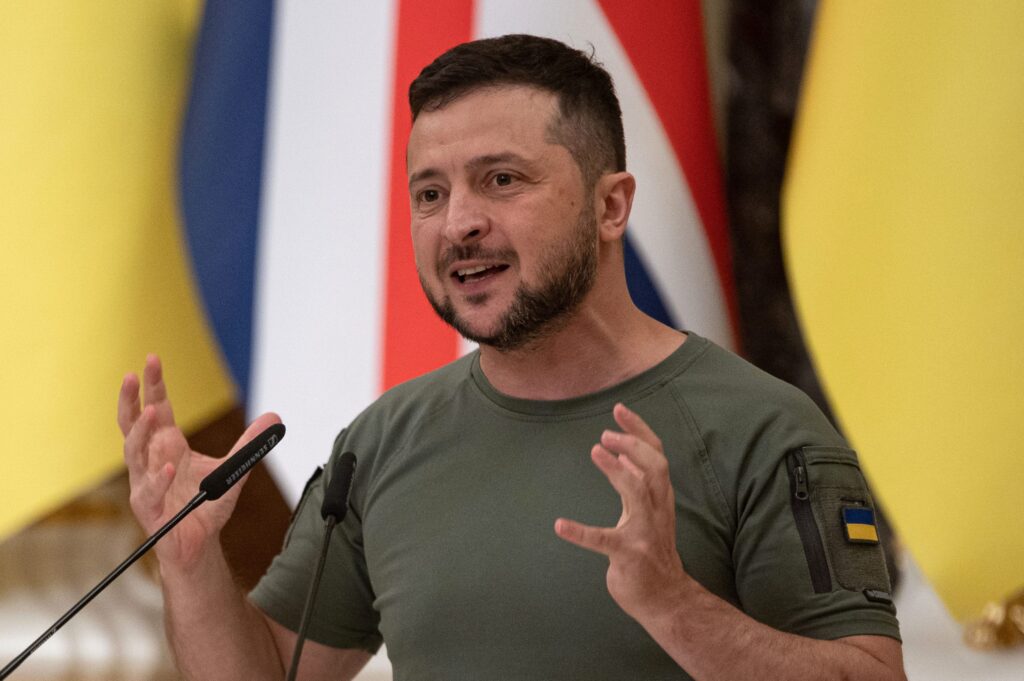
WASHINGTON, July 6 — The shift is subtle but unmistakable. Ukrainian President Volodymyr Zelensky will not address the upcoming NATO summit in Washington, D.C., a decision driven by the alliance’s desire to avoid offending former U.S. President Donald Trump, the presumptive Republican nominee for the 2024 presidential election. The summit runs July 9-11, 2024, and marks NATO’s 75th anniversary.
According to a report in The Telegraph, unnamed sources familiar with the planning say NATO officials and allied governments fear a Zelensky speech could be seen as a provocation by Trump, who has expressed skepticism about continued U.S. aid to Ukraine. Zelensky has been a frequent speaker at international forums, including previous NATO summits, where he has rallied support for Ukraine’s defense against the Russian invasion that began in February 2022.
This time, he’s been sidelined. The decision has drawn criticism from some NATO members and Ukraine supporters, who argue it undermines the alliance’s commitment to Kyiv. The summit is expected to focus on support for Ukraine and strengthening the alliance’s eastern flank — making the snub all the more pointed.
What’s changing here is the calculation. NATO is walking a tightrope between showing solidarity with a besieged ally and not alienating a potential future U.S. president who has questioned that very solidarity.
Watch this space: the trend underneath is the alliance recalibrating its messaging for a political landscape that could shift dramatically after November. The North Atlantic Treaty Organization (NATO) has long been a cornerstone of international security, with its member states working together to provide collective defense against potential threats. The alliance’s summits, which bring together leaders from its member countries, are key events where important decisions are made and strategies are discussed.
In recent years, NATO has faced numerous challenges, including the ongoing conflict in Ukraine, which has required the alliance to adapt and respond to evolving security needs. As the alliance celebrates its 75th anniversary, it is navigating a complex geopolitical landscape, where the interests and priorities of its member states may not always align. The relationship between NATO and Ukraine has been a significant aspect of the alliance’s work in recent years.
Ukraine’s conflict with Russia has led to a major escalation of tensions in the region, and NATO has played a key role in providing support to Ukraine’s defense efforts. The alliance has also sought to strengthen its eastern flank, in response to concerns about Russian aggression and the need to reassure member states in the region.
This has involved a range of measures, including the deployment of additional troops and equipment, as well as efforts to enhance cooperation and coordination with partner countries like Ukraine. The decision to bar President Zelensky from speaking at the NATO summit reflects the complex and nuanced nature of international diplomacy. As a key player in the conflict in Ukraine, Zelensky’s presence and words carry significant weight, and the alliance’s decision-makers must carefully consider the potential implications of his involvement.
At the same time, the move has been criticized by some as a sign of weakness or lack of resolve, highlighting the challenges that NATO faces in balancing competing interests and priorities. As the alliance looks to the future, it must navigate these complexities and find ways to address the evolving security needs of its member states, while also maintaining a strong and unified front in the face of external challenges.
The broader implications of this decision will likely be closely watched by observers of international relations, as they reflect the ongoing evolution of the global security landscape. The fact that NATO is taking steps to avoid offending a potential future U.S. president highlights the significant role that domestic politics can play in shaping international relations.
As the 2024 U.S. presidential election approaches, the alliance will likely face continued pressure to navigate the complex and sometimes competing interests of its member states, all while maintaining its commitment to collective defense and security cooperation. This delicate balancing act will require careful diplomacy and strategic communication, as NATO seeks to address the challenges of a rapidly changing world.




