
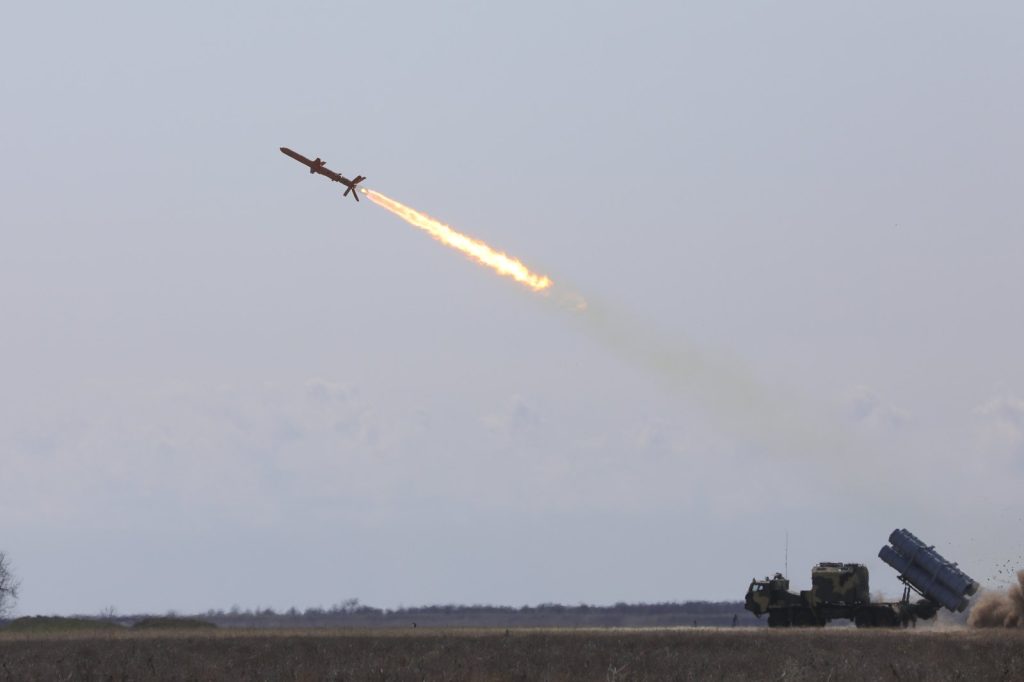
KYIV, July 11 — Ukrainian military officials have formalised the country’s long-range strike capabilities under a new, unified command structure, consolidating operations that have targeted Russian military infrastructure since the early months of the full-scale invasion. The record shows Ukraine’s first major long-range strike occurred in April 2022, when it used the R-360 Neptune missile to sink the Russian cruiser Moskva. That operation established a baseline for what would become an expanding campaign deep inside Russian territory.
By December 2022, Ukraine struck the Engels-2 airbase in Russia, 600 km from the border, using modified Soviet-era Tu-141 drones. According to available information, that attack demonstrated Ukraine’s growing ability to reach strategic targets far beyond the front lines.
Escalation through drone warfare
Throughout 2023, Ukrainian forces launched more than 100 drone attacks on Russian oil refineries and military depots. One notable operation that year was the August 2023 strike on the Soltsy airbase, which officials confirmed as part of the sustained campaign against Russian logistics and fuel infrastructure. These operations were conducted by the Main Intelligence Directorate of the Ministry of Defence, known as the HUR, and the Security Service of Ukraine, or SBU.
The ad hoc nature of these efforts, built on improvised platforms and evolving tactics, marked the early phase of Ukraine’s long-range strike programme. In 2024, Ukraine introduced the Palianytsia into combat for the first time.
The weapon system was used in September of that year to hit a Russian ammunition depot in Bryansk Oblast, according to official statements from Ukrainian defence sources.
Centralisation of targeting and intelligence
The new command structure formalises what had been a series of independent operations conducted by different agencies. According to the announcement, the reorganisation centralises targeting and intelligence under a single military structure, replacing the previous decentralised approach. Officials confirmed that the move is intended to improve coordination and strategic planning for future strikes.
The consolidation places previously separate drone and missile programmes under unified operational control, a shift that defence analysts say could increase the efficiency and impact of future attacks. The formalisation comes as Ukraine continues to develop its domestic weapons production capacity, including the Palianytsia system and other long-range platforms.
The strategic context suggests that Kyiv is seeking to institutionalise capabilities that were originally developed as emergency responses to Russian missile and artillery superiority. What remains to be seen is whether the new command structure will lead to an expansion of operations deeper into Russian territory, or whether it signals a shift toward more selective, high-value targeting. Defence officials have not commented on specific future operations under the new arrangement.




