
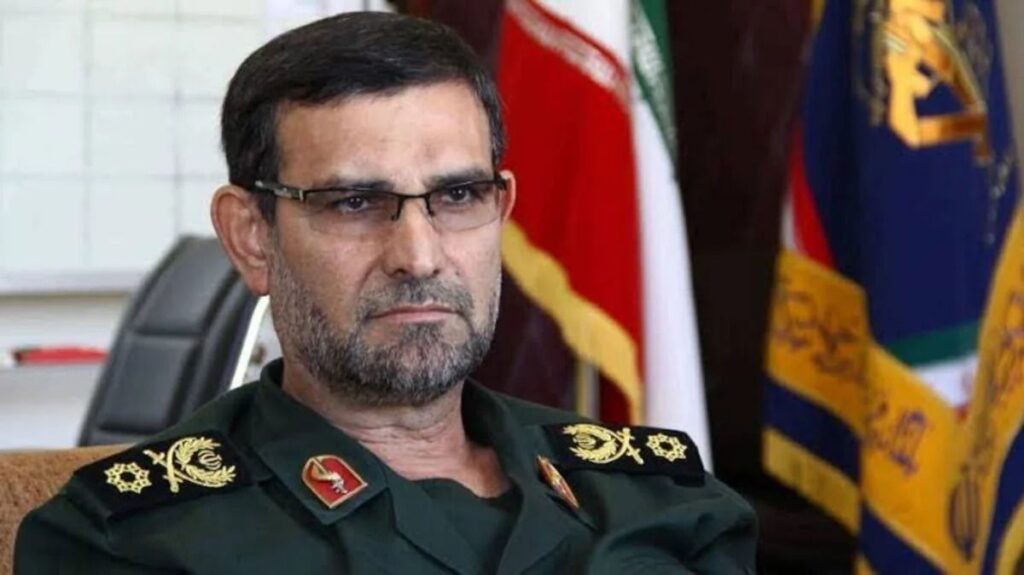
Rear Admiral Alireza Tangsiri, the commander of the Islamic Revolutionary Guard Corps Navy, has died, removing a central figure in Iran’s maritime confrontation with the West. The circumstances surrounding his death on March 26, 2026, remain unclear, and no successor has been announced by Iranian authorities.
His passing comes at a time of heightened tension in the Persian Gulf, where his leadership had shaped the IRGC Navy’s aggressive posture for nearly eight years.
A Career Forged in Conflict
Tangsiri, born in 1960 in Tangestan, Iran, joined the Islamic Revolutionary Guard Corps during the Iran-Iraq War in the 1980s. He rose through the ranks, serving as deputy commander of the IRGC Navy and as commander of the IRGC’s naval bases in the Persian Gulf before his appointment by Supreme Leader Ali Khamenei in August 2018. By the mid-2000s, Tangsiri had commanded the IRGC Navy’s First Naval District in Bandar Abbas, Iran’s main port on the Persian Gulf, giving him direct control over the waters that later became his signature arena.
His career was defined by a willingness to extend confrontation far beyond Iran’s coastline. In 2007, Tangsiri said that if the United States clashed with Iran, the IRGC would pursue American forces as far as the Gulf of Mexico, signaling the breadth of his strategic thinking.
He was also involved in the 2016 detention of American sailors after their vessels drifted into Iranian waters following an engine failure—an incident that underscored the IRGC’s readiness to exploit any tactical advantage in the gulf. By the time he assumed command of the IRGC Navy, he had built a reputation for aggressive, asymmetric tactics that relied on small fast boats, anti-ship missiles, and naval mines.
A Hardened Stance on the Strait
Tangsiri’s public record shows he repeatedly threatened to close the Strait of Hormuz—the narrow channel between the Persian Gulf and the Gulf of Oman that serves as a choke point for a large share of the world’s seaborne oil. He made such threats in 2018 and 2019 in response to U.S. sanctions.
In July 2019, he oversaw the seizure of the British-flagged tanker Stena Impero, a significant escalation in the IRGC Navy’s tactics against commercial shipping. The U.S. Treasury Department sanctioned Tangsiri in 2019 under Executive Order 13224 for terrorism-related activities, reflecting Washington’s assessment of his role in destabilizing maritime security. On April 28, 2025, Tangsiri announced via state media the first indefinite closure of the Strait of Hormuz under his command. That declaration represented a sharp departure from previous threats, which had been temporary or conditional, and signaled a hardening of IRGC policy months before his death.
Tangsiri was a close ally of IRGC commander-in-chief Hossein Salami, who was appointed in 2019. Their partnership shaped the IRGC Navy’s posture during a period of heightened tensions with the United States and its allies, with Tangsiri’s forces operating the small boats, missiles, and mines that formed the core of asymmetric warfare in the Persian Gulf.
Leadership Vacuum at a Critical Juncture
The loss of Tangsiri leaves a leadership vacuum in the IRGC Navy at a moment of maximum pressure on Gulf shipping lanes. Analysts will watch for Khamenei’s choice of a successor and whether the new commander maintains the indefinite closure policy or shifts toward de-escalation. The U.S. administration under President Donald Trump has not commented on Tangsiri’s death. With Tangsiri gone, the future direction of the IRGC Navy and its operations in the gulf remains uncertain, as his aggressive,




