
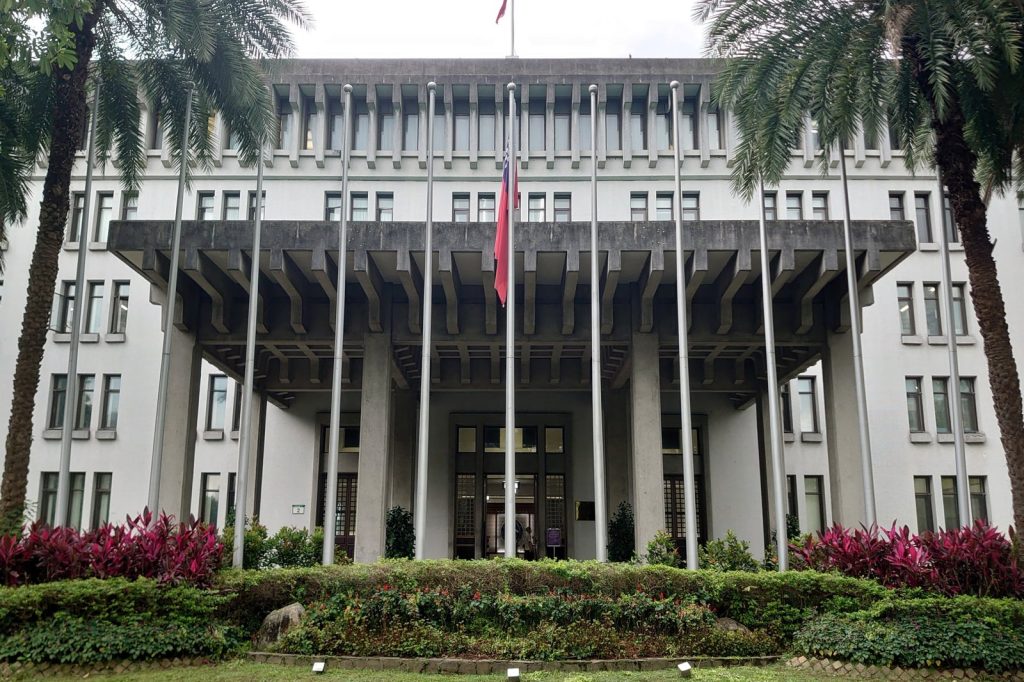
On 14 February, Taiwan’s government warned it would take unspecified retaliatory action if the Philippines does not reverse a sudden ban on travelers from the island. The restriction, imposed by Manila on 10 February, places Taiwan in the same category as mainland China, Hong Kong, and Macau—a move Taipei says is based on Beijing’s claim that the democratic island is part of China’s virus zone.
Foreign Ministry spokeswoman Joanne Ou told reporters that President Tsai Ing-wen’s administration “has a plan” to respond but declined to provide details. “We will continue to communicate with the Philippines and explain that this is a one-sided and wrong decision by the Philippines’ health ministry, which has already affected the relationship between the two countries of Taiwan and the Philippines,” Ou said. The statement represents the strongest public warning Taiwan has issued to a regional neighbor since the coronavirus outbreak began.
The ban bars all Taiwanese passport holders from entering the Philippines, even though Taiwan has recorded only 18 confirmed Covid-19 cases compared to more than 66,000 on the mainland. The measure has stranded hundreds of Taiwanese business travelers and left 115,000 Filipino workers in Taiwan uncertain about visiting home.
One-China Policy Drives Manila’s Decision
Philippine officials acknowledged the ban aligns with Beijing’s “One-China” principle. The Department of Health said it grouped Taiwan with China because the World Health Organization lists the island’s statistics under “Taiwan, China”—a designation Taipei rejects.
“We are bound by the One-China policy,” Health Secretary Francisco Duque told local radio on 13 February. “Unless the WHO reclassifies Taiwan, we have to treat it as part of China.” The WHO classification has drawn criticism from governments including the United States, Australia, the European Union, and Japan, all of which have urged the UN agency to grant Taiwan separate status or observer rights. Taipei argues that Beijing’s political pressure distorts epidemic data and misleads other nations, noting that Taiwan’s health system warned the world about human-to-human transmission as early as 31 December.
Economic Consequences Loom
Manila Economic and Cultural Office chair Angelito Banayo, Manila’s de-facto envoy to Taipei, warned that Taiwan could cancel the 2017 visa-waiver program allowing Filipinos to stay fourteen days without a visa. Approximately 500,000 Philippine nationals visit Taiwan annually for tourism, education, and work.
Banayo said a reciprocal ban would “hurt our own people” and urged patience while Manila reviews the policy. Taiwan’s labor ministry countered that the Philippine government should focus on remittances from workers on the island. Filipino employees in Taiwanese factories and households send home roughly US $200 million annually, according to central-bank data. “If Taipei restricts re-entry after home leave, whole families in Luzon and Visayas will feel it,” said Doris Ho, head of Manila-based recruitment firm MIP International.
“The ban is already causing panic among our workers.”
WHO Role Sparks Sovereignty Dispute
Taiwan’s Mainland Affairs Council issued a formal protest on 12 February demanding the WHO “immediately correct its mistake” and list Taiwan separately. The council noted the island’s infection rate of 0.76 per million residents is among the lowest in Asia, lower than Singapore, Japan, or South Korea.
“Lumping us with China creates a false risk profile and justifies discriminatory restrictions,” the council said. Beijing’s foreign ministry praised Manila’s stance. Spokesman Geng Shuang told reporters on 14 February that the Philippines “upheld the universal consensus of the international community” by treating Taiwan as Chinese territory.
Taipei responded by accusing the Chinese Communist Party of “weaponising a health emergency to squeeze Taiwan’s international space.” The American Institute in Taiwan, the de-facto US embassy in Taipei, issued a rare statement on 13 February urging “all countries to base travel measures on science, not politics.” The remark appeared directed at Manila, a US defense treaty ally that relies on American military aid to counter Chinese claims in the South China Sea.
Risk Review Underway
Philippine cabinet officials pledged to re-evaluate the ban after a scheduled meeting on 18 February. Duque said epidemiologists will assess “incidence data, containment capacity and exportation risk” before recommending changes. However, any reversal could anger Beijing, which has provided infrastructure loans to President Rodrigo Duterte’s government since 2016.
Taiwanese diplomats are lobbying other Southeast Asian capitals to resist similar pressure. Vietnam, Thailand, and Indonesia have so far kept borders open to Taiwanese travelers under separate health protocols.
Analysts say Manila’s final decision will indicate how far Beijing’s influence extends over pandemic policy within the Association of Southeast Asian Nations. Meanwhile, Taiwanese carriers Eva Air and China Airlines continue flying half-empty planes to Manila and Cebu, barred from disembarking passengers but required to maintain landing slots. Flight-tracking data shows daily arrivals from mainland China still landing in Manila with tighter screening—a discrepancy Taipei calls “irrational and unjust.” The standoff leaves 115,000 Filipino workers caught between paychecks and family reunions, while Taiwanese investors consider shifting orders to Vietnam or Malaysia if uncertainty persists.
Both sides have significant stakes, but Manila’s calculus ultimately rests on whether officials fear Beijing’s loans or Taipei’s retaliation more.




