
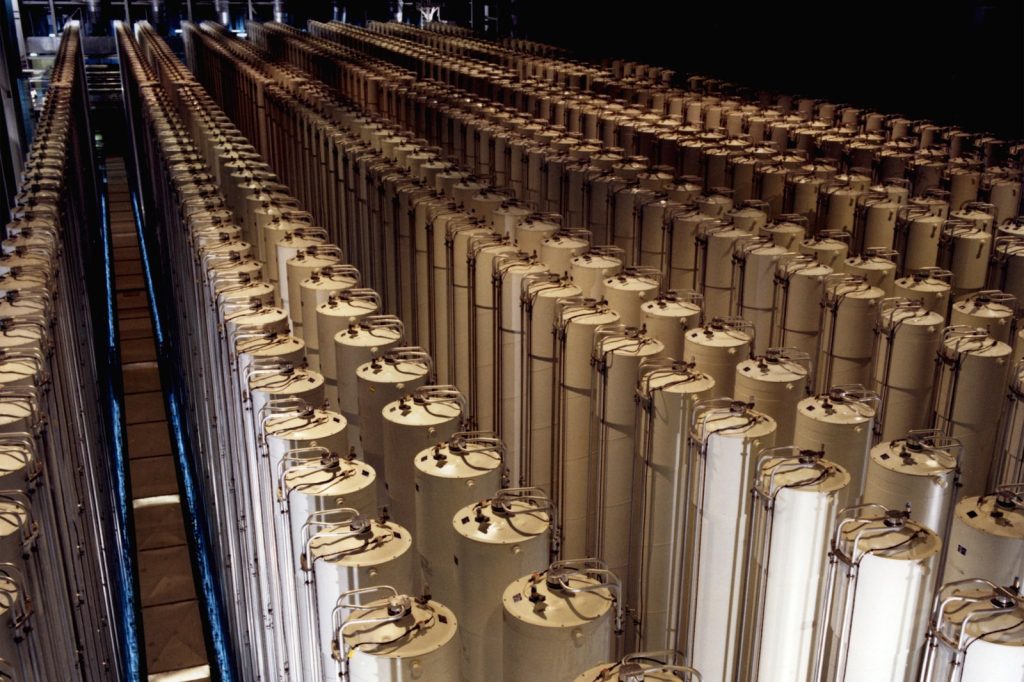
VIENNA, July 13 — Eleven years after the landmark nuclear deal with Iran was signed, the agreement exists largely on paper only, a ghost of its original intent. The Joint Comprehensive Plan of Action, or JCPOA, was designed to put a safe distance between Iran and a nuclear bomb. Today, that distance has all but vanished.
The deal, signed on July 14, 2015, between Iran and the P5+1 — China, France, Russia, the United Kingdom, the United States, plus Germany — set strict limits. Iran’s uranium enrichment was capped at 3.67 percent.
Its stockpile of low-enriched uranium could not exceed 300 kilograms. Those were the guardrails meant to reassure the world.
A deal unravels
The architecture began to crack on May 8, 2018. That was when President Trump withdrew the United States from the agreement and reimposed sanctions on Tehran. Iran, in response, started to breach the deal’s core limits the following year.
By July 2019, inspectors found Iran enriching uranium to 4.5 percent, a clear violation of the 3.67 percent cap. Then came January 2020.
After the U.S. killing of Qasem Soleimani, Iran announced it would no longer observe any of the deal’s limits. The restraint was gone. By April 2021, Iran had reached 60 percent enrichment.
That level is just a short technical step away from weapons-grade material, which is 90 percent purity. The International Atomic Energy Agency, the IAEA, has been watching closely.
The IAEA’s latest assessment
As of June 2025, the IAEA reported that Iran has accumulated enough uranium enriched to 60 percent to produce several nuclear weapons, should it choose to further enrich that material. That finding is not speculation. It is the agency’s formal, verified assessment.
On June 5, 2025, the IAEA Board of Governors passed a resolution censuring Iran for its lack of cooperation with inspectors. The resolution was a diplomatic rebuke, but it carried no enforcement mechanism of its own.
Iran’s nuclear infrastructure is well-known and hardened. Its facilities include the underground enrichment plant at Natanz, the bunker facility at Fordow, and the heavy water reactor at Arak. The Arak reactor was redesigned under the terms of the original JCPOA to produce less plutonium.
What comes next is uncertain. The diplomatic track, for now, remains cold.
The IAEA continues its inspections, but its access and Iran’s cooperation have both eroded. For those who track proliferation, the margin for error has become very thin.




