
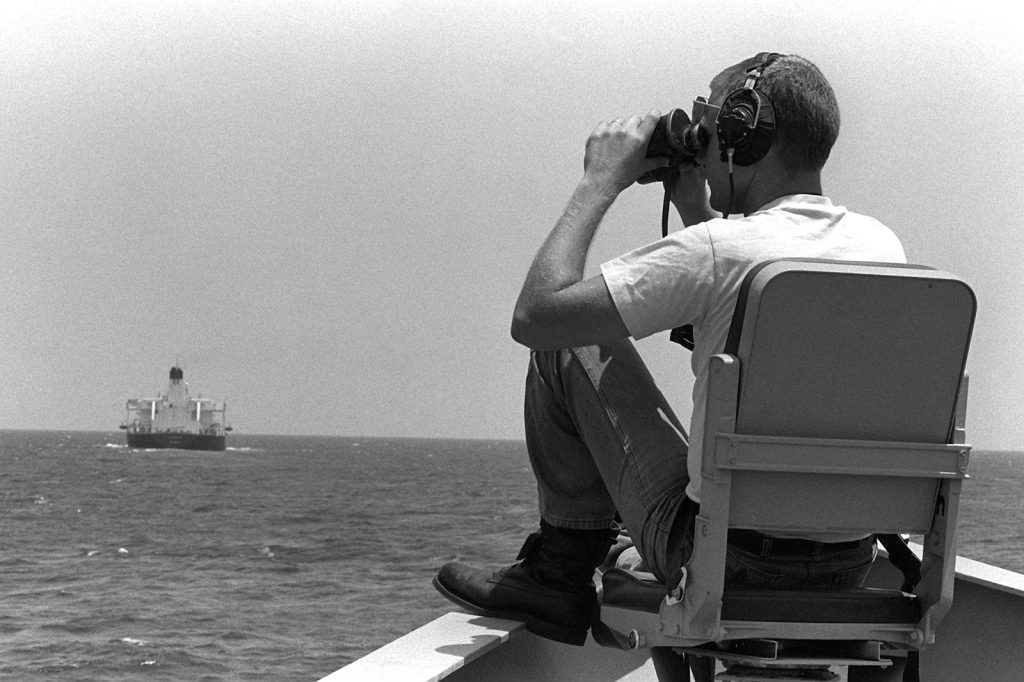
A newly declassified Pentagon assessment has brought renewed attention to the 1987-1988 Tanker War, a critical phase of the broader Iran-Iraq War that transformed the Persian Gulf into a contested waterway for commercial shipping. The assessment examines how the conflict, which began with Iraqi attacks on oil tankers in 1984 and escalated through Iranian retaliation, ultimately drew the United States into direct naval engagements and set lasting precedents for military operations in the region.
The Origins and Escalation of the Tanker War
The Iran-Iraq War, which began in 1980, created the conditions for what became known as the Tanker War. Both belligerents sought to weaken each other’s economic lifelines by targeting oil shipments in the Persian Gulf. Iraq initiated the campaign against oil tankers in 1984, focusing on Iranian oil exports.
Iran retaliated by striking vessels from Kuwait and Saudi Arabia, turning the Gulf into a battleground for commercial shipping. The crisis intensified through 1987 as the scope of attacks broadened and the threat to global energy supplies grew.
The Strait of Hormuz, a narrow chokepoint for a significant portion of the world’s oil traffic, became increasingly vulnerable as the conflict escalated.
U.S. Intervention and Direct Confrontation
The United States launched Operation Earnest Will on July 24, 1987, in response to the mounting danger. The operation involved reflagging 11 Kuwaiti tankers under the American flag and providing Navy escorts through the Gulf.
The stated objectives were to protect oil shipments and demonstrate the U.S. commitment to freedom of navigation in international waters. The reflagging operation and subsequent escort missions represented a significant commitment of U.S. naval power to the region. Iran’s use of naval mines to disrupt shipping prompted further U.S. military responses.
The U.S. Navy conducted operations targeting Iranian mining activities, which culminated in retaliatory strikes on Iranian oil platforms during Operation Praying Mantis on April 18, 1988. This operation marked a significant escalation in direct U.S.-Iran military confrontation, representing the most substantial exchange of fire between the two nations during the Tanker War period.
The conflict also included a tragic incident that remains a point of contention in U.S.-Iran relations. On July 3, 1988, the U.S. Navy accidentally downed Iran Air Flight 655, a civilian airliner, killing all 290 passengers aboard. The Pentagon assessment notes this event as part of the historical record of the Tanker War period.
The Tanker War concluded with the Iran-Iraq War ceasefire in August 1988. Throughout the conflict, the vulnerability of oil shipments transiting the Strait of Hormuz was starkly demonstrated, highlighting the strategic importance of this chokepoint for global energy supplies.
Strategic Implications and Lasting Lessons
The Pentagon assessment underscores how the 1987-1988 period illustrated the risks inherent in regional conflicts that threaten international shipping lanes. The reflagging operation and subsequent naval engagements established precedents for U.S. force protection and escort missions in the Gulf that would inform later military planning.
Analysts point to the Tanker War as a case study in asymmetric warfare, where Iran employed mines and small-boat attacks against a superior naval power. The conflict also demonstrated how regional wars can draw in outside powers when commercial interests are directly threatened. The Strait of Hormuz remains a strategic concern for the U.S. military and allied navies, a reality that traces directly to the lessons learned during the Tanker War.
The Gulf War, a separate conflict that began in 1990 when Iraq invaded Kuwait, unfolded in two phases: the defensive buildup known as Operation Desert Shield and the combat operations of Operation Desert Storm to liberate Kuwait in early 1991. While distinct, both conflicts underscore the strategic importance of the Persian Gulf and its shipping routes.
The Tanker War demonstrated how regional conflicts can disrupt global energy supplies, while the Gulf War set a precedent for large-scale international coalitions intervening in Middle Eastern crises. The newly declassified assessment provides a detailed examination of these dynamics as they played out during the 1987-1988 period.




