
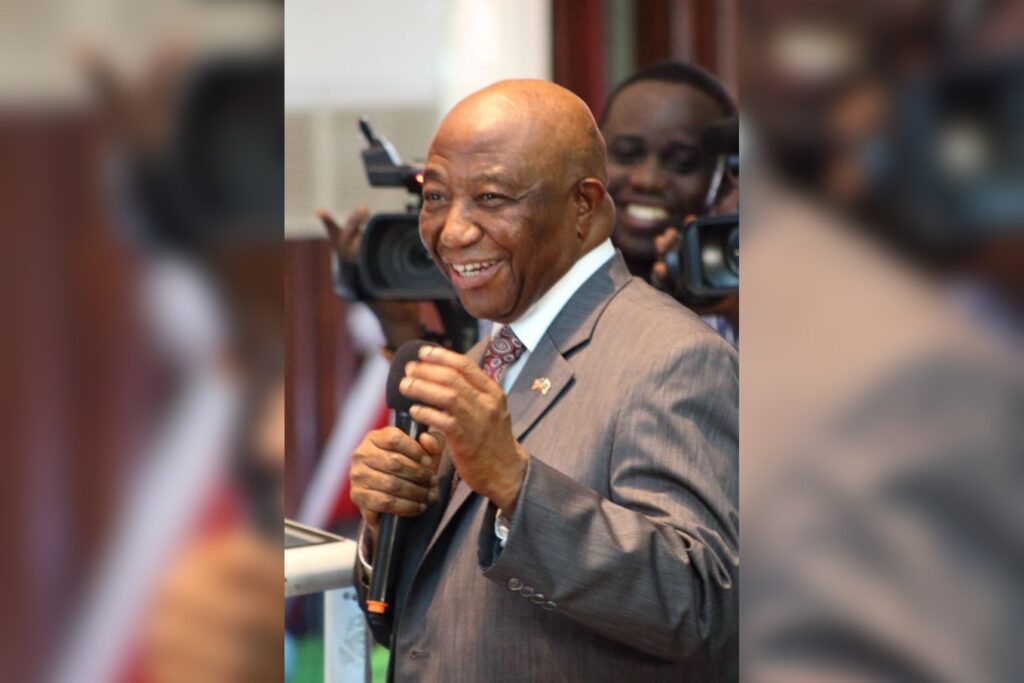
Liberian President Joseph Nyuma Boakai marked a turning point for his country’s environmental governance Tuesday, using the dedication of a new headquarters for the Environmental Protection Agency to draw a firm line on natural resource stewardship. Speaking before lawmakers, government officials, and civil society groups gathered at Mamba Point in Monrovia, Boakai dedicated the EPA’s newly acquired headquarters under the theme “From Tenant to Ownership,” underscoring that the agency had long operated without a permanent base.
The president described the facility as a symbol of Liberia’s commitment to sound governance and responsible environmental management. He also commissioned an advanced Elemental Analyzer for the EPA’s laboratory, equipment designed to strengthen the agency’s technical capacity for monitoring and enforcement.
Agency Mandate and Institutional Evolution
The EPA was established by an Act of the National Legislature in 2002, created to coordinate and implement environmental policies across Liberia. Executive Director Dr. Emmanuel Urey Yarkpawolo, who provided an overview of the agency’s achievements and ongoing challenges, has led an institution born from the ashes of civil conflict. The creation of the EPA in 2002 reflected a post-war commitment to regulate natural resources amid persistent threats from illegal logging and mining.
For more than two decades, the agency operated without a permanent headquarters, a fact that President Boakai’s dedication ceremony sought to rectify. The theme “From Tenant to Ownership” captured not only the physical relocation but also a broader assertion of institutional authority over Liberia’s environmental assets.
The new headquarters and the laboratory equipment signal a step toward stronger enforcement capacity, enabling the agency to better monitor environmental compliance and prosecute violations.
Balancing Growth with Protection
“Economic advancement must not come at the expense of Liberia’s forests, wetlands, rivers, coastlines, and other resources vital to current and future generations,” Boakai told the gathering, making clear that Liberia will not repeat the mistakes of the past. He emphasized that the EPA plays a pivotal role in national development, and that investment and economic growth are welcome only when they safeguard the nation’s environment, communities, and vital natural resources.
This stance comes against the backdrop of Liberia’s resource-rich landscape: the West African nation, founded in 1847, possesses significant deposits of iron ore, as well as rubber, diamonds, gold, and timber. The country also maintains substantial forest cover, much of which faces threats from illegal logging and mining operations.
President Boakai’s message positions the EPA as the gatekeeper ensuring that foreign and domestic investment does not come at the cost of environmental degradation.
Historical Context and Resource Legacy
Liberia’s founding and development are deeply intertwined with resource extraction and foreign investment. Established in the 19th century by the American Colonization Society as a settlement for freed African Americans and Afro-Caribbeans, the nation declared independence in 1847, becoming Africa’s first republic to break free from colonial rule.
It maintained its sovereignty throughout the Scramble for Africa, a distinction that shaped its early identity. The economy expanded significantly with major foreign investment, particularly in rubber production by Firestone in the 1920s, which reshaped labor patterns and land use across the country. Political upheaval in 1980 ended the era of Americo-Liberian dominance when a coup installed Samuel Doe, whose authoritarian rule sparked prolonged conflict. Two devastating civil wars — the first from 1989 to 1997, the second from 1999 to 2003 — left Liberia’s environment and economy in ruins, devastating forests, infrastructure, and governance structures.




