
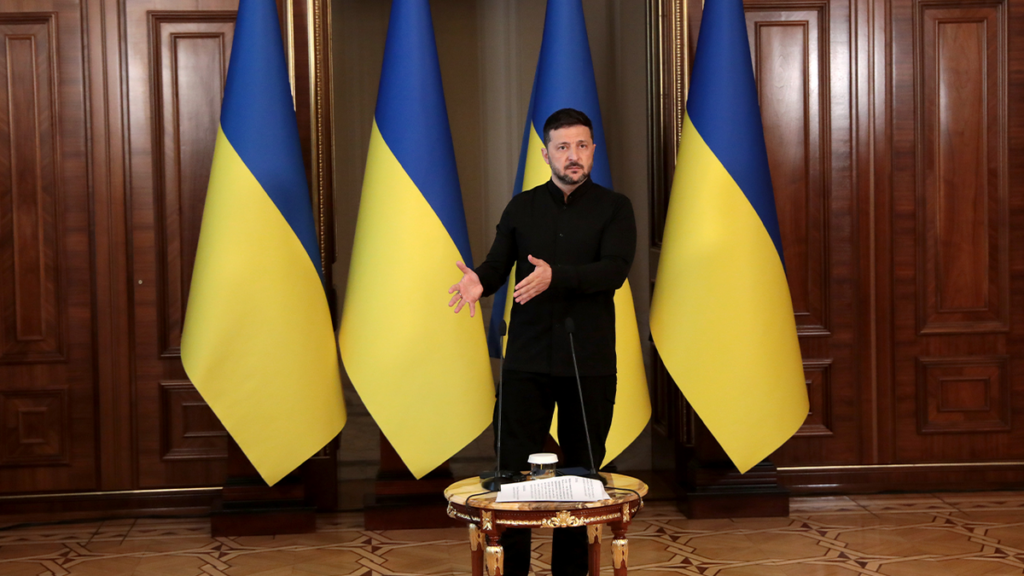
Kryvyi Rih, August 21 — Ukrainian President Volodymyr Zelenskyy denounced a Russian drone attack on a shopping center in his hometown as a “terrorist act,” after official reports confirmed 14 deaths and at least 121 injuries. The assault, described as a “double-tap strike,” involved an initial wave of drones followed by a second onslaught targeting rescue efforts.
Zelenskyy emphasized the deliberate nature of the assault, stating on social media that such attacks “amount to nothing less than terrorist acts.” In a subsequent video address, he vowed Ukraine would respond, framing the incident as part of Moscow’s escalating aerial campaign. Local authorities, led by city administration head Oleksandr Vilkul, provided the most concrete figures available.
Vilkul confirmed the death toll at 14, noting that 22 children were among the injured. The attack occurred in Kryvyi Rih, a city Zelenskyy has called home since 2014, which has endured repeated strikes during the war. A prior assault in April 2025 killed 20 people, including nine children, underscoring the persistent vulnerability of the region.
The timing of Friday’s attack—just 24 hours after Russia’s missile and drone barrage on Kyiv, which killed at least 16—highlighted the intensifying tempo of Russian strikes. Zelenskyy’s remarks did not specify how Ukraine planned to retaliate, but the immediate aftermath saw Kyiv scrambling to replenish defensive systems amid reports of a “shortage” of such capabilities.
The Context of Escalation
The back-to-back attacks on Kyiv and Kryvyi Rih revealed a pattern: Russia’s forces have increasingly deployed long-range munitions in recent months. While Kyiv’s military has not detailed the exact number of drones used in Friday’s strike, analysts suggest the “double-tap” method—targeting both civilians and responders—reflects a calculated effort to maximize casualties. This tactic, previously employed in other cities, raises questions about Moscow’s strategic objectives.
Was this a warning, a demonstration of capability, or an attempt to disrupt Ukraine’s ability to coordinate relief efforts? The lack of transparency from Russian officials complicates analysis, but the timing relative to Kyiv’s assault suggests a deliberate linkage.
Ukraine’s defense challenges were starkly illustrated by the attack. Reports indicate the country continues to face shortages in air defense systems, a vulnerability Moscow has exploited. Zelenskyy’s public condemnation aligns with a broader narrative of Ukraine’s defensive struggles, but critics argue such shortages stem from Western aid delays.
The U.S. administration, under President Donald Trump, has faced scrutiny over the pace of military assistance, though the administration has not publicly commented on Friday’s strike. Vice President JD Vance and Secretary of State Marco Rubio have emphasized supporting Ukraine’s sovereignty, but concrete policy shifts remain elusive.
Kryvyi Rih’s history as a target adds layers to the incident. The city, located in central Ukraine, has been a focal point of Russian offensives due to its strategic position. Zelenskyy’s personal connection to the city—his hometown—lends emotional weight to his response.
However, the focus on personal stakes risks overshadowing the broader implications. The attack was not an isolated event; it followed a pattern of Russian strikes aimed at civilian infrastructure, a tactic that has drawn international condemnation. The U.S. government, while publicly backing Ukraine, has not yet taken steps to address the defensive gaps highlighted by the assault.
The human cost of Friday’s strike cannot be understated. With 14 confirmed dead and over a hundred injured, including children, the attack reinforces the toll of Russia’s military strategy.
However, the source material does not provide details on the victims’ backgrounds or the exact location of the shopping center, leaving gaps in understanding the full impact. Without additional data, it is difficult to assess whether this strike was an anomaly or part of a broader campaign against civilian targets. The absence of named victims or specific infrastructure details limits the narrative’s depth, but the confirmed figures alone underscore the severity of the conflict.
{“@context”: “https://schema.org”, “@type”: “NewsArticle”, “headline”: “Ukrainian President Zelenskyy Condemns Drone Attack as Terrorist Act”, “description”: “Kryvyi Rih, August 21 — Ukrainian President Volodymyr Zelenskyy denounced a Russian drone attack on a shopping center in his hometown as a “terrorist act,”…”, “datePublished”: “2026-08-21T09:30:00+00:00”, “author”: {“@type”: “Person”, “name”: “Beatrice Ferrari”}, “publisher”: {“@type”: “Organization”, “name”: “InfoPulse Today”, “url”: “https://newsfeed.2bme.xyz/”}}




