
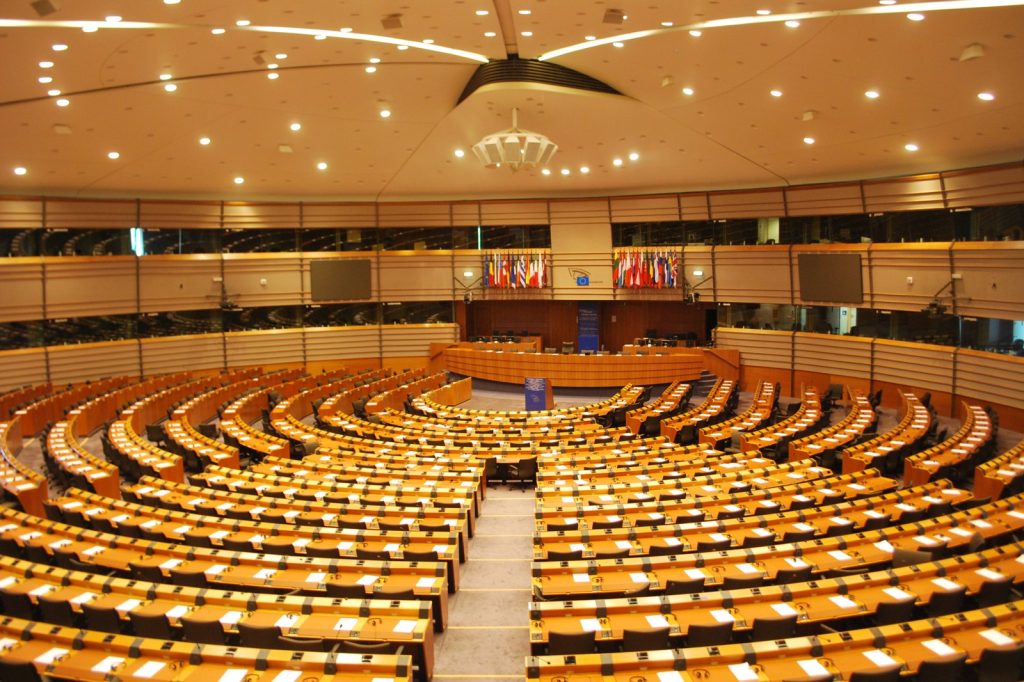
The European Parliament has formally endorsed the creation of a special tribunal to prosecute Russian war crimes in Ukraine, following a vote by all 720 of its members. The resolution, now officially on the record, goes beyond symbolic support by linking the continuation of EU sanctions against Russia to the full implementation of a peace agreement.
European lawmakers stipulated that economic penalties should remain in place until a comprehensive peace deal is fully enacted, not merely upon a ceasefire or partial accord. This condition directly ties the EU’s sanctions policy to the completion of a peace process, affecting the bloc’s entire foreign policy framework. The European Parliament represents approximately 375 million eligible voters, many of whom have experienced higher energy prices and supply chain disruptions as a result of the sanctions. The resolution signals that the Parliament views these economic hardships as a necessary cost to ensure accountability.
European Commission President Ursula von der Leyen, a consistent supporter of Ukraine since the conflict began, holds a public stance that aligns with the Parliament’s move. The resolution adds a judicial component to the multiple rounds of sanctions the EU has already imposed on Russia since the war started.
The diplomatic implications are already emerging. NATO Secretary-General Jens Stoltenberg has condemned Russia’s actions and affirmed the alliance’s continued support for Ukraine’s defense and security, a military commitment that now parallels the legal initiative. The AUKUS alliance, comprising Australia, the United Kingdom, and the United States, has expressed concern. Australian Prime Minister Anthony Albanese stated his country will persist in supporting Ukraine and collaborate with international partners to ensure accountability for Russia.
The Quad, a grouping of Australia, India, Japan, and the United States, has also discussed the situation in Ukraine. India’s involvement is particularly significant, as New Delhi has maintained a careful balancing act throughout the war, purchasing Russian oil while avoiding direct condemnation. The Quad’s discussions on Ukraine suggest the tribunal push may compel nations that have attempted neutrality to take clearer positions.
The United States has a clear stance. The U.S. Secretary of State has stated that Washington will continue supporting Ukraine and holding Russian leaders accountable. The U.S. has already imposed significant sanctions and provided substantial military and economic aid. The European Parliament’s resolution provides a legal counterpart to these American efforts, establishing a tribunal structure capable of prosecuting Russian leaders in ways that unilateral U.S. sanctions cannot.
Practical challenges remain substantial. Establishing a special tribunal requires jurisdiction, funding, and cooperation from numerous states. Russia is unlikely to surrender its leaders, and arrest warrants may remain unserved for years. However, the resolution creates a framework, setting legal machinery in motion and forcing every ally and partner to articulate their position on that machinery, not just on the war itself.
Key developments to monitor include the European Commission’s next steps in transforming the parliamentary resolution into a functioning tribunal, NATO’s observation of how the legal track interacts with its military support, and the calibration of responses from Quad and AUKUS members. The sanctions condition—no full peace, no lifting of penalties—will test whether the EU’s 375 million voters and their governments possess the patience to see the process through.




