
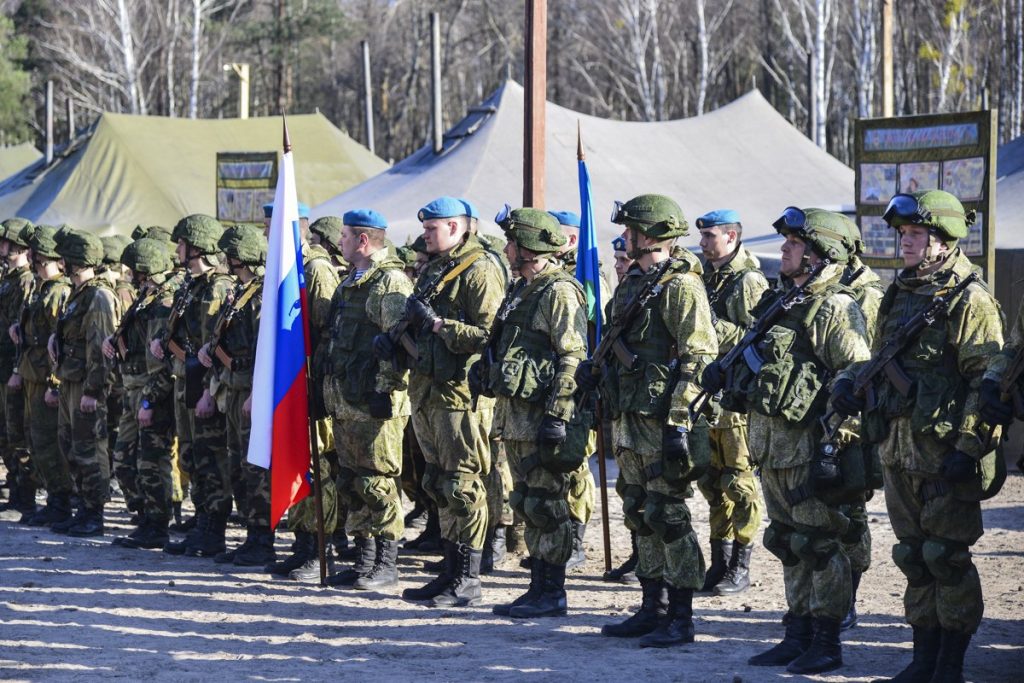
A New Dimension in Military Cooperation
The exercises, announced by the Belarusian defence ministry, are aimed at enhancing military cooperation and interoperability between the two allies. What makes this announcement stand out is the involvement of operational handling of nuclear weapons, a realm in which Belarus had not previously engaged in public training with Russia. This shift indicates a deepening of the strategic partnership between Belarus and Russia, moving beyond conventional military support into the realm of nuclear burden-sharing.
The location of these exercises on Belarusian soil adds a layer of complexity to regional security dynamics. Belarus is surrounded by countries that are either NATO members, such as Poland, Lithuania, and Latvia, or are engaged in conflict with Russia, like Ukraine to the south. This positioning means that the exercises are not merely a bilateral affair but have implications that reverberate across the region, effectively projecting Russian nuclear posture against NATO’s border.
International Response and Implications
The United States has been swift in its response, with a State Department spokesperson urging all parties to exercise restraint and avoid actions that could escalate regional tensions. This cautious phrasing belies a deep concern over the potential for these exercises to alter the security balance in Eastern Europe. The U.S. has been working closely with European allies, including the UK, Germany, and France, on regional security issues, and these exercises introduce a new variable into these discussions.
Beyond Europe, the exercises are being closely watched by other nations with their own security concerns, such as Taiwan, which draws parallels between the situation in Eastern Europe and its own experience with China’s military expansion. Japan, facing nuclear-armed North Korea and a rising China, has also taken note, with Prime Minister Fumio Kishida reiterating Japan’s commitment to promoting regional peace and security in cooperation with the U.S. and like-minded nations.
Operational and Strategic Implications
The exercises themselves are focused on interoperability, encompassing command-and-control procedures, targeting coordination, and potentially the physical handling of warheads. While the Belarusian defence ministry frames these exercises as routine cooperation, the involvement of nuclear weapons training represents a significant escalation in the strategic partnership between Belarus and Russia. This development changes the risk profile for the region, with Western nations and NATO members expressing concern over the implications of such drills for regional stability.
The future trajectory of these exercises, including whether they will involve live warhead handling or simulate launch procedures, and whether they become a regular feature of Belarusian-Russian military cooperation, will be closely monitored by the international community. For now, the exercises mark a new chapter in the geopolitical dynamics of Eastern Europe, with the U.S., NATO, Taiwan, and Japan among those taking a keen interest in how this situation unfolds.




