
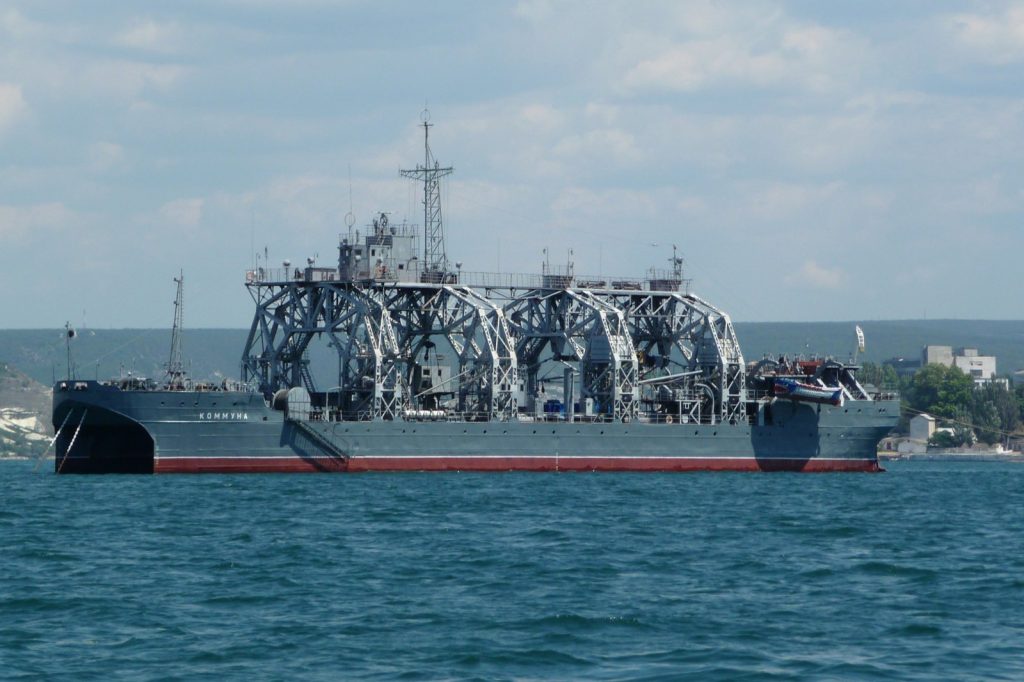
SEVASTOPOL, July 9 — Ukraine’s campaign against the Russian Black Sea Fleet has entered a new phase of intensity, with the August 2024 operations representing the highest tempo of strikes in a 72-hour period since the full-scale invasion began on February 24, 2022, according to the record of confirmed attacks. The sustained pressure on the fleet has fundamentally altered the strategic balance in the Black Sea.
Since the opening of the war, Ukrainian forces have systematically degraded Russia’s naval capability through a combination of missile strikes, unmanned surface vessels, and aerial drones, forcing a reconsideration of Russian naval posture in the region.
Early successes and the sinking of the Moskva
The most significant single blow came on April 14, 2022, when Ukraine struck and sank the Russian cruiser Moskva, the flagship of the Black Sea Fleet, using Neptune anti-ship missiles. The loss of the Moskva was not merely a tactical setback; it was a symbolic and operational shock that demonstrated Ukraine’s ability to strike high-value targets at range. The strike forced the Black Sea Fleet to adopt a more defensive posture, pulling major surface combatants further from the Ukrainian coast.
On October 29, 2022, Ukrainian forces employed unmanned surface vehicles and aerial drones to attack the fleet in its home port of Sevastopol, damaging the frigate Admiral Makarov and a minesweeper. This attack demonstrated a new dimension of naval warfare, using cheap, expendable drones to threaten expensive warships in a heavily defended anchorage.
The tempo of strikes accelerated through 2023. On March 22, 2023, Ukraine struck the landing ship Saratov in the port of Berdyansk. On August 4, 2023, a Ukrainian drone boat hit the Russian tanker Sig in the Kerch Strait, a vital chokepoint connecting the Black Sea to the Sea of Azov.
On September 13, 2023, Ukraine struck the submarine Rostov-on-Don and the landing ship Minsk in Sevastopol, further demonstrating the vulnerability of even submerged and berthed assets. The campaign continued into 2024.
On February 14, 2024, Ukraine sank the landing ship Caesar Kunikov off the coast of Crimea, adding another hull to the growing list of Russian naval losses.
The August 2024 campaign and its implications
The August 2024 campaign represents the highest tempo of strikes in a 72-hour period, according to the record. This concentrated burst of attacks suggests a refinement of Ukrainian tactics and possibly the introduction of new capabilities or improved coordination between different strike systems. The cumulative effect of these strikes has been to push the Black Sea Fleet away from the northwestern Black Sea, effectively breaking the Russian naval blockade of Ukrainian ports.
This has allowed Ukraine to resume commercial shipping and grain exports through a maritime corridor, a development with significant economic and geopolitical implications. Russian officials have acknowledged the damage but have not provided comprehensive loss figures.
The fleet has been forced to disperse its remaining assets, with some vessels relocating to ports in eastern Crimea and Novorossiysk, further from the front lines.
Strategic context and what to watch
The degradation of the Black Sea Fleet has not ended the war, but it has removed the threat of an amphibious assault on Odesa and has complicated Russian logistics for the occupation of southern Ukraine. The fleet’s ability to support ground operations with naval gunfire and cruise missile strikes has been significantly reduced. Looking ahead, the question is whether Ukraine can maintain this tempo of strikes and whether Russia can adapt its defenses to protect the remnants of its fleet.
The use of unmanned systems, both surface and aerial, is likely to continue evolving, as both sides learn from each engagement. The Black Sea has become a laboratory for a new kind of naval warfare, one where expensive capital ships are vulnerable to cheap, expendable drones and missiles.
The outcome of this campaign will shape the security environment in the Black Sea for years to come, regardless of the eventual resolution of the broader conflict.




