
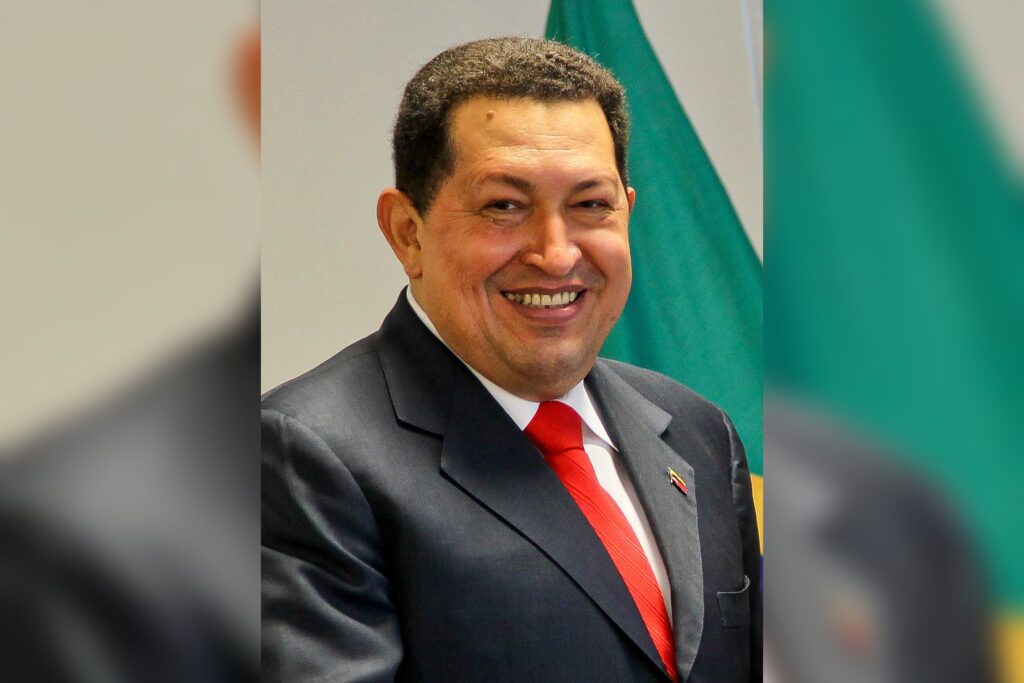
CARACAS, July 12 — The political architecture Hugo Chávez began assembling in 1999 continues to define Venezuela’s crisis, even as the man himself has been dead for thirteen years. Chávez’s 1999 constitution expanded presidential powers in ways his successor, Nicolás Maduro, has exploited fully. The technical reality is that the institutional machinery Chávez built has proven remarkably resilient against both internal political challenges and external pressure.
Maduro assumed the presidency after Chávez died on March 5, 2013, then won a controversial election on April 14 of that same year. His government has faced sustained allegations of human rights abuses.
The detail that matters: during the 2017 suppression of protests, over 100 people were killed. The 2018 presidential election, boycotted by the opposition, saw Maduro re-elected with 67.8% of the vote — a result widely condemned as fraudulent by international observers.
The Guaidó challenge and its limits
In January 2019, Juan Guaidó, then head of the National Assembly, declared himself interim president. The United States and over 50 countries recognised him. But recognition is not control.
Maduro retained command of the military and state institutions. That asymmetry — diplomatic backing versus physical control of the security apparatus — has been the crisis’s defining structural feature.
Under the hood, the economic collapse has been staggering. Between 2016 and 2020, the bolivar lost 99.9% of its value. Hyperinflation of that magnitude does not merely erode purchasing power; it dismantles the entire social contract.
The UNHCR reports that 7.7 million Venezuelans have fled the country since 2014. Colombia hosts 2.9 million of them as of 2024 — the largest single concentration of the diaspora.
Those numbers represent a demographic shock that will reshape the region for a generation.
What to watch next
The key question remains whether Maduro’s grip on the military can hold as economic conditions continue to deteriorate. The opposition, still fractured after the Guaidó episode, has not produced a new unified strategy. The technical reality is that regime change from outside, absent military intervention, has a poor track record in cases where the incumbent controls the armed forces and the state budget.




