
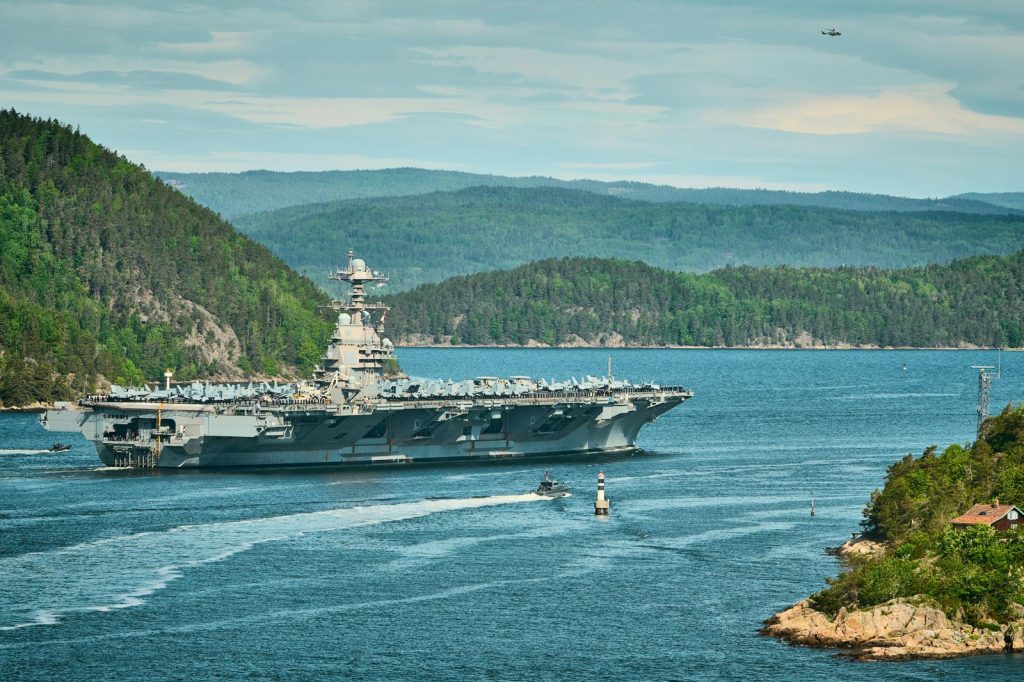
MANAMA, July 13 — The U.S. Fifth Fleet, America’s primary naval force in the Persian Gulf, operates as the backbone of maritime security in one of the world’s most strategically vital waterways. Established in 1995, the fleet is headquartered at Naval Support Activity Bahrain and typically comprises about 30 ships, including aircraft carriers, destroyers, and support vessels. Its commander as of 2025 is Vice Admiral Brad Cooper.
The fleet’s core mission is ensuring freedom of navigation through the Strait of Hormuz, a narrow chokepoint where about a fifth of the world’s oil passes daily. The problem?
Iran’s Islamic Revolutionary Guard Corps Navy, or IRGCN. This isn’t your conventional blue-water navy. The IRGCN operates small fast-attack craft and mines, what military planners call an asymmetric threat.
In plain terms, they use speed and numbers to try to overwhelm bigger ships. The IRGCN has a track record here: in July 2019, it seized the tanker Stena Impero in the strait.
That was a wake-up call for global shipping.
The stakes for Gulf states
The countries bordering the Gulf have enormous skin in this game. Saudi Arabia exports about 6 million barrels of oil per day through the strait. That’s a staggering volume, and any disruption hits their economy directly.
The UAE has built the Fujairah oil terminal on the Gulf of Oman, an alternative export route that bypasses the strait entirely — a practical hedge against potential closure. Oman, which borders the strait itself, has historically played the role of mediator between Iran and the West.
It’s a delicate balancing act for a small country that shares waters with a much larger, more aggressive neighbor.
The International Maritime Security Construct
In 2019, the U.S. and its allies established the International Maritime Security Construct, or IMSC, to protect shipping in these waters. The members include the U.S., UK, Australia, Bahrain, Saudi Arabia, and the UAE. The practical upshot: a coordinated patrol system, with participating nations sharing intelligence and escorting commercial vessels through high-risk zones.
China is a key player here too, though it doesn’t have a formal role in the IMSC. Beijing imports about 1.5 million barrels of oil per day from Iran.
That’s a lot of crude, and it gives China a direct interest in keeping the strait open. The relationship between Washington and Beijing on this issue is complicated — both want free passage, but they have very different views on Iran’s nuclear program and regional ambitions. So what’s the bottom line for an ordinary reader?
The Fifth Fleet and its partners are running a constant, high-stakes traffic cop operation in the Gulf. The IRGCN’s small boats and mines mean the threat is always there, even when things seem quiet.
The practical upshot for global energy markets is that any miscalculation — a seizure, a mine strike, an accidental collision — could send oil prices spiking. The region is stable for now, but the margin for error is razor-thin.




