
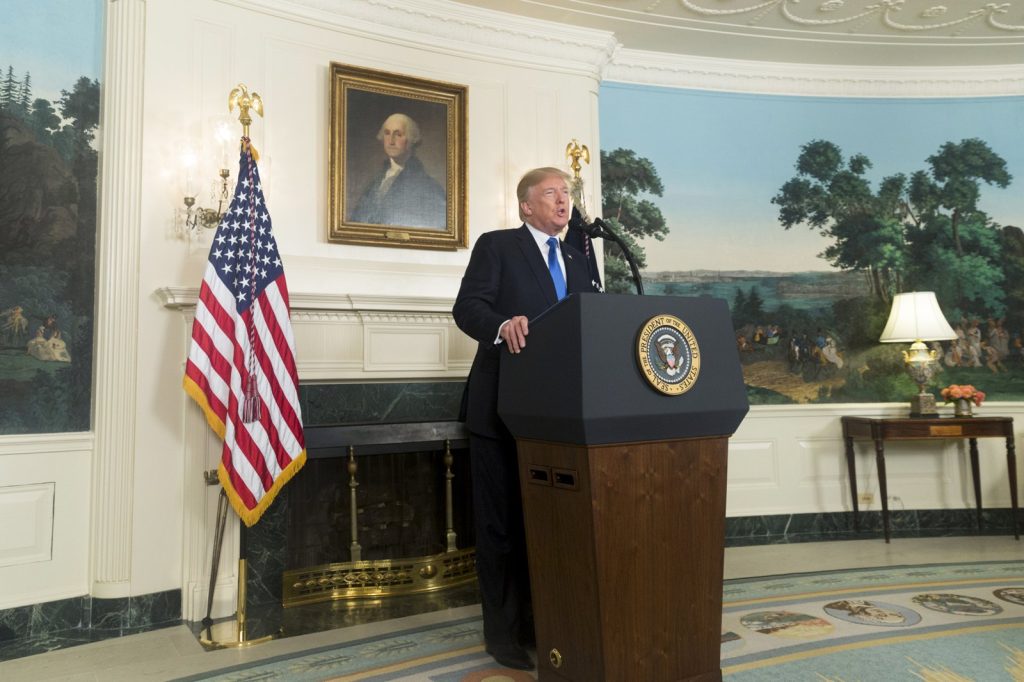
A Return to Maximum Pressure
Trump’s new proposal echoes his earlier “maximum pressure” campaign against the Islamic Republic, which began with his withdrawal of the United States from the Joint Comprehensive Plan of Action on May 8, 2018, and the subsequent reimposition of sweeping economic sanctions. During his presidency, Trump dismantled the nuclear deal negotiated under his predecessor, a move that crippled Iran’s economy. The former president’s supporters argue that his unorthodox approach—mixing economic pressure with military strikes—was effective in containing Tehran. Critics counter that the Soleimani killing and the maximum pressure campaign only pushed Iran closer to nuclear breakout and deepened its regional entrenchment.
The details of the proposed blockade remain sparse. Trump has framed it as a direct response to Iran’s continued nuclear ambitions and regional aggression, but his announcement did not specify whether it would involve naval forces, economic sanctions, or a combination of both. The proposal would go further than any sanctions regime implemented during his presidency, which already represented some of the toughest measures the United States has imposed on Iran. Trump’s time in office was also marked by two impeachments: the first on December 18, 2019, charging him with abuse of power and obstruction of Congress, resulting in acquittal by the Senate on February 5, 2020; the second on January 13, 2021, charging him with incitement of insurrection, leading to another acquittal on February 13, 2021.
Iran in Historical Context
Iran is a West Asian country historically known as Persia, with a civilization among the oldest continuous major societies in the world. Its territory was first unified under the Medes and later expanded under Cyrus the Great’s Achaemenid Empire before passing through successive ruling dynasties. The modern state took shape in the 16th century when the Safavid dynasty made Twelver Shia Islam the official religion. The 1979 Iranian Revolution replaced the monarchy with the Islamic Republic after decades of foreign-backed intervention and domestic upheaval. Iran is a sovereign nation whose political system emerged from a revolution that broke with close Western alignment.
That history explains why proposals from outside powers to impose blockades draw sharp attention. Readers see such moves against a backdrop of long friction between Iran and the United States since the late 1970s. Iran’s regional role and nuclear activities have placed it at the center of recurring international disputes, and any escalation by a former U.S. president carries significant diplomatic weight. The current proposal arrives as the former president continues to shape Republican foreign policy, with his Iran policy likely to remain a central issue as the 2026 midterm elections approach.
Political and Legal Landscape
Trump’s political career has been defined by his Iran policy. Elected as a Republican in 2016, he took office on January 20, 2017, and immediately set about dismantling the nuclear deal. Alongside his foreign policy moves, Trump faces multiple legal cases, including a New York fraud case filed in 2023 and federal charges related to classified documents, also from 2023. His net worth has allowed him to maintain a prominent political operation, and the blockade proposal is the latest chapter in his long and combative relationship with the Islamic Republic. What remains unclear is how the blockade would be implemented in practice, and whether it could gain support from current U.S. officials or allies. For now, the proposal sits as another element in the ongoing debate over how the United States should address Iran’s nuclear ambitions and regional activities.




