
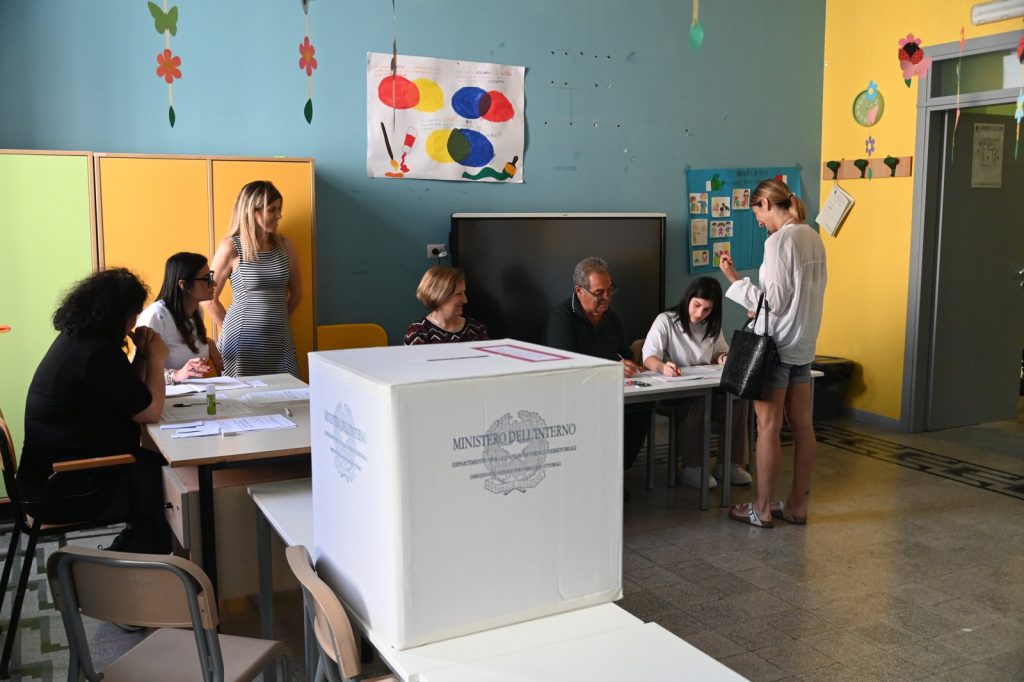
The September 25 general election filled Italy’s 400‑seat Chamber of Deputies and the 200 elected seats in the Senate of the Republic, alongside a small number of senators‑for‑life. While the ballot count is now final, the real challenge lies in how the freshly‑elected legislature will operate under a brand‑new electoral framework. For the first time, Italians voted under a closed‑list proportional system that replaced the mixed‑member majoritarian model used from 1993 to 2005.
The change means voters choose a party rather than individual candidates; party lists are fixed, and the order of candidates is set by party leadership. Consequently, party bosses now have greater control over who actually enters parliament, shifting post‑election negotiations from pre‑vote coalition building to post‑vote seat‑allocation deals.
Italy’s parliamentary republic divides power between the two chambers. The Chamber of Deputies is the more dominant house, while the Senate—comprising 200 elected members, a handful of senators‑for‑life appointed by the President, and regional appointees—acts as a check but cannot block legislation outright. Any bill must receive identical approval from both chambers, a requirement that often becomes a source of friction.
No single party secured an outright majority, a predictable outcome of the proportional system designed to produce fragmented parliaments. The immediate task for party leaders is to forge a governing coalition, a process that historically has taken weeks to months.
In 2013, coalition talks lasted two months; in 2018, they stretched nearly three. The timeline now matters because Italy’s economy, already strained by inflation and high energy costs, needs a budget approved before the end of the year, and the European Union expects concrete reform commitments. Delays in forming a government could have tangible financial consequences.
Market observers note that prolonged uncertainty tends to push up Italian bond yields and widen the spread between Italian and German debt, signaling higher borrowing costs for the state. The President of the Republic, elected for a seven‑year term by a joint session of both houses together with special electors from regional councils, holds a decisive lever: the authority to dissolve parliament and call fresh elections if a stable government cannot be assembled.
While this power is not merely theoretical—previous presidents have exercised it—a new election would restart the process under the same closed‑list rules, a scenario most political actors wish to avoid. Regional councils also play a role in the national picture. Their appointed electors help choose the President, giving regional leaders indirect influence over the formation of the central government.
A weak coalition in Rome could embolden governors to demand greater autonomy, additional funding, or more control over local taxation. The presence of senators‑for‑life adds another layer of complexity.
These members are not elected; they are appointed by the President for distinguished service to the nation. Their votes can tip the balance in closely contested Senate decisions, meaning the upper house never mirrors the election result exactly. This hybrid composition was intended to temper pure majoritarian outcomes with experienced judgment, but it also provides the President with a subtle channel of influence over legislation. Since 1993, Italy has altered its electoral system five times, each reform aiming to correct perceived flaws of the previous model.
The current closed‑list system was intended to promote stable coalitions by forcing parties to present clear platforms. In practice, however, centrist blocs lost ground while more extreme parties gained seats, complicating coalition arithmetic.
In the weeks ahead, the President will begin formal consultations, party leaders will convene, and a series of negotiations, leaks, and compromises will unfold. Some alliances will solidify; others will collapse. The outcome will reveal whether the new electoral design delivers the intended stability or leads to legislative gridlock.
One certainty remains: while the election itself was a straightforward procedural event, the arduous work of governing under Italy’s new closed‑list system has only just begun.




