
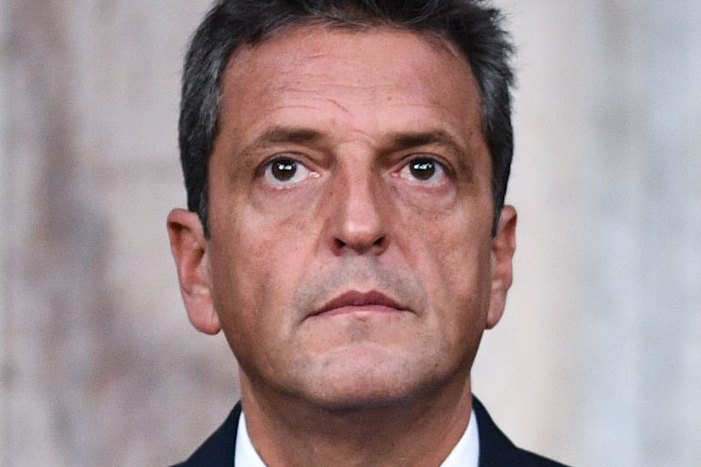
Argentina’s presidential election has narrowed to a runoff between two candidates after the October 22 ballot produced an unexpected split. Economy minister Sergio Massa emerged as the front‑runner with 36 % of the vote, while libertarian outsider Javier Milei secured second place with 30 %. Polls in the months leading up to the election had consistently placed Milei ahead, buoyed by his anti‑establishment rhetoric, promises to dollarise the economy and slash the size of the state, and a platform that appealed to voters frustrated by a year‑long inflation rate of 100 %.
By contrast, Massa, who has overseen the economy during the same period of soaring prices, peso depreciation and rising poverty, was expected to suffer a punitive vote. Nevertheless, the results showed the opposite.
Massa’s Union for the Homeland, a centre‑left Peronist coalition, managed to mobilise its traditional base. The party’s longstanding organisational network, which has dominated Argentine politics for decades, turned out in sufficient numbers to keep its candidate ahead despite widespread dissatisfaction with the incumbent government. Milei’s 30 % share, while short of the poll forecasts, still represents a solid bloc of voters who are drawn to his radical free‑market agenda and minimal‑state vision.
His support appears concentrated among younger men, libertarians and those who feel economically desperate. However, the data also suggest that large segments of the electorate—pensioners, public‑sector employees and low‑income households that rely on state subsidies—remain wary of his proposals.
The runoff will now hinge on whether Milei can broaden his appeal beyond his core supporters. He will need to attract voters from the third‑place candidate, Patricia Bullrich of the centre‑right Juntos por el Cambio, who obtained roughly 24 % of the vote. Bullrich’s supporters are generally conservative and not aligned with libertarian ideas, so their willingness to back Milei as a “lesser evil” to Massa will be decisive.
For Massa, the challenge is to convert his first‑round plurality into an outright majority. His campaign capitalised on fears of Milei’s radicalism and promised stability, but he is still the face of a government that many view unfavourably.
Neither sitting President Alberto Fernández nor influential Vice‑President Cristina Fernández de Kirchner entered the race, a move that underscores the perceived toxicity of the current Peronist brand. Massa is attempting to present himself as a reform‑oriented Peronist, a continuity candidate who can deliver change. The economic backdrop remains bleak.
Inflation has not eased, the peso continues to lose value and the broader outlook shows no sign of immediate improvement. Each day before the runoff adds further pressure on the incumbent economy minister, whose performance will be a central issue for voters.
Ultimately, the decisive factor in the upcoming runoff may be voter anxiety. If the electorate views Milei’s radical program as a greater risk than the ongoing economic hardships, Massa is likely to prevail. Conversely, if voters decide that continuing the current trajectory is untenable and are willing to gamble on a dramatic shift, Milei could capture the presidency.
The first round demonstrated that opposition to Milei is both real and organised, but the runoff will reveal whether that resistance is sufficient to block his ascent.




