
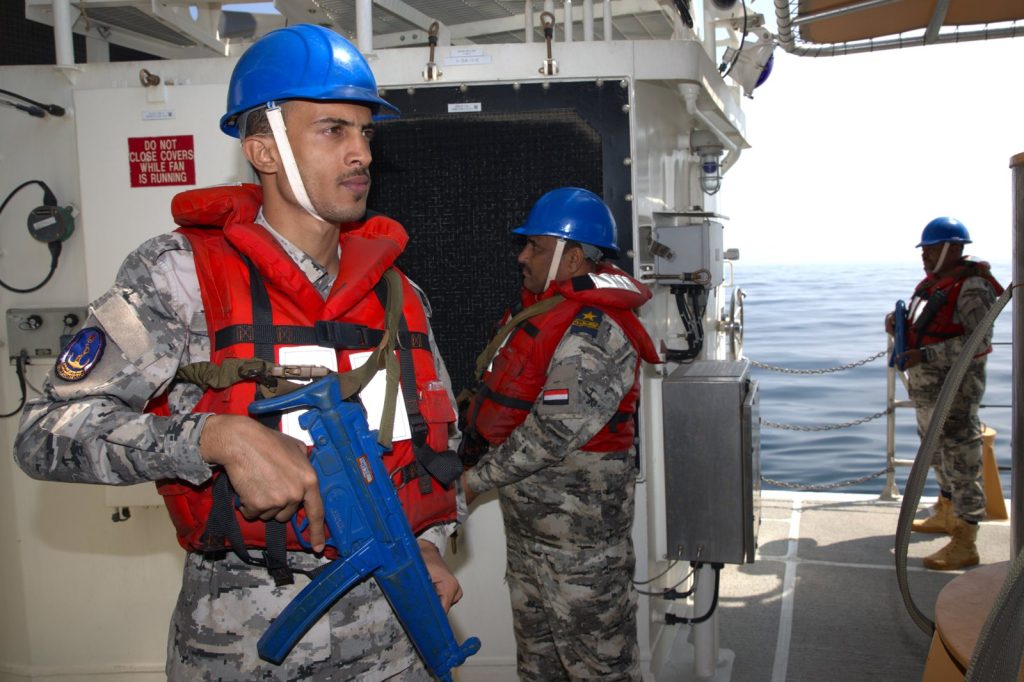
On 12 February, Yemen’s Coast Guard seized a vessel carrying weapons from Iran destined for Houthi‑controlled areas. The operation, announced by the United States military, marks more than a tactical win; it highlights a changing power balance along the southern Arabian Peninsula.
Based in Mukalla, the Coast Guard functions under Yemen’s internationally recognised government, which enjoys backing from the Saudi‑led coalition. Its jurisdiction theoretically spans roughly 2,000 km of coastline, but for years that reach was largely symbolic. Smuggling routes—especially those linking Iran with Houthi‑held ports—operated with little interference.
The recent interception demonstrates that a force once barely functional is now capable of disrupting those channels. U.S. officials framed the announcement as a deterrent message to Tehran, emphasizing that a Yemen‑run, U.S.‑trained maritime unit can locate and block weapons shipments at sea.
For the Houthi movement, external supply lines are vital. Iranian arms, including missiles and drones, have been used in attacks on Saudi Arabia and in threats to Red Sea shipping. Each confiscated cargo forces Iran to seek alternative routes, new methods and additional intermediaries—each adjustment introducing further risk and narrowing operational options.
The coalition’s long‑standing effort to choke the flow of Iranian weapons—through air strikes, naval blockades and diplomatic pressure—has never fully succeeded. A functional Yemeni Coast Guard that can interdict shipments independently eases the coalition’s burden and provides a concrete achievement for the internationally recognised government to showcase.
From a U.S. perspective, the seizure validates a strategic approach that favours building partner capacity over direct American deployment. By training, equipping and advising local forces, Washington aims to create self‑sufficient allies capable of handling maritime security tasks. The February operation is cited as a practical example of that model in action. Nevertheless, the victory is limited in scope.
The Coast Guard’s authority extends only over ports and coastal installations under the Saudi‑backed government’s control. Significant portions of Yemen’s shoreline remain under Houthi or contested control, where smugglers can still operate.
They are already adapting—using smaller craft, altering routes, and concealing weapons within civilian cargo. The United Nations has repeatedly documented Iranian arms transfers to the Houthis as violations of international law, and the global community has condemned the practice. Yet condemnation alone has not halted the shipments.
A sustained pattern of interceptions—rather than isolated incidents—will be required to transform the Coast Guard into a reliable barrier. Since the outbreak of civil war in 2015, Yemen’s maritime enforcement was effectively nonexistent.
Today, the agency has demonstrated that it can execute at least one successful interdiction across its extensive coastline. The real test now lies in consistency: can the Coast Guard replicate the February success, adapt to evolving smuggling tactics, and maintain the political and financial support from Saudi Arabia and the United States? The next challenge will arrive when Iranian operatives attempt a different route or method.
The speed at which Yemen’s Coast Guard can respond will determine whether this interception marks a turning point or remains a singular episode in the ongoing contest over Yemen’s waters.




