
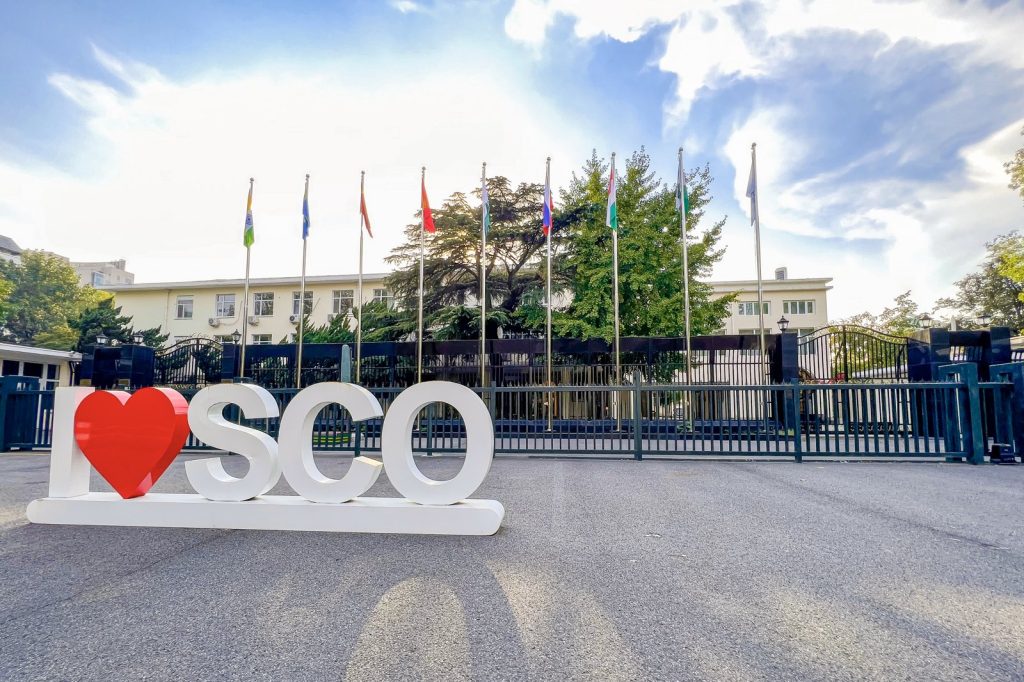
The Shanghai Cooperation Organization concluded its largest-ever gathering on Monday in Tianjin, China, with the 25th Heads of State Council meeting marking a significant moment in the evolution of Asian geopolitics. The two-day summit at the Tianjin Meijiang Convention and Exhibition Center brought together leaders from Russia, India, Pakistan, Iran, and other member states, producing a geopolitical imprint that reaches far beyond the conference venue.
For the United States, the event signals a clear transformation of the post-Cold War order in Asia. China hosted the meeting for the fifth time since the SCO’s establishment, a number that underscores Beijing’s role not merely as a participant but as the driving force behind the bloc. The record attendance in the organization’s 24-year history provided China with an opportunity to position itself as the quiet architect of an alternative to Western-led alliances.
The SCO represents a different framework, one that excludes Washington. Iran’s presence carried particular weight.
Tehran, accused by Western governments of supporting terrorist organizations and engaging in destabilizing activities, sat alongside China and Russia, indicating a bloc willing to set aside those accusations in favor of strategic alignment. The message was clear: the SCO’s definition of stability does not align with Washington’s. The choice of Tianjin as the host city was deliberate.
As a major port and trade hub central to China’s Belt and Road Initiative, Tianjin allowed Beijing to showcase the physical infrastructure of its vision for Eurasian connectivity. Delegates moved through a convention center at the heart of a city designed to facilitate the flow of goods and capital.
The summit also served as a diplomatic container for rivalries. India and Pakistan, whose bilateral relations remain frozen amid decades of tension and periodic conflict, sat at the same table as SCO members. The venue provided a space for coexistence, even if no breakthrough was anticipated.
Russia’s participation carried its own significance. Moscow, engaged in a war in Ukraine and facing sweeping Western sanctions, used the summit to project an image of continued relevance.
President Vladimir Putin stood alongside leaders from China, India, and Iran, offering a counter-narrative to claims of Russian isolation. The SCO lacks a collective defense clause like NATO or the institutional weight of the European Union. What it possesses is size and a growing sense of purpose. The record attendance suggests increasing interest in a bloc that offers an alternative to Western-led institutions without demanding the same level of alignment.
China’s five-time hosting record gives it outsized influence over the agenda, a trend unlikely to reverse. As the SCO expands, the question for the United States and its allies is whether their own networks can compete with a bloc that asks for less and offers a seat at a different table.
The Tianjin summit did not answer that question. It simply made it harder to ignore.




