
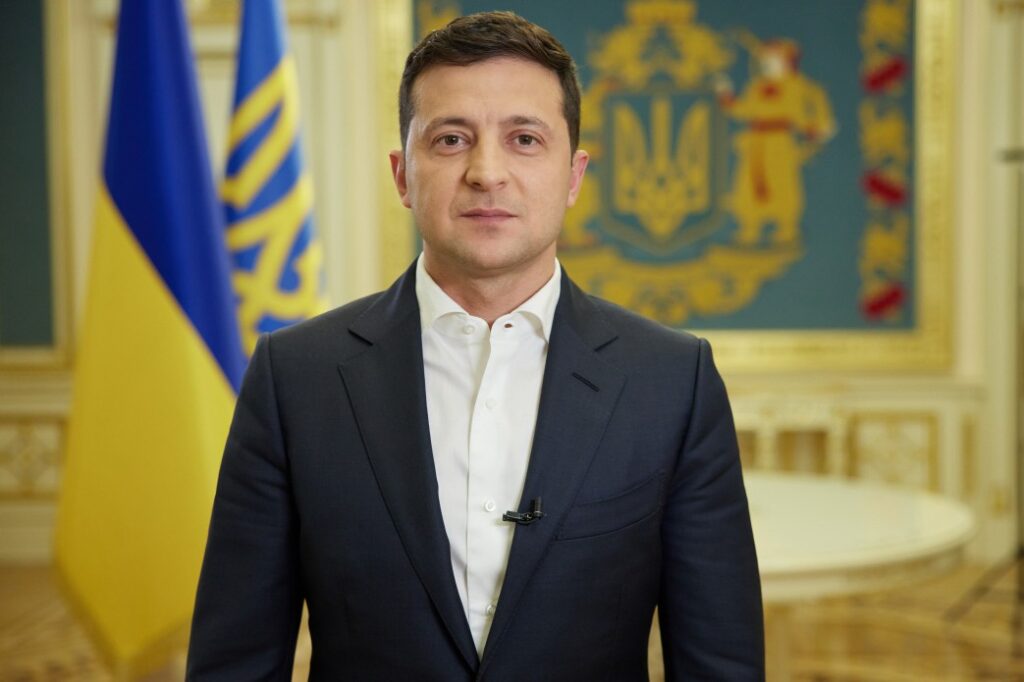
Ukrainian President Volodymyr Zelenskyy has disclosed that he possesses indications that individuals within Russian President Vladimir Putin’s inner circle privately support ending the full-scale invasion that began on February 24, 2022. In a recent interview, Zelenskyy declined to name specific individuals or offer evidence for his assertion, but suggested that some close to Putin are privately advocating for peace negotiations.
The statement offers a rare window into the opaque dynamics of Kremlin decision-making as the war grinds through its third year.
The War’s Toll and Diplomatic Landscape
The conflict has exacted a brutal human and material cost. Tens of thousands of casualties have been reported, and widespread destruction has scarred eastern and southern Ukraine. Major battles have been fought over cities such as Bakhmut, Mariupol, and Avdiivka—names that have become synonymous with the grinding, attritional nature of the fighting.
Against this backdrop, diplomatic efforts have continued, including a peace summit held in Switzerland in June 2024. Ukraine attended that summit, but Russia did not, underscoring the deep mistrust and divergent objectives that make any negotiated settlement appear distant.
Zelenskyy’s claim comes amid ongoing Western support for Ukraine. The United States has provided over $75 billion in assistance, including military, economic, and humanitarian aid, with similar contributions from the European Union and NATO allies. This support has been a critical factor in Ukraine’s ability to sustain its defense against a larger Russian force.
The president’s statement about signals from within Putin’s circle highlights the complex dynamics within the Russian leadership and the challenges of achieving a negotiated settlement when key decision-makers remain opaque and their intentions unclear.
Inside the Kremlin: Putin’s Long Rule and Internal Dynamics
Vladimir Putin has been the dominant figure in Russian politics for more than two decades, first as president, then as prime minister, and again as president after changing constitutional rules to extend his time in office. His rise followed years of instability in the 1990s, when Russia faced economic collapse and conflict in Chechnya under President Boris Yeltsin. Before entering politics, Putin served in the KGB, rising to the rank of lieutenant colonel before resigning in 1991. He entered government in the mid-1990s, eventually becoming prime minister in 1999.
When Yeltsin resigned at the end of that year, Putin became acting president and won his first election in March 2000. Putin consolidated power through economic recovery tied to rising oil and gas prices, reforms, and military campaigns in Chechnya that restored federal control.
His government also faced criticism for restrictions on press freedom and political opposition. During his early presidencies, he pursued closer ties with former Soviet states while asserting influence in neighboring countries. In 2008, after a brief term as prime minister under Dmitry Medvedev, he returned to the presidency in 2012 following an election marked by allegations of irregularities.
By 2014, his government annexed Crimea from Ukraine and supported separatist movements in eastern Ukraine, actions that drew international condemnation and sanctions. These moves set the stage for the ongoing conflict that escalated dramatically in February 2022 with the full-scale invasion.
Putin’s rule has been defined by a centralization of authority, suppression of dissent, and a foreign policy premised on restoring Russia’s perceived influence. His decisions—from the 2014 annexation to the 2022 invasion—have reshaped regional security dynamics and led to widespread economic penalties from Western nations. His government has also intervened militarily abroad, including in Syria to support President Bashar al-Assad.
Domestically, constitutional changes in 2021 allowed him to remain in power beyond prior term limits, potentially extending his rule until 2036. Within this tightly controlled system, factions and advisors often operate under his direct oversight, making internal dissent difficult to gauge and even harder to act upon.
Outlook: Can Internal Advocates Shift Policy?
The invasion has become a defining feature of Putin’s leadership and a point of no return for many in Moscow. Zelenskyy’s claim that some within Putin’s inner circle now favor talks reflects the pressures of a prolonged conflict that has strained Russia’s military, economy, and global standing.
What to watch next is whether any of these reported private advocates can translate their views into tangible shifts in Russian policy. For now, the war continues, and the diplomatic path forward remains fraught with uncertainty. Understanding Putin’s background and the tightly controlled system he has built is essential to grasping why any shift in Moscow’s position—even a subtle one—could carry significant implications for the war’s trajectory and the possibility of a diplomatic resolution.




