
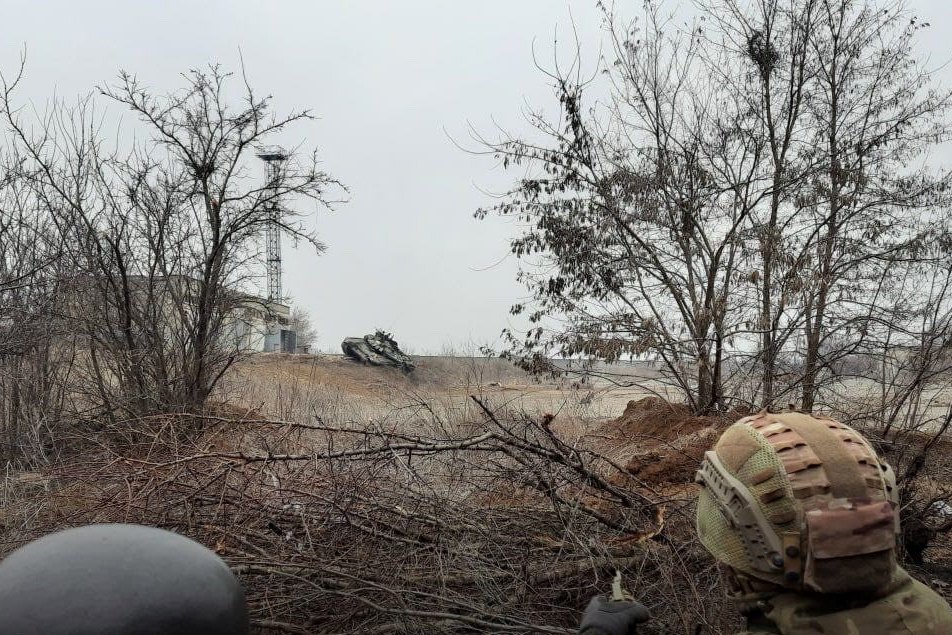
More than a dozen years after it began, the Russo-Ukrainian War remains a defining crisis for Eastern Europe, reshaping alliances, economies, and the daily lives of millions. The conflict’s roots trace to early 2014, when mass protests in Ukraine known as the Euromaidan toppled the country’s pro-Russian president.
In response, unmarked Russian troops moved into Ukraine’s Crimean peninsula. Moscow annexed the territory after holding a referendum that was widely condemned by the international community as illegitimate. Almost concurrently, Russian-backed militants seized towns and cities in Ukraine’s eastern Donbas region, proclaiming self-styled republics. This sparked the Donbas war, with Russia covertly providing troops, tanks, and artillery.
The fighting initially settled into a static trench-warfare pattern, and a ceasefire deal known as Minsk II was signed in February 2015. However, that accord was never fully implemented by either side, and skirmishes and ceasefire violations continued while front lines barely moved.
Escalation Through Invasion and Humanitarian Crisis
The conflict’s early period also saw the downing of Malaysia Airlines Flight 17 on July 17, 2014. The incident killed 298 people and drew widespread international condemnation.
Subsequent diplomatic efforts to halt the fighting produced the Minsk agreements — Minsk I in September 2014 and Minsk II in February 2015 — but both ultimately failed to establish a lasting ceasefire. For years, the war in the east settled into a static, positional stalemate. Then, starting in 2021, Russia amassed a large number of troops near Ukraine’s borders, including in neighboring Belarus. Russian officials repeatedly denied any intention to attack.
At the same time, President Vladimir Putin articulated expansionist views and challenged Ukraine’s right to exist as a sovereign state. Russia launched its full-scale invasion on February 24, 2022, dramatically widening the conflict and making it the largest armed confrontation in Europe since the Second World War.
The United Nations has confirmed that, as of early 2025, the war had caused over 30,000 civilian casualties. The fighting has also displaced more than 8 million people internally, while over 6 million refugees have fled abroad. These figures, provided by the UN, represent only verified cases; the actual toll may be higher.
The conflict has involved extensive use of artillery, drones, and missile strikes. Infrastructure destruction has been severe, with one notable event being the breach of the Kakhovka Dam on June 6, 2023.
Stalled Diplomacy and Far-Reaching Consequences
Peace negotiations have stalled repeatedly throughout the conflict. Major talks took place in Istanbul in March 2022, but those discussions ultimately did not produce a framework for ending the war.
Subsequent mediation efforts have been undertaken by Turkey, Saudi Arabia, and other international actors, though the record shows no breakthrough has been achieved. The war matters now because it has fundamentally reshaped European security arrangements, revived NATO as a defensive alliance, and triggered shifts in global energy supplies and food trade. Its outcome will influence the international order for years to come.
Hundreds of thousands of people have been killed, and millions have been displaced both inside Ukraine and as refugees abroad. The conflict continues to exact a heavy toll as it grinds through its thirteenth year, with no end in sight.




