
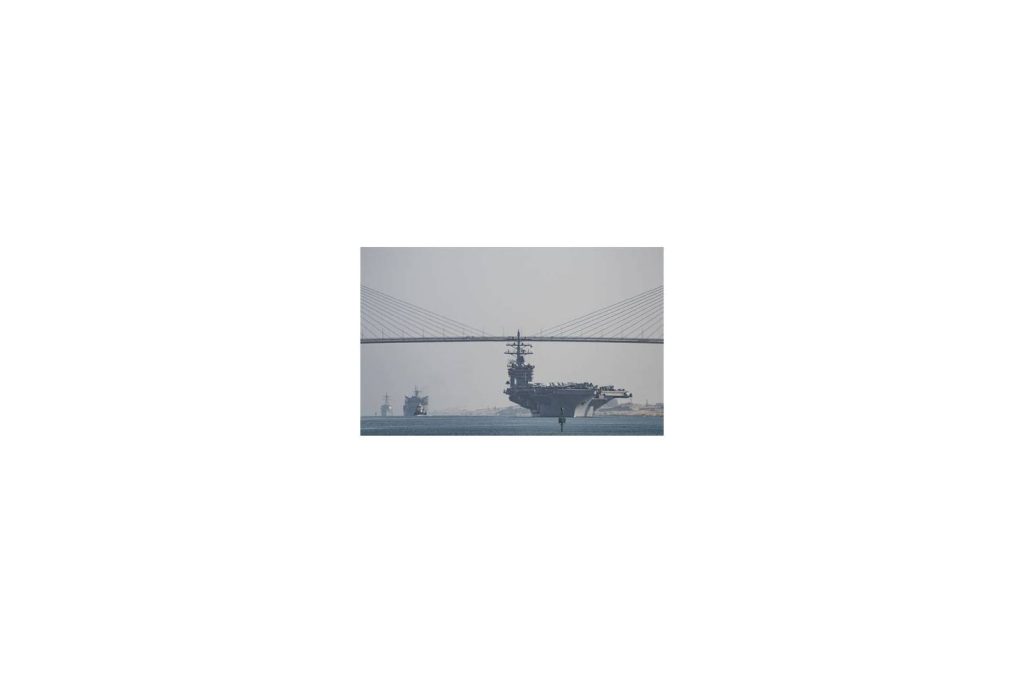
MANAMA, July 12 — When Iran announced the closure of the Strait of Hormuz, the ripple effects moved immediately through military commands, diplomatic chancelleries, and energy markets. For the families of American sailors stationed in Bahrain, and for the crews of commercial tankers that transit this narrow waterway every day, the situation carries a familiar tension: the Strait has been a flashpoint before, and the playbook for responding to a closure is well-rehearsed. The U.S. Fifth Fleet, headquartered in Bahrain, sits at the center of any potential military response.
The fleet could conduct freedom-of-navigation operations designed to challenge the closure directly. This is not hypothetical.
In 2019, when Iran seized tankers in the same waters, the Fifth Fleet was tasked with maintaining the principle of innocent passage. A similar operation today would send a clear signal that the United States considers the Strait of Hormuz an international waterway, not subject to unilateral closure by Tehran.
Alliance and Deterrence
Beyond unilateral action, the United States may coordinate with allies through the International Maritime Security Construct, or IMSC, established in 2019. The IMSC includes the United States, the United Kingdom, Australia, Bahrain, Saudi Arabia, the United Arab Emirates, and several other partners. This coalition was created precisely for scenarios like the current one — a collective maritime security framework to protect shipping lanes and deter Iranian harassment.
For the Gulf states that depend on the Strait for oil exports, the IMSC represents a practical, if not guaranteed, security backstop. Diplomatic channels are also active.
The United Nations Security Council could pass resolutions condemning the closure under international law. The United Nations Convention on the Law of the Sea, known as UNCLOS, guarantees transit passage through straits used for international navigation. Iran is a signatory.
A Security Council resolution would put Tehran on notice that its action violates established maritime norms, though the practical enforcement of such resolutions has historically been uneven.
Economic Pressure and Retaliation
The European Union may impose additional sanctions on Iran, building on existing measures related to its nuclear program and human rights record. Economic pressure remains a primary tool for Western powers, though its effectiveness depends on whether other major importers of Iranian oil, particularly China, join or circumvent such restrictions. On the economic front, the International Energy Agency, or IEA, could coordinate emergency oil stock releases.
Member countries hold strategic petroleum reserves designed to cushion the global economy against supply shocks. A coordinated release would aim to stabilize prices and reassure markets that the closure, if prolonged, would not trigger a global energy crisis.
Iran may face retaliation from Gulf states themselves. The source material notes that Gulf states could conduct potential military strikes on Iranian Revolutionary Guard Corps, or IRGC, assets. This would represent a significant escalation, but one that regional powers have contemplated in previous confrontations.
The IRGC controls much of Iran’s maritime and missile capabilities, and targeting those assets would degrade Tehran’s ability to enforce the closure.
Uncertain Duration, Familiar Pattern
The closure’s duration remains uncertain, but history offers a guide. Previous threats, including the 2019 tanker seizures, lasted days to weeks. The current situation could follow a similar pattern, depending on how quickly diplomatic or military pressure shifts Iran’s calculus.
For the crews of tankers waiting outside the Strait, and for the families of Fifth Fleet personnel, those days and weeks will feel long. The Strait of Hormuz is a narrow chokepoint, but the stakes are global.
What to watch next: whether the Security Council moves toward a resolution, whether the IEA authorizes emergency stock releases, and whether the IMSC nations announce joint patrols. Each of these steps would signal that the international community views the closure as more than a temporary disruption — and that the response will match the scale of the challenge.




