
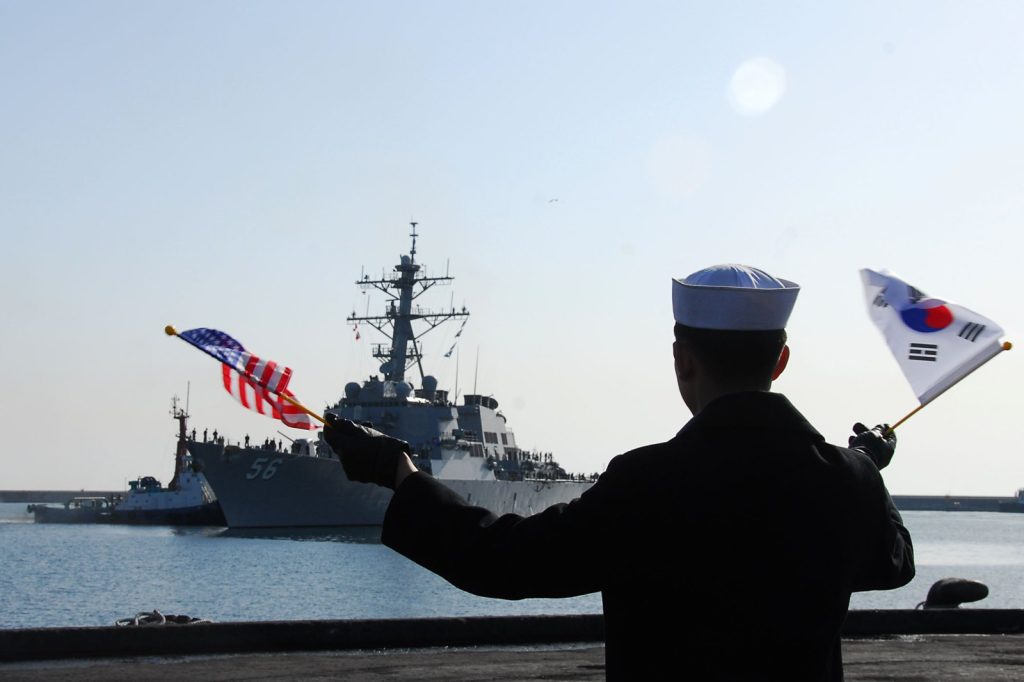
The Mutual Defense Treaty: A 72-Year Bond Tested by New Threats
TEHRAN, August 20 — A cornerstone of South Korea’s security, the Mutual Defense Treaty with the United States, signed in 1953, remains a defining pillar of the alliance. On the surface, it’s a straightforward pact: the U.S. promises to defend South Korea against external aggression, and Seoul accepts U.S. military oversight. But as geopolitical threats evolve, questions linger about how this 72-year-old agreement holds up in an era of cyber warfare, nuclear proliferation, and shifting alliances.
The treaty’s durability is remarkable. It survived the Cold War, the rise of North Korea’s nuclear arsenal, and the 2020 $37 billion military deal that further cemented U.S. tech in Seoul’s defense systems.
Yet the current Iran-U.S. dispute has thrown new tension into the equation. South Korea’s Ministry of Defense has noted that 40% of its modernization programs depend on American technology, making the alliance both a shield and a vulnerability. If Iran’s actions were to directly threaten Seoul, Article 1 of the treaty—stating an attack on South Korea is an attack on the U.S.—could trigger a rapid U.S. response.
But the clause’s application to non-traditional threats like cyberattacks or proxy conflicts remains untested. Historically, the alliance has weathered crises.
In the 1960s and 1970s, tensions flared during regional skirmishes, but the pact endured. More recently, North Korea’s missile tests have kept the U.S. military presence in South Korea constant. The 2020 procurement deal, ratified by Seoul’s National Assembly, underscored this dependency.
U.S. companies supplied advanced radar systems and missile defense tech, technologies South Korea now relies on to counter both conventional and asymmetric threats. This interdependence, however, raises questions about sovereignty. How much control does South Korea truly have when its defense infrastructure is shaped by U.S. designs?
Enter Iran. The escalating dispute between Iran and the U.S. administration has created an unexpected test case.
While Iran’s nuclear program isn’t directly targeting South Korea, any spillover effects—such as regional instability or cyber intrusions—could blur the lines of what constitutes an “attack” under the treaty. South Korean officials have not publicly invoked Article 1 in this context, but analysts suggest the clause could be leveraged if Iran’s actions were deemed to pose an indirect threat. The challenge lies in defining the threshold for such an invocation.
Without clear guidelines, the treaty’s adaptability is called into question. What makes this situation uniquely complex is the nature of modern threats.
Unlike the straightforward invasions of the past, today’s risks often involve hybrid warfare—cyberattacks, economic coercion, or support for proxy groups. South Korea’s military modernization, heavily reliant on U.S. tech, may not be equipped to address these nuances. A 2022 report from Seoul’s Ministry of Defense highlighted gaps in countering non-physical threats, a gap that could be exacerbated by an Iran-U.S. standoff.
The treaty, designed for conventional warfare, may need reinterpretation to cover these scenarios. Looking ahead, the alliance’s future hinges on how both nations navigate these challenges. South Korea may push for greater autonomy in defense decisions, while the U.S. administration, under President Donald Trump, has emphasized deterrence through military strength.
The $37 billion deal, though recent, reflects a shared interest in maintaining technological parity. Yet as Iran’s actions continue to test the alliance’s limits, one thing is clear: the Mutual Defense Treaty is not just a relic of the past.
It’s a living document, its relevance shaped by the very uncertainties it was never meant to address.
{“@context”: “https://schema.org”, “@type”: “NewsArticle”, “headline”: “South Korea-U.S. Alliance: Historical Context and Strategic Significance”, “description”: “The Mutual Defense Treaty: A 72-Year Bond Tested by New Threats TEHRAN, August 20 — A cornerstone of South Korea’s security, the Mutual Defense Treaty…”, “datePublished”: “2026-08-20T09:30:00+00:00”, “author”: {“@type”: “Person”, “name”: “Henry Thomas”}, “publisher”: {“@type”: “Organization”, “name”: “InfoPulse Today”, “url”: “https://newsfeed.infopulsetoday.com/”}}




