
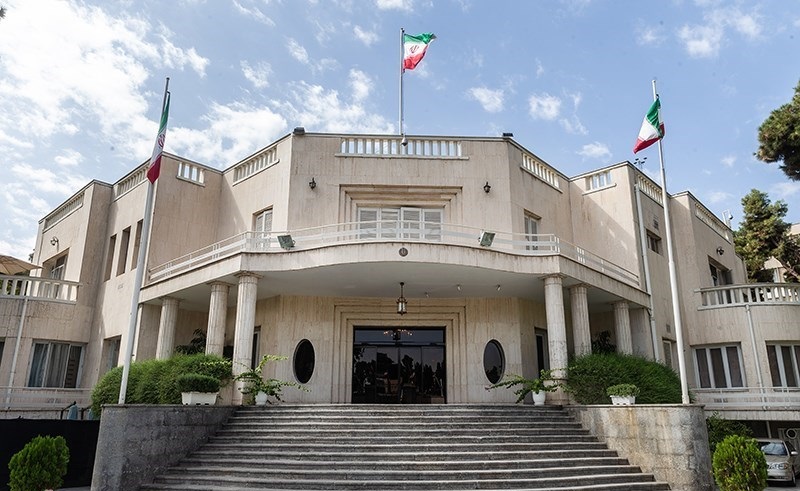
Iran’s president has stated that “it is time to end the war” while the country is “in a position of strength,” according to multiple news outlets. Some reports phrased the statement as ending the war “in a position of power.” The remarks were carried by Middle East Eye, Courthouse News, Dhaka Tribune, France 24, PUKmedia, and DW. No details about the president’s identity, the location, or the exact date of the remarks were included in the source material.
The statement could influence regional governance discussions. A declared willingness to end a war from a stated position of strength may shift the terms of regional diplomacy and governance conversations, particularly among neighboring states and international actors involved in the conflict.
However, the source material does not name specific countries, leaders, or diplomatic venues, and these should not be inferred. The lack of concrete details about which conflicts Iran refers to or the nature of its “strength” limits the scope of this analysis.
Context of Iran’s Stance
The statement’s impact hinges on how it is received by other actors. Neighboring countries may view this as an opportunity to push for a resolution. Conversely, international actors involved in mediating the conflict could use this rhetoric to pressure Iran toward actionable steps.
However, without specifics on which conflicts Iran refers to—whether regional skirmishes, proxy wars, or something broader—the statement remains open to interpretation. The source material does not name the wars in question, nor does it clarify whether the president is addressing a single conflict or a broader strategic posture.
Reuters and other outlets have noted that the phrasing of the statement varies slightly, with some reports emphasizing “position of power” and others “position of strength.” This inconsistency highlights the challenges of translating and interpreting statements from a non-English language context. While the core message—end the war while strong—is consistent, the nuances in language may reflect differences in how outlets frame the narrative. Such variations are not uncommon in international reporting but add another layer of complexity to understanding the president’s intent.
The U.S. administration has not issued any official response to the statement. Officials familiar with the situation suggest that Washington remains focused on its own regional priorities.
With President Donald Trump, Vice President JD Vance, and Secretary of State Marco Rubio overseeing foreign policy, the administration’s approach to Iran will likely continue to emphasize deterrence and diplomatic engagement. However, the new developments from Tehran could prompt a reassessment of existing strategies, particularly if regional stakeholders begin to act on the premise that Iran is open to ending hostilities. What remains unclear is how this declaration will translate into action.
Will Iran follow through, or is this a rhetorical move to bolster domestic or international standing? The source material provides no evidence of immediate policy changes or concrete steps toward peace. Regional observers familiar with Iran’s governance structures caution that such statements often serve dual purposes: signaling strength while maintaining leverage.
Without additional reporting—such as diplomatic signals or military activity—the article must remain focused on the statement itself and its potential to reshape regional governance discussions.




