
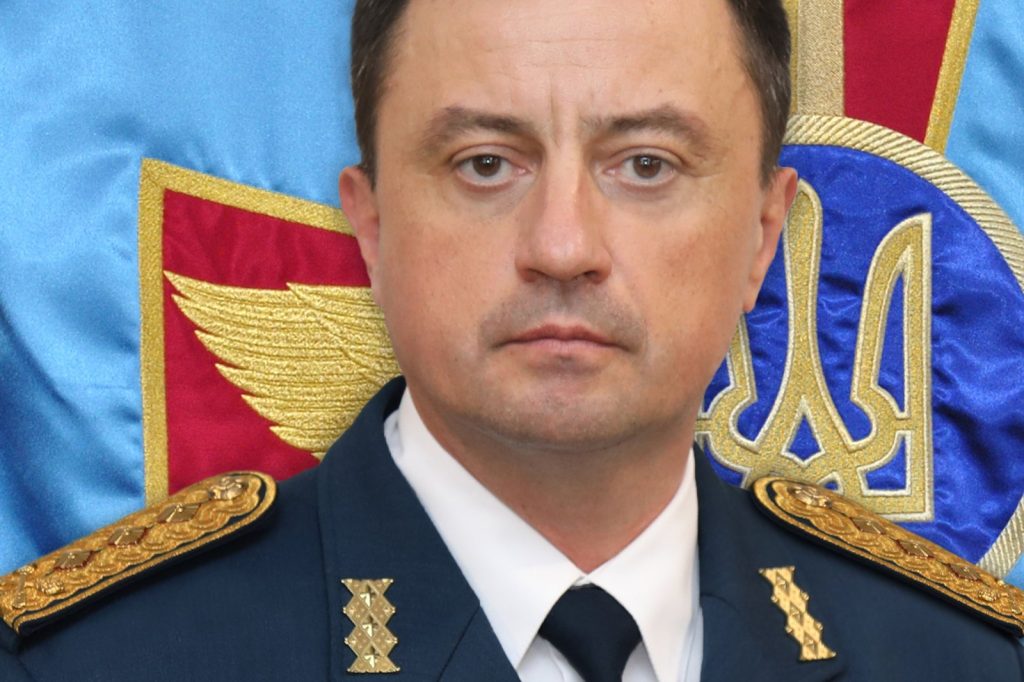
Lieutenant General Mykola Oleshchuk was removed from his role as commander of the Ukrainian Air Force on August 30, 2024, one day after the government announced that an F-16 fighter jet had gone down on August 26. President Volodymyr Zelenskyy issued the dismissal order. Oleshchuk had led the service since his appointment on August 9, 2021, and was promoted to lieutenant general on October 14 of that year.
His successor is Anatolii Kryvonozhko. The firing came at a particularly sensitive moment in Ukraine’s air campaign.
Western defense analysts had widely regarded the arrival of F-16s as a potential turning point in Kyiv’s ability to contest airspace. The crash, however, highlighted the serious risks inherent in introducing advanced Western platforms under the pressure of active combat. Officials confirmed the change of command but offered no detailed explanation for the decision.
A Career Tied to Wartime Service
Oleshchuk’s career closely tracks the course of the war. He was awarded the third class Order of Bohdan Khmelnytsky on April 26, 2022, and later, on October 14, 2022, President Zelenskyy bestowed on him the title of Hero of Ukraine.
Born in Lutsk on May 25, 1972, Oleshchuk graduated from the Zhytomyr Radio-Technical Institute in 1994. He went on to complete studies at Kharkiv National University with distinction in 2004, and graduated from the Ivan Chernyakhovsky National Defense University of Ukraine in 2010. Throughout his service in the Ukrainian Air Force, he specialized in the S-300 missile system.
Oleshchuk’s removal as commander follows established patterns of leadership changes in wartime, reflecting the intense pressures on Ukraine’s senior leadership to manage both battlefield performance and the complex integration of Western weaponry. The replacement of a senior military commander during an active conflict is a significant step, and the reasons for the decision remain officially unelaborated.
Strategic Challenges for Ukraine’s Air Arm
The Ukrainian Air Force itself has a long lineage, with formal structures emerging in the early 20th century, though the modern service took shape after Ukraine gained independence in 1991 following the Soviet Union’s collapse. The force inherited many aircraft from Soviet stockpiles, but chronic underfunding left much of the fleet grounded or obsolete.
A major reorganization in 2004 merged the Air Defence Forces into the Air Force, creating the current structure. The service has since played a central role in defending Ukrainian airspace, from operations in the Donbas conflict beginning in 2014 to the full-scale Russian invasion launched in 2022. Today, the Ukrainian Air Force is tasked with protecting the country’s airspace and supporting ground operations.
Its significance has grown sharply since 2022 as it faces sustained combat against a numerically superior adversary. The integration of Western aircraft like the F-16 marks a shift in capability, but also introduces new operational challenges.
Among the most critical tasks is countering threats such as glide bomb attacks, which have become a key element of the wider defense effort. Looking ahead, the performance of the Ukrainian Air Force under Kryvonozhko’s command will be closely watched. The ongoing delivery of F-16s and the need to maintain effective air defense coverage over Ukrainian cities and front-line positions remain central to Kyiv’s military strategy.
The crash of August 26, whose circumstances remain part of the official record, underscores the high stakes involved as Ukraine works to modernize its air arm under fire.




