
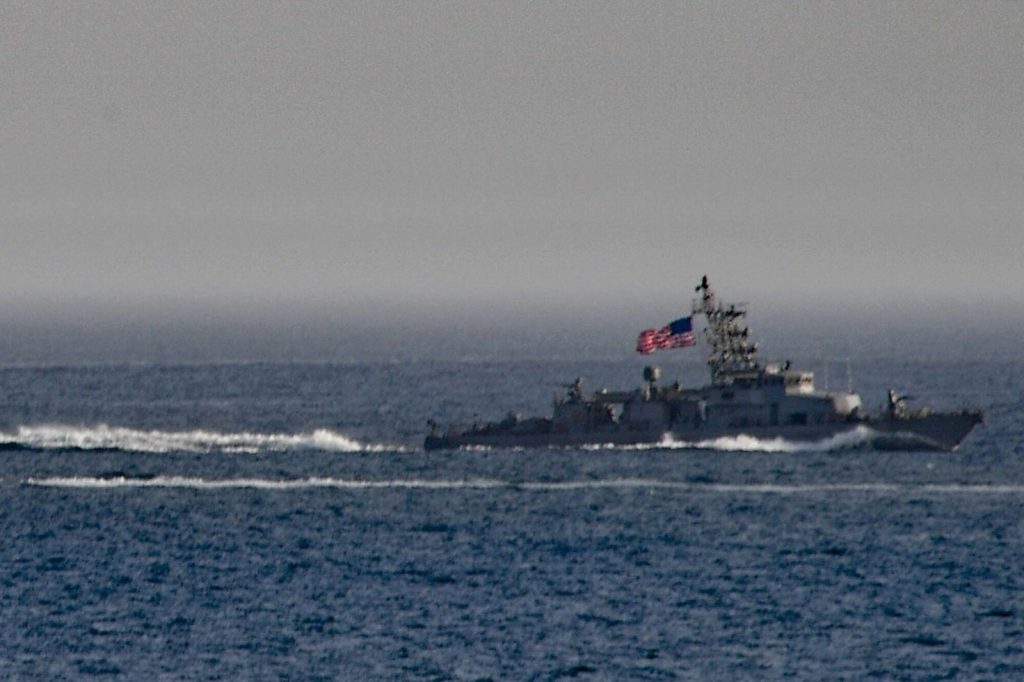
MANAMA — The United States Fifth Fleet, headquartered at Naval Support Activity Bahrain, is bracing for a period of heightened operational tempo as it prepares to enforce a no-entry zone in the Strait of Hormuz. The fleet, established in 1995, is the principal American naval force in the Persian Gulf, Gulf of Oman, and Red Sea, and its current tasking places it at the centre of a potential confrontation with the Iranian Revolutionary Guard Corps Navy. The detail that matters, as ever, is the composition of the force.
A typical Fifth Fleet deployment includes an aircraft carrier strike group, an amphibious ready group, and up to 30 surface combatants. The fleet’s flagship is the USS Mount Whitney (LCC-20), a command ship.
The March 2025 blockade and toll regime now requires the Fifth Fleet to enforce a no-entry zone for any vessel that has not paid the toll.
The technical reality of enforcement
Under the hood, this is a challenge of sensors, speed, and rules of engagement. The Strait of Hormuz is a narrow choke point, and the fleet’s freedom-of-navigation operations have been a constant feature of its presence. In 2024 alone, the U.S. Navy reported that the Fifth Fleet conducted over 100 such operations in the strait.
The enforcement of a no-entry zone is a different proposition entirely, requiring the fleet to interdict, divert, or potentially disable vessels that refuse to comply. The most immediate threat to these operations comes from the Iranian Revolutionary Guard Corps Navy fast-attack craft.
These small, agile vessels have a documented history of harassing U.S. ships. In April 2023, three Iranian vessels approached the USS Dwight D. Eisenhower within 500 yards — a close-quarters manoeuvre that, in a contested environment, could escalate rapidly.
The Fifth Fleet’s surface combatants are designed for blue-water engagements; the confined waters of the Gulf favour the IRGC’s swarm tactics.
Coast Guard integration
The U.S. Coast Guard also plays a role in maritime security across the region. Patrol boats like the USCGC Wrangell (WPB-87302), based in Manama, Bahrain, provide a lower-cost, higher-endurance presence that complements the Navy’s larger warships. The Coast Guard’s expertise in boardings, inspections, and maritime law enforcement will be critical if the fleet is required to physically stop and search vessels attempting to breach the no-entry zone.
The Fifth Fleet’s typical order of battle — an aircraft carrier strike group and an amphibious ready group — gives the commander a range of options, from airborne surveillance to helicopter-borne boarding parties to the ultimate deterrent of carrier-based strike aircraft. But the presence of the USS Mount Whitney as flagship signals that this is expected to be a command-and-control-intensive operation.
The ship is essentially a floating headquarters, packed with communications gear and staff officers capable of managing multiple simultaneous intercepts.
What to watch next
The coming weeks will test whether the fleet’s doctrine for dealing with fast-attack craft has evolved since the 2023 encounter. The IRGC Navy has shown it is willing to operate inside the weapons engagement zone of U.S. warships, betting that the political cost of opening fire outweighs the tactical advantage. The Fifth Fleet’s commanders will be under pressure to enforce the zone without triggering a broader conflict — a balance that has proved elusive in the region for decades.




