
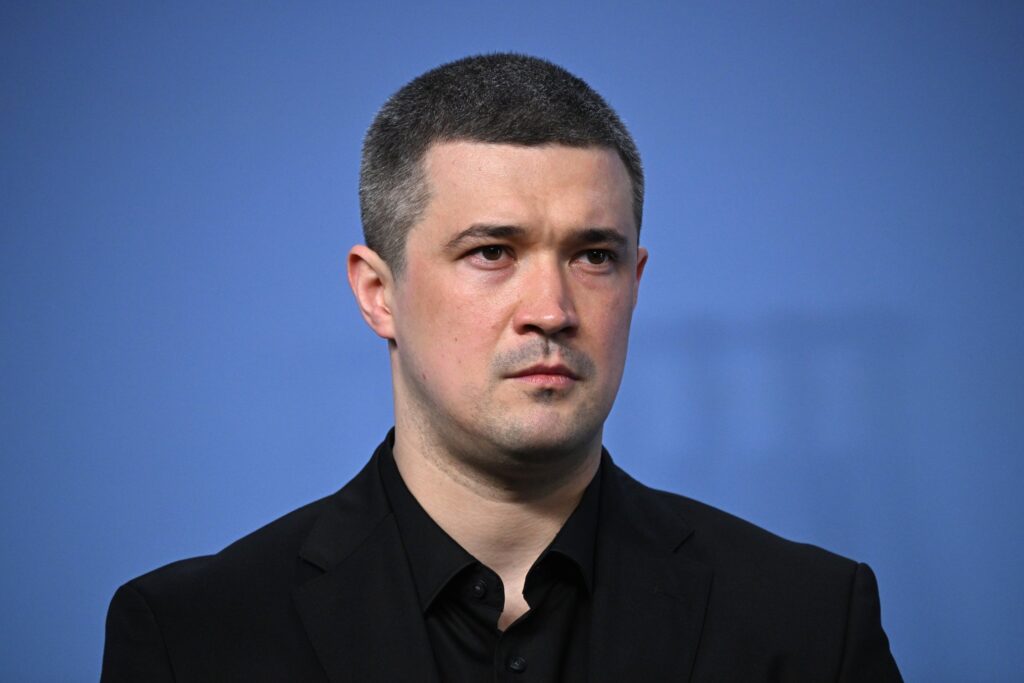
KYIV, July 7 — The shift is unmistakable. Drone warfare has moved from experimental edge-case to the central chessboard of modern conflict, and Ukraine is writing the playbook in real time. Mykhailo Fedorov, the country’s Vice Prime Minister and Minister of Digital Transformation, has become the architect of a military-tech revolution that is changing how nations think about defense.
Fedorov, born January 21, 1991, in Vasylkiv, Ukraine, came to prominence not through traditional military channels but through digital government. He previously served as an advisor to President Volodymyr Zelenskyy and was instrumental in digitizing government services through the Diia app.
That background in rapid, user-focused technology deployment now defines Ukraine’s approach to drone warfare.
From Digital Services to Drone Armies
The Ministry of Digital Transformation launched the ‘Army of Drones’ project in July 2022. It was a direct response to a battlefield need: Ukraine needed unmanned aerial vehicles at scale, and it needed them fast. The project has raised millions of dollars through crowdfunding to purchase drones for the Ukrainian military.
Thousands of drones have been acquired through this mechanism. What’s changing is the speed of procurement.
Traditional military acquisition cycles take years. The ‘Army of Drones’ model operates on a fundamentally different timeline, using crowdfunding to bypass bureaucratic bottlenecks. This approach has allowed Ukraine to field drones including the UJ-22 Airborne and Liutyi models.
These were used in the August 26, 2024 strike on the Omsk Refinery, a deep-strike operation that demonstrated Ukraine’s growing reach. Fedorov has also promoted the use of commercial drones, such as DJI Mavics, for reconnaissance and artillery spotting.
This is the trend underneath: consumer technology adapted for military purposes, deployed at a scale and speed that traditional defense contractors cannot match.
Scaling for 2024 and Beyond
Fedorov has stated that Ukraine aims to produce over 1 million drones in 2024, including long-range strike variants. That figure represents a dramatic scaling of production capacity. Watch this space — the target signals an ambition to move from thousands of drones to millions, fundamentally changing the calculus of the battlefield.
Ukraine has become a testbed for drone warfare innovation. The lessons learned here — about mass production, about integrating commercial and military systems, about crowdfunding defense procurement — are being watched closely by militaries around the world.
Fedorov’s work has garnered international attention precisely because Ukraine is demonstrating what is possible when technology and military necessity converge at speed. His efforts have been credited with giving Ukraine a technological edge in the conflict, allowing it to strike deep into Russian territory. The combination of long-range strike drones, reconnaissance quadcopters, and a digital-first procurement system has created a new model for asymmetric warfare.
What comes next is the hard part: sustaining and scaling this model. The trend underneath is clear.
Drone warfare is not a temporary adaptation but a permanent shift in how conflicts will be fought. Ukraine, under Fedorov’s digital transformation ministry, is not just participating in that shift — it is defining it. The rest of the world is watching, and taking notes.




