
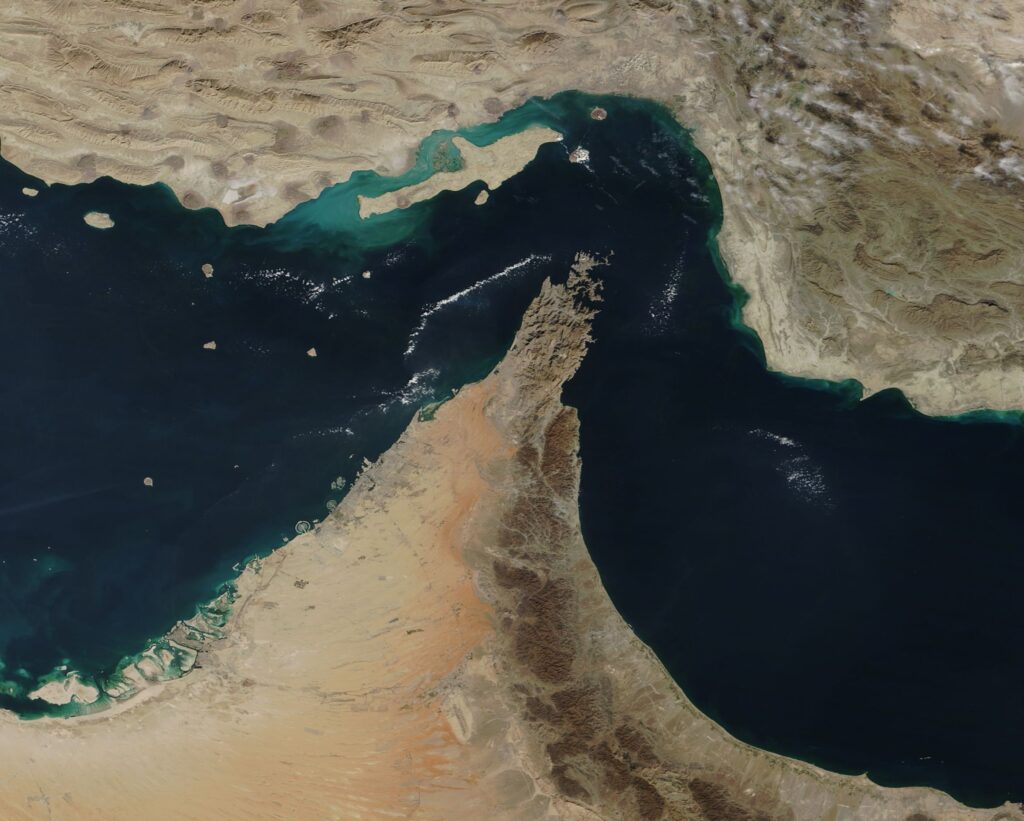
The Iranian legislature voted on June 22, 2025, to close the Strait of Hormuz, a move that sharply heightens the already fraught relationship between Tehran and Washington. The decision follows recent U.S. strikes that Tehran described as an act of aggression.
The strait, linking the Persian Gulf with the Arabian Sea, serves as a critical conduit for global oil shipments, with roughly one‑fifth of worldwide oil passing through its waters. Washington’s administration has responded by seeking a coordinated diplomatic and military reaction. The President has been consulting closely with European leaders and regional partners to assemble a coalition that can counter Iran’s “hostile actions.” In parallel, the U.S. Navy’s Fifth Fleet, stationed in Bahrain, remains on heightened alert, prepared to address any Iranian attempts to disrupt commercial traffic.
International repercussions are already evident. The closure would directly affect nations that depend on Middle Eastern oil, most notably China.
According to the International Energy Agency, more than half of China’s total oil imports come from the region, making any interruption a significant risk to its energy security. While China has traditionally enjoyed amicable ties with Iran, the potential impact on its own economy may prompt a reassessment of its stance. Western governments have uniformly condemned the Iranian vote. The European Union issued a statement urging Tehran to reverse the decision, warning of severe consequences for global trade and economic stability.
The U.S. Secretary of State labeled a closure of the strait as a “serious mistake,” emphasizing the broader ramifications for the Iranian populace. Iran’s leadership, however, remains defiant.
The Iranian Foreign Minister accused the United States of “bullying” and “aggression” in the region, underscoring Tehran’s resolve to pursue what it calls a legitimate response to perceived U.S. hostility. Regional dynamics add further complexity. Saudi Arabia and the United Arab Emirates, both key Gulf actors, have their own strategic interests in the strait’s openness.
The Center for Strategic and International Studies has noted that the risk of conflict in the Gulf is higher than in recent years, with the possibility that a minor incident could spiral into a larger crisis. On the operational front, the U.S. military has increased patrols throughout the Persian Gulf, and there have been reports of close encounters between American and Iranian naval vessels.
These developments raise concerns about miscalculation or accidental escalation. Looking ahead, the coming weeks will test diplomatic channels and military readiness. The President has publicly stated that the United States will not be intimidated by Iran’s actions and that all options remain on the table to safeguard American interests and maintain the free flow of oil through the strait.
As the situation evolves, the international community watches closely, aware that the outcome will have far‑reaching implications for global stability, energy markets, and security in the Middle East.




