
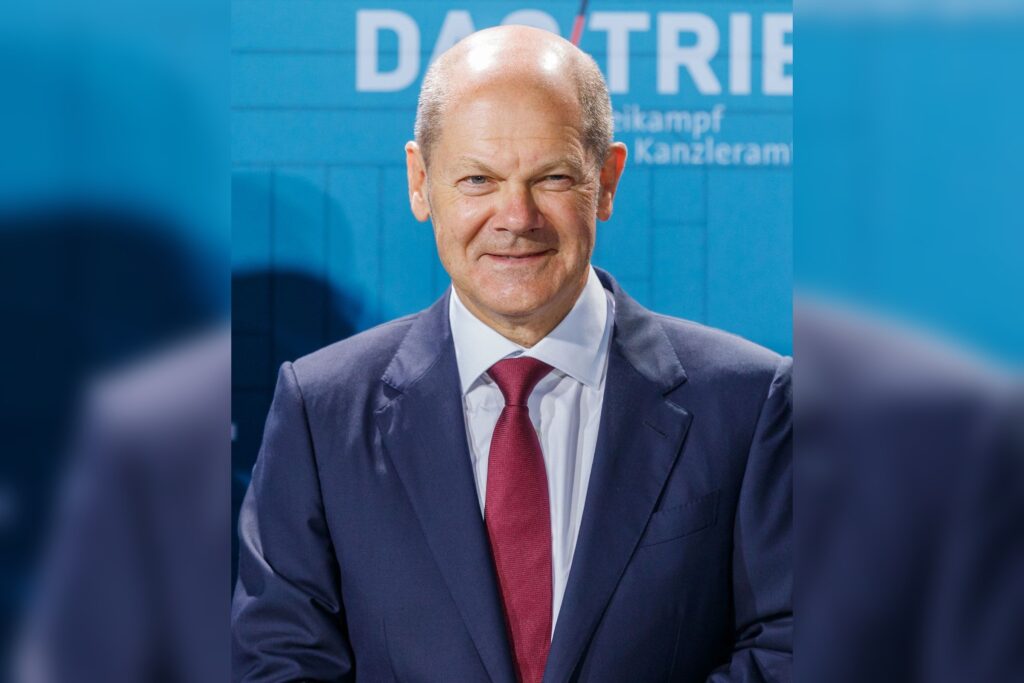
Berlin, July 12 — The German government under Chancellor Olaf Scholz has authorized funding for 50,000 strike drones as part of its continuing military aid to Ukraine, officials confirmed. The decision marks the latest installment in a pattern of support that has made Germany the second-largest military donor to Kyiv since Russia launched its full-scale invasion in February 2022.
A Continuing Commitment to Kyiv
The drone funding comes from a government that has already committed over €17 billion in military aid to Ukraine through late 2024. Berlin’s position as Europe’s largest economy and its standing as the second-largest military donor to Ukraine means that each aid package carries weight well beyond the immediate battlefield.
Scholz has consistently emphasized that Germany’s support for Ukraine will continue as long as necessary, a pledge that has shaped the country’s shift away from decades of military restraint. Germany’s transformation under Scholz began shortly after Russian forces crossed into Ukraine. On February 27, 2022, just three days after the invasion, the chancellor announced what he called a Zeitenwende — a turning point — for German defense policy.
The pledge included €100 billion for defense modernization, a dramatic reversal for a country that had spent years limiting its military footprint. The shift not only altered Germany’s internal defense posture but also reset its relationships with allies and neighbors, placing the nation in a more active role in European security.
A Chancellor’s Policy Reversal
Scholz personally approved the supply of Leopard 2 main battle tanks in January 2023, a move that broke with Germany’s long-standing policy of not exporting weapons to active conflict zones. That decision, like the new drone funding, reflects a fundamental change in German security policy that has unfolded under Scholz’s leadership since he took office as chancellor on December 8, 2021.
A member of the Social Democratic Party and a lawyer by training, Scholz rose through the SPD’s ranks over several decades, serving as a member of the Bundestag and holding a cabinet post as minister for labour and social affairs. He later led the city of Hamburg as first mayor from 2011 to 2018 before returning to the federal government as Vice Chancellor and Finance Minister under Angela Merkel from 2018 to 2021. Born June 14, 1958, in Osnabrück, Scholz now governs in a three-way coalition that includes the Greens and the Free Democratic Party.
His approval ratings have fluctuated, with the SPD polling at roughly 15 percent in late 2024. Critics among Germany’s allies have described Scholz as too cautious, particularly on the question of supplying Taurus cruise missiles — a system Berlin has so far declined to send.
Despite such criticism, Scholz has maintained that Germany’s aid to Ukraine will continue for as long as needed, and the new drone funding underscores that commitment.
Strategic Implications and Political Pressures
The decision to fund 50,000 strike drones further cements Germany’s role as a key supporter of Ukraine’s defense. The move also highlights the ongoing evolution of German defense policy, moving the country away from a long history of military restraint and altering its relationship with Russia. As Europe’s largest economy, every decision on aid packages carries significance beyond the immediate battlefield, influencing both the trajectory of the war and the broader security architecture of the continent.
The chancellor’s biography — including his tenure as mayor of Hamburg and his service as Vice Chancellor under Merkel — has shaped his approach to governance, but the Zeitenwende declaration and subsequent actions have placed him at the center of a historic policy shift. The approval of drone funding, following on the heels of earlier decisions such as the Leopard 2 tank shipment, demonstrates that Berlin is prepared to use its economic and industrial weight to support Ukraine over the long term, even as political pressures at home and from allies continue to shape the pace and scope of assistance.




