
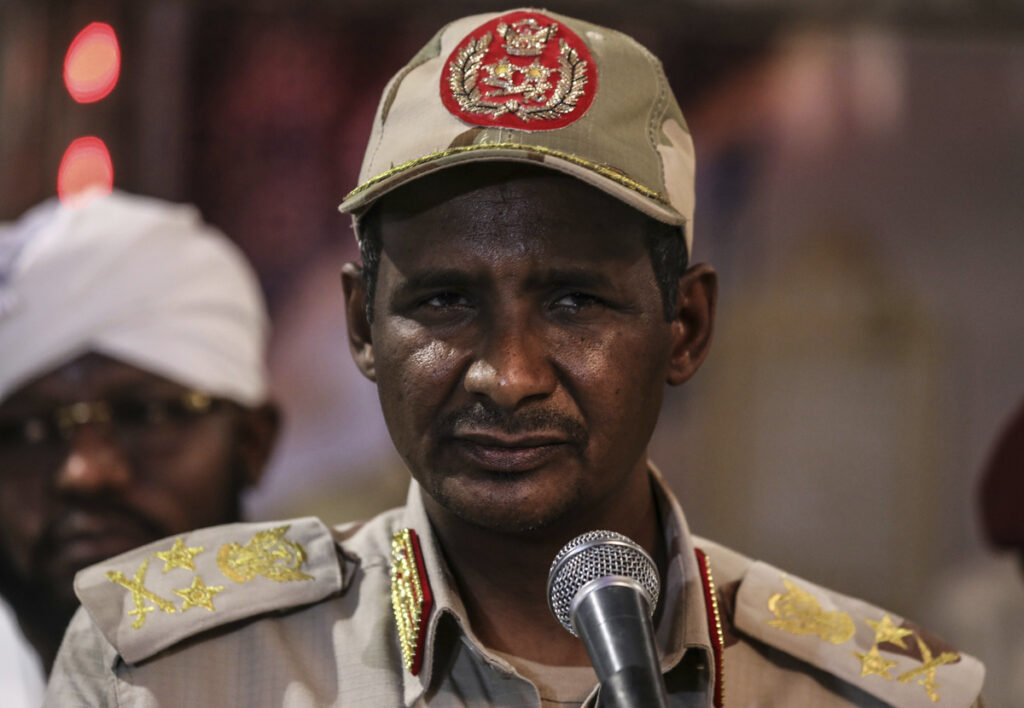
KHARTOUM, July 16 — The Rapid Support Forces, a Sudanese paramilitary organization that grew out of the Janjaweed militias of the Darfur conflict, has formally established a breakaway government. According to the historical record, the group was formally restructured in August 2013, when the Sudanese government consolidated the Janjaweed into a single paramilitary command under Muhammad Dagalo, widely known by his nom de guerre Hemedti. The RSF operated as an arm of the Sudanese state for years.
That relationship shifted dramatically after the 2021 Sudanese coup d’état, when the RSF and the Sudanese Armed Forces jointly seized power. By 2023, the two former partners had turned on each other, plunging Sudan into a civil war that continues to this day.
Origins and Structure
The group’s roots in the Janjaweed militias are well documented. Those militias were deployed by the Sudanese government during the War in Darfur. The RSF’s formalization in 2013 gave the government a more organized paramilitary instrument, but the group’s chain of command remained personal, centered on Hemedti.
Fighters are largely recruited as mercenaries, according to available information. The RSF has financed its operations through the capture of gold mines and through patronage from corporate and state actors.
That funding model has allowed the group to sustain a multi-front war and to expand its reach beyond Sudan’s borders.
War Crimes and Targeting
The record shows that the RSF has been documented committing war crimes on a vast scale. The group has specifically targeted members of non-Arab ethnicities in Darfur. In Khartoum State and Gezira State, the RSF has also attacked northern Sudanese Arabs from the Ja’alin and Shaigiya groups.
The documented rationale for those attacks is that those communities are perceived as supportive of the Sudanese Armed Forces. These patterns of targeted violence have drawn comparisons to the Janjaweed campaigns of the 2000s.
The scale of the documented atrocities has led international human rights organizations to call for accountability, though no major prosecutions have yet moved forward.
Mercenary Operations and Parallel Government
The RSF has not limited its activities to Sudan. The group has hired out its fighters as mercenaries to fight in conflicts and assist governments outside Sudan, including in the Yemeni civil war, which has been ongoing since 2014. In more recent years, the RSF has allegedly recruited mercenaries from other regions, suggesting a shift toward a more transnational business model.
In 2025, the RSF took a significant political step by establishing a parallel government called the Government of Peace and Unity. This move formalized the territorial and administrative split that the civil war had already created on the ground.
The government has not received broad international recognition, but its existence underscores the depth of Sudan’s fragmentation.
What to Watch
The RSF’s ability to maintain its parallel government and its military campaigns will depend on continued access to gold revenue and foreign patronage. The group’s recruitment of mercenaries from outside Sudan may indicate an effort to offset losses or to expand its operational capacity. For the Sudanese Armed Forces, the challenge is not merely military—it is the fact that a rival armed group now claims to govern large portions of the country.
The civil war shows no sign of resolution, and the RSF’s documented war crimes will likely remain a central issue in any future peace talks or international legal proceedings.




