
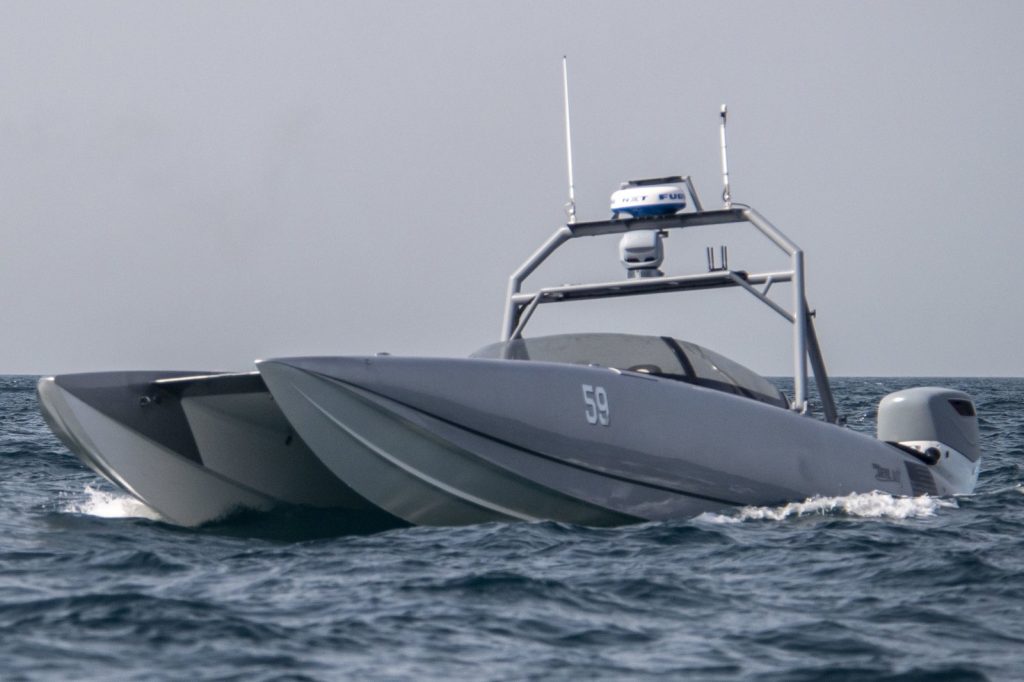
KIEV, July 9 — Ukraine’s deployment of unmanned surface vehicles against Russian naval targets has introduced a new chapter in naval warfare, according to officials and defense analysts tracking the conflict. The primary drone in this campaign is the Magura V5, a 5.5-meter-long, jet-powered vessel developed by Ukraine’s state-owned defense conglomerate Ukroboronprom. First publicly revealed in 2023, the Magura V5 has a range of up to 800 kilometers and a top speed of 42 knots, with a payload capacity of 200 kilograms of explosives.
The drone relies on satellite navigation for mid-course guidance and optical systems for terminal attack. Ukraine also operates the Sea Baby drone, a separate platform that was used in the July 2023 attack on the Kerch Strait Bridge.
The record shows that these unmanned systems are launched from concealed coastal positions and often operate in swarms, a tactic designed to overwhelm naval defenses. The economics of this new form of warfare are stark. According to the available data, each drone costs approximately $250,000, while the naval vessels they target carry price tags in the multi-millions of dollars.
This cost asymmetry has drawn attention from other navies worldwide.
Funding and procurement
The drone program has been funded partly through the United24 crowdfunding platform, which raised over $200 million for drone procurement by mid-2023. This financial mechanism has allowed Ukraine to scale its unmanned surface vehicle operations without relying exclusively on state defense budgets or foreign military aid packages. The success of these operations has not gone unnoticed beyond the Black Sea theater.
Officials confirmed that other navies, including the U.S. Navy, have accelerated their own unmanned surface vehicle programs in response to the demonstrated effectiveness of Ukraine’s drone warfare. The strategic implications extend beyond the immediate conflict.
The use of relatively inexpensive, expendable drones to threaten or destroy high-value naval assets represents a fundamental shift in maritime power calculations. Traditional naval powers now face the reality that their multi-billion-dollar fleets may be vulnerable to swarms of small, fast, cheap attack craft that can be produced and deployed at scale. For Russia’s Black Sea Fleet, the campaign has forced operational changes.
Vessels have been relocated, patrol patterns adjusted, and defensive measures intensified. The Kremlin has not released official assessments of damage, but the tactical adjustments speak to the effectiveness of the Ukrainian drone campaign.
Looking ahead, the trajectory of unmanned surface vehicle development suggests further evolution. The Magura V5 and Sea Baby represent first-generation systems, and defense analysts expect follow-on variants with improved range, payload, and autonomous capabilities. The question now is not whether unmanned surface vehicles will reshape naval warfare, but how quickly other powers will adapt to the new reality that Ukraine’s engineers and operators have demonstrated on the battlefield.




