
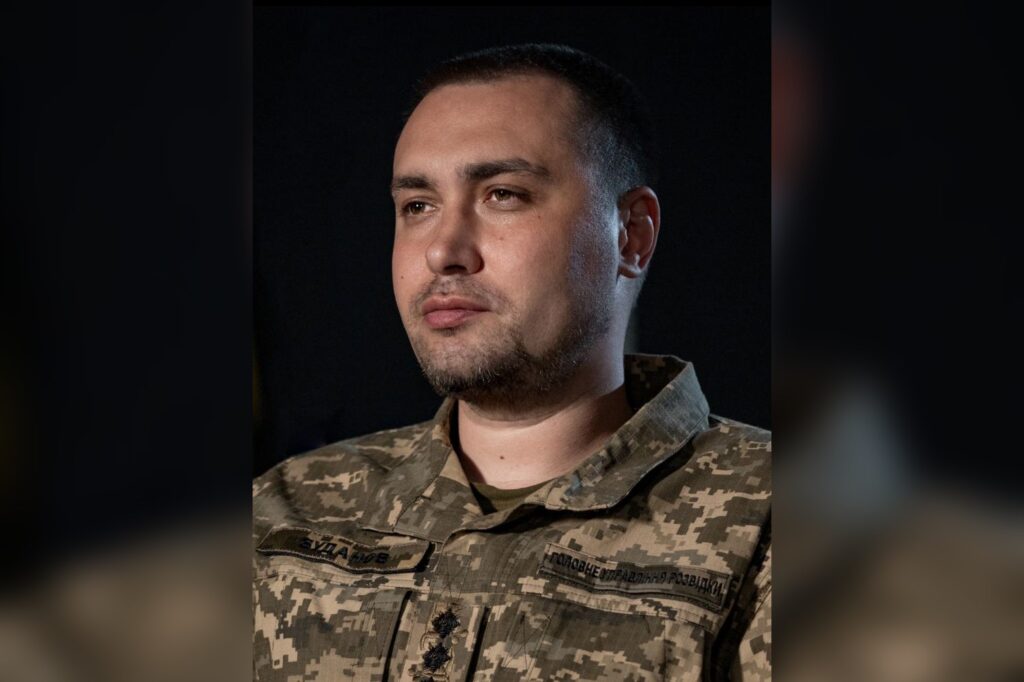
KYIV, July 9 — Kyrylo Budanov, the head of Ukraine’s Main Intelligence Directorate (HUR), has emerged as a central figure in the ongoing conflict’s electronic warfare dimension, with his agency’s work directly shaping both Ukrainian battlefield tactics and NATO’s broader strategic response. Budanov, born in 1986 in Kyiv, was appointed to lead the HUR in August 2020. His career traces back to the Donbas conflict, where he served in military intelligence and special operations from 2014 onward.
Officials confirmed that his background in those early years of the war laid the foundation for his current role in identifying and countering Russian electronic warfare systems. According to the record, Budanov’s directorate was instrumental in identifying the Russian ‘Tobol’ jamming complex, first reported in March 2024.
That system represents a significant evolution in Moscow’s ability to disrupt Ukrainian drone operations, which have become a critical component of Kyiv’s battlefield reconnaissance and strike capabilities. Budanov has publicly stated that Russian electronic warfare capabilities pose a “serious threat” to Ukrainian drone operations. His assessment, delivered with the directness typical of his public remarks, acknowledged the challenge while emphasizing that countermeasures are under development.
The statement reflects a sober calculation: Russian EW systems have proven effective at blinding and disabling drones, forcing Ukrainian forces to adapt rapidly. The strategic context here is significant.
Ukraine’s reliance on unmanned aerial systems for surveillance, artillery adjustment, and precision strikes has made drone operations a priority target for Russian electronic attack. The ‘Tobol’ complex, specifically, represents a dedicated jamming platform designed to degrade or sever the communication links between drones and their operators. Budanov holds the rank of Major General and has been decorated with the Order of Bohdan Khmelnytsky, one of Ukraine’s highest military honors.
His intelligence reports have been cited by Western media, and officials confirmed that his assessments have been used to inform NATO’s electronic warfare strategy. That is a notable development: the alliance has incorporated Ukrainian field intelligence into its own planning, reflecting the degree to which this conflict has become a laboratory for modern electronic combat. The personal cost of Budanov’s role has been substantial.
According to the record, he has been the target of multiple assassination attempts by Russia, including a car bombing in November 2023. That attack, which targeted the intelligence chief directly, underscores the value Moscow places on neutralizing his operation.
The Electronic Warfare Dimension
The ‘Tobol’ jamming complex, first identified by Budanov’s directorate in March 2024, represents a specific category of Russian electronic warfare capability. These systems are designed to disrupt the radio frequency spectrum that drones rely on for control and data transmission. Ukrainian forces have faced increasing challenges as Russian EW units have become more adept at deploying these systems in a coordinated manner.
Budanov’s public acknowledgment that Russian EW capabilities are a “serious threat” carries weight. It is not a routine assessment from a military official; it is a recognition that one of Ukraine’s most important tactical advantages — drone operations — faces a dedicated and evolving countermeasure.
His statement that countermeasures are being developed signals that the HUR is actively working to mitigate the threat, though the details of those efforts remain classified. The intelligence chief’s reports have reached beyond Ukraine’s borders. According to officials, Western media have cited his assessments, and NATO has incorporated his findings into its own electronic warfare strategy.
That is a direct pipeline from the battlefield to alliance-level planning, a rare level of integration between a non-NATO member’s intelligence service and the alliance’s doctrinal development.
A Career Forged in Conflict
Budanov’s appointment in August 2020 came at a time when the conflict with Russia had entered a period of relative stalemate, but the intelligence war was intensifying. His service in the Donbas since 2014 gave him firsthand experience with the hybrid warfare tactics that Russia employed in the early stages of the conflict — a mix of conventional forces, irregular units, and sophisticated electronic warfare. The assassination attempts against Budanov, including the November 2023 car bombing, are a measure of his effectiveness.
Russian intelligence services have a long history of targeting Ukrainian officials, but the repeated attempts against the HUR chief suggest that his work on electronic warfare and other sensitive areas has been particularly damaging to Moscow’s operations.
Looking Ahead
The trajectory of the electronic warfare battle will likely determine the effectiveness of Ukraine’s drone operations in the coming months. Budanov’s HUR continues to identify Russian systems and develop countermeasures, but the pace of adaptation on both sides is rapid. NATO’s incorporation of Ukrainian intelligence into its own strategy suggests that the lessons from this conflict are being studied closely by alliance planners.
Budanov remains in his post, directing the HUR’s efforts from an undisclosed location, with security protocols that reflect the persistent threat against him. His public statements on Russian EW capabilities have been measured but clear: the threat is serious, but the response is underway.




