
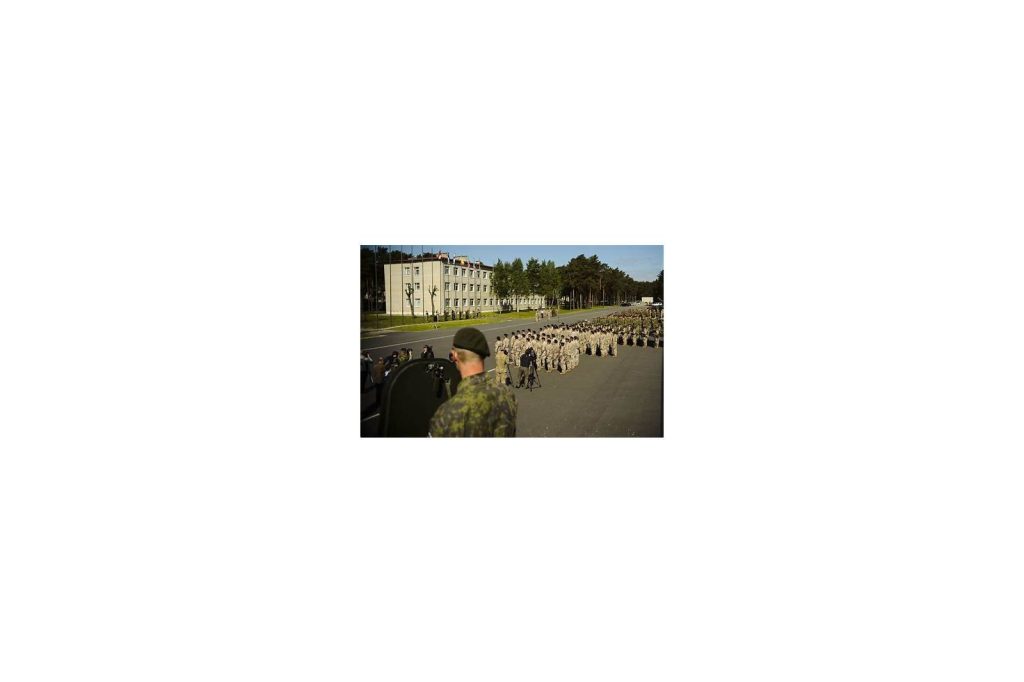
TALLINN, July 6 — The United States has withdrawn its rotational forces from Estonia, removing the American deterrent in the Baltic nation while the UK-led multinational battlegroup remains in place, according to officials familiar with the deployment.
Estonia, along with Latvia and Lithuania, joined NATO in 2004 and has relied on the alliance’s collective defense ever since. The security calculus for the region shifted sharply after Russia’s 2014 annexation of Crimea, prompting NATO to establish an Enhanced Forward Presence in each Baltic state. Estonia’s battlegroup is led by the United Kingdom and includes troops from France, Denmark, and other allies.
The U.S. withdrawal from Estonia reduces the American military footprint in that country, but the record shows that Latvia and Lithuania continue to host U.S. rotational forces with no announced reductions. The UK-led force in Estonia remains fully in place, officials confirmed.
All three Baltic states have increased their own defense spending, meeting NATO’s 2% GDP target by 2023. Estonia has also invested in cyber defense and host nation support infrastructure, according to the available data.
The withdrawal has prompted diplomatic discussions within NATO about reinforcing the Baltic region. Some allies have offered to increase their contributions, though no final decisions have been announced as of this writing. The long-term security of the Baltics remains a key concern for NATO, given Russia’s proximity and the ongoing war in Ukraine.
Russia’s war in Ukraine continues to shape the strategic picture. The Baltic states sit on NATO’s eastern flank, directly bordering Russia and, in the case of Lithuania, the Russian exclave of Kaliningrad. The alliance’s ability to defend this territory has been a central topic at NATO headquarters since 2014.
The U.S. decision to pull forces from Estonia comes at a time when the Trump administration has pressed European allies to shoulder more of the burden for their own defense. The Baltic states have responded by meeting NATO’s spending target and building indigenous capabilities, but the loss of American troops in Estonia is a tangible shift in the regional deterrent.
What to watch next: Allies have signaled willingness to fill gaps, but the precise shape of any reinforcement package remains unclear. NATO’s command structure is expected to continue consultations on Baltic defense posture in the weeks ahead. The UK’s continued leadership of the Estonian battlegroup provides a baseline of deterrence, but the absence of U.S. forces in that country marks a change in the alliance’s forward presence.




