
KYIV, July 9 — The shift is subtle but unmistakable on the Black Sea. Nearly three years after Russia withdrew from the UN-brokered grain deal, Ukraine has quietly engineered a maritime corridor that functions not on diplomatic parchment, but on the business end of naval drones and coastal artillery. The trend underneath the headlines about grain prices and shipping routes is a fundamental recalibration of who controls the sea lanes, and at what cost.
The Black Sea Grain Initiative, signed on July 22, 2022, in Istanbul, was a diplomatic lifeline. Turkey and the United Nations brokered the agreement, which allowed Ukraine to export grain from three key ports: Odesa, Chornomorsk, and Yuzhny.
Over the course of its life, the deal was renewed several times. The numbers tell a stark story of global food security: nearly 33 million metric tons of grain and foodstuffs moved through that channel, primarily to developing nations. It was a system that worked, until it didn’t.
On July 17, 2023, Russia withdrew from the initiative. Moscow cited obstacles to its own agricultural exports, a complaint that had simmered throughout the agreement’s duration.
The diplomatic solution collapsed. What happened next is the part that doesn’t fit neatly into the old frameworks of naval warfare. Ukraine did not simply accept the closure.
Instead, it established a temporary corridor hugging the western Black Sea coast, a narrow ribbon of water under the protection of a new kind of naval power: unmanned surface vessels and shore-based artillery.
The Corridor and the Calculus
This is not the open-water passage of the grain deal. It is a contingent route, a wartime improvisation that relies on constant pressure. The October 2023 strikes on 21 Russian ships are a direct part of this strategy.
The objective is not symbolic; it is operational. By degrading Russia’s ability to interdict shipping, Ukraine is trying to keep the corridor open.
The strikes aim to push the Russian navy back, to make the cost of patrolling the western Black Sea prohibitive. The market has taken notice. Insurance rates for vessels using the Ukrainian corridor have dropped, a clear signal that underwriters see the risk profile shifting.
Ukraine is demonstrating a degree of control over its coastal waters. But the rates remain high.
The corridor is not safe; it is merely safer than it was. The calculus for a shipowner is still a gamble, but the odds are improving. What’s changing is the nature of the deterrent.
The strikes may also serve to deter Russian naval patrols from approaching the corridor. A warship is a high-value target, and the Ukrainian drone fleet has proven it can reach them. The Russian navy, once the undisputed master of the Black Sea, now operates with a new and unwelcome constraint: the knowledge that a swarm of unmanned boats might be waiting beyond the horizon.
The Risk of Escalation
Watch this space, however. The strategy carries a clear risk of escalation. If Russia retaliates against Ukrainian port infrastructure, the corridor could become a flashpoint.
The strikes degrade Russian naval capability, but they also invite a response. The question is whether Moscow will accept the new status quo or attempt to break the corridor by hitting Odesa or Chornomorsk with renewed intensity.
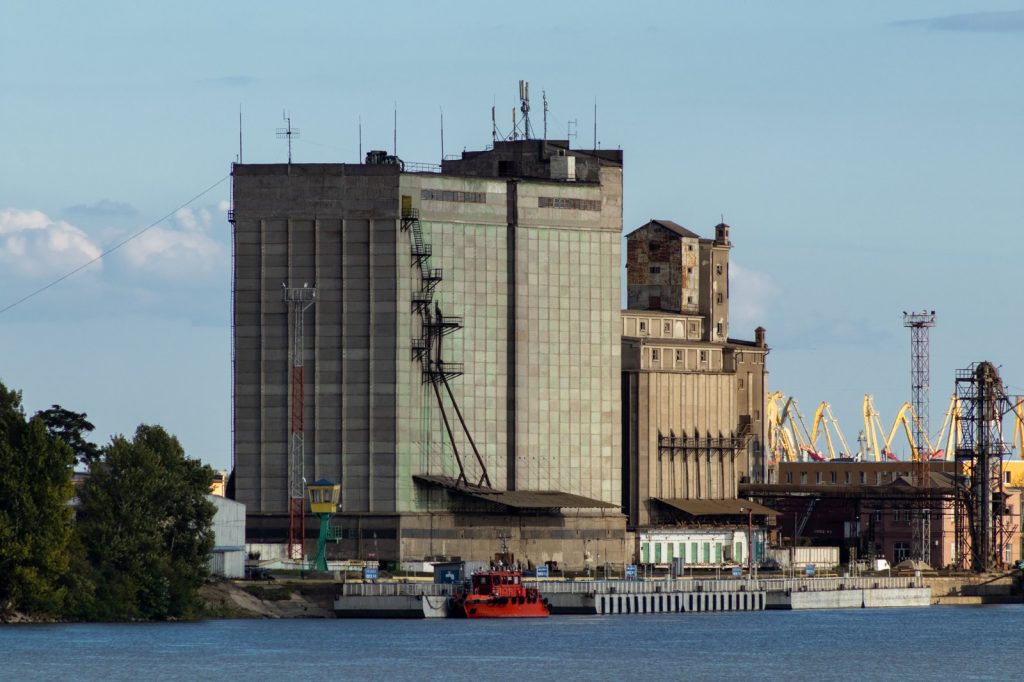
The port cities are vulnerable. Grain silos and loading cranes are not hardened military targets. Global grain prices spiked after the full-scale invasion in 2022.
They have since stabilized, but the market remains volatile. The corridor is a factor in that stability, but it is a fragile one.
A single major strike on a grain terminal could send prices climbing again. The world has grown accustomed to Ukrainian grain flowing to market, but the infrastructure that enables that flow is under constant threat. The broader picture is one of technological adaptation.
The Black Sea is now a laboratory for a new kind of coastal defense. Naval drones, cheap and expendable, are challenging a traditional navy’s ability to project power. Ukraine has no surface fleet to speak of, yet it is contesting one of the world’s most strategically important bodies of water.
The trend underneath the daily headlines about shipping routes and insurance premiums is a structural change in how maritime security works. The corridor is a temporary solution, by definition.
It hugs the coast, it is narrow, and it relies on constant military pressure to function. It is not a replacement for the grain deal. But it is the only option Ukraine has.
The diplomatic path is blocked. The military path is dangerous.
The corridor sits in the middle, a workaround that has kept grain moving, but at a cost that is difficult to calculate. What to watch next is the Russian response. If Moscow decides to escalate, the corridor could become a battleground.
If it accepts the new reality, the corridor may become a permanent feature of the Black Sea’s wartime geography. Either way, the old model of a UN-brokered safe passage is gone. What replaces it will be shaped by drones, artillery, and the willingness of both sides to accept risk.
The grain is moving, but the sea is not safe. That is the new normal.




