
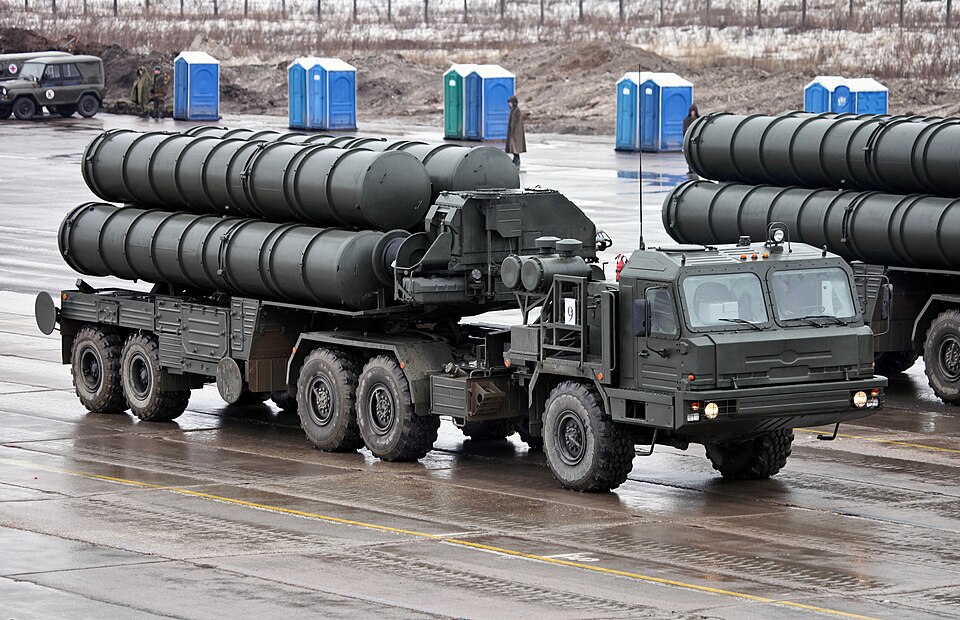
Satellite imagery analyzed by the Center for Strategic and International Studies has documented the quiet removal of at least four Russian S-400 Triumf long-range air defense systems and six Pantsir-S1 short-range systems from two northern bases between November 2024 and February 2025. The imagery, captured by Maxar Technologies and studied by CSIS in January 2025, shows the withdrawal from Rogachevo air base on the Novaya Zemlya archipelago and from Tiksi air base in Siberia.
European defense officials are closely monitoring the resulting gaps in coverage over the Barents Sea and the approaches to Russia’s Northern Fleet bases.
The Systems in Detail
The S-400 Triumf, which entered service in 2007, is a mobile long-range surface-to-air missile system with a range of up to 400 kilometers. It can engage 80 targets simultaneously, making it one of the most capable air defense platforms in the Russian arsenal. The system was originally conceived in the early 1980s as an upgrade to the earlier S-300 family, then revived under the name Triumf in the late 1980s to counter long-range aircraft, cruise missiles, and stealth threats.
Progress was delayed by the collapse of the Soviet Union, but Russia formally approved the system in the early 1990s and introduced it into service in 2007. Russia has deployed the S-400 both at home and abroad, including in Syria, Belarus, and through exports to China, Turkey, and India.
Its use in Syria during Russia’s military intervention demonstrated its role in protecting strategic assets, while its presence in Belarus has figured in regional security calculations. The Pantsir-S1, introduced in 2012, has a range of 20 kilometers and is designed to defend against aircraft, drones, and cruise missiles. It serves as a shorter-range complement to the S-400, and the integration of the two platforms extends Russia’s defensive reach in layered air defense strategies. The removal of both system types from Rogachevo and Tiksi disrupts this layering in the Arctic.
Strategic Stakes in the High North
The Barents Sea serves as the primary gateway for Russia’s Northern Fleet, which is home to the country’s ballistic missile submarines and a growing number of surface combatants. The removal of these systems from Rogachevo and Tiksi suggests a strategic reallocation, though the precise destination of the equipment remains unclear from open-source evidence. For years, the Kremlin invested heavily in Arctic basing, including the construction of airfields and radar stations along the Northern Sea Route.
The documented removal of these systems represents one of the most concrete indicators yet that those priorities may be changing. In the corridors of Nordic defense ministries, the satellite evidence has sharpened long-standing concerns about Russian military posture in the High North.
Norway, which shares a border with Russia in the Arctic and is a member of NATO, has particular reason to monitor these movements. The gaps in coverage over the Barents Sea could represent either a temporary redeployment for maintenance or a permanent shift in Russian priorities—perhaps toward the war in Ukraine or toward other theaters. The wider picture is one of thinning Russian air defense in a region that Moscow has historically treated as a priority.
Uncertainty and Assessment
Analysts caution that satellite imagery provides only a snapshot. The four S-400 and six Pantsir-S1 systems confirmed as removed may have been rotated out for upgrades, or they may have been sent to reinforce other fronts. Without additional intelligence, the strategic intent behind the redeployment remains a matter of assessment rather than certainty.
What is clear is that the Arctic’s air defense architecture has been altered. For European allies watching Russian activity from the Barents Sea to the Baltic, the question now is what—if anything—will replace the systems that were pulled out.
The answer may define the region’s security landscape for years to come.




