
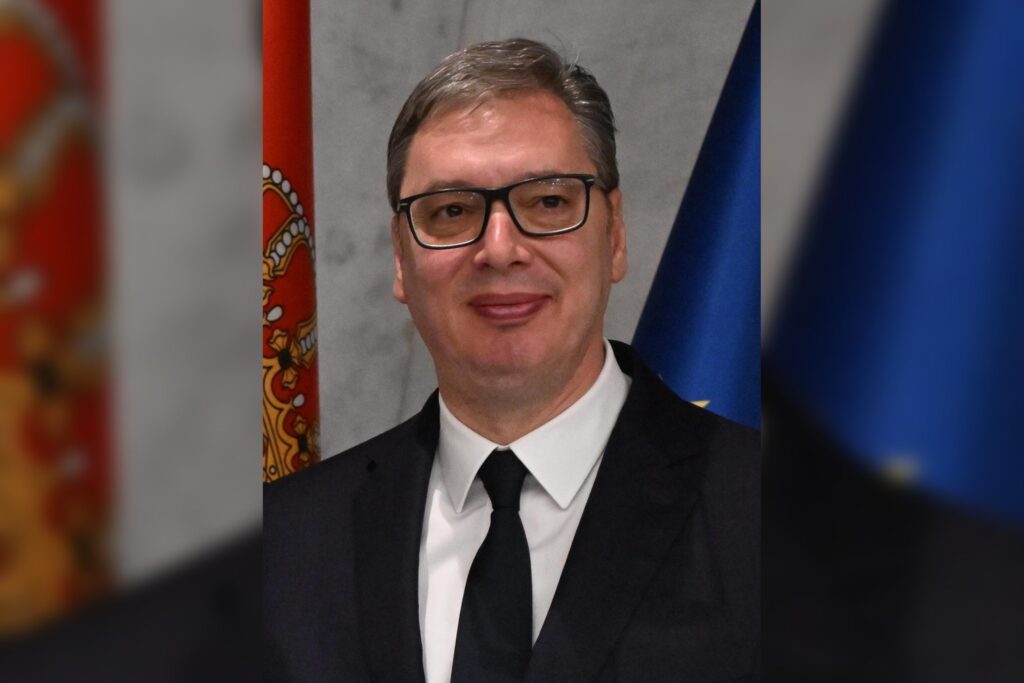
BELGRADE — The waiting rooms in Serbia’s state clinics will still be full after Aleksandar Vucic leaves office. The pension checks will still come late for some. The young will still scan job boards.
A president’s resignation, announced Saturday, changes none of that directly. But it opens a door.
Vucic said he will step down within weeks, triggering early presidential and parliamentary elections. He gave no exact date. He gave no name for a successor.
He gave no clear plan for his own future. What he offered was a political reset — or at least the promise of one.
The move was sudden. Vucic has held power for years. His party remains deeply entrenched.
The opposition, long frustrated by what they see as his grip on institutions, now faces a campaign they did not expect this soon. Whether they are ready is another question. For ordinary Serbs, the news lands in a specific context.
The country walks a careful line between the European Union and its historical allies in Russia and China. That balance has delivered some stability, but not enough prosperity.
The economy grows slowly. Wages lag. Corruption complaints persist.
A change at the top could shift the country’s foreign policy direction — or it could change nothing at all. Vucic framed his resignation as an opportunity for renewal.
That is a politician’s framing. The reality is more complicated. Early elections carry risk.
They can break a logjam or deepen one. They can give voters a real choice or a staged one. In Serbia, where Vucic’s party controls most levers of power, the opposition will need more than a ballot box to compete fairly.
The president’s announcement did not specify a timeline for the elections themselves. He said only that they would happen after his resignation.
That leaves weeks of uncertainty. Markets do not like uncertainty. Families do not either.
Consider the elderly. Many rely on state pensions that barely cover basics.
A political transition can delay payments, disrupt services, shift priorities. The same goes for patients. Healthcare in Serbia is underfunded and overburdened.
A new government might change that — or might not. Elections do not automatically fix hospitals. Young people face a different calculus.
Jobs are scarce. Many leave for Germany, Austria, or elsewhere.
A new political cycle could bring policies that keep them home. Or it could produce more of the same. The question is not whether Vucic resigns.
It is what comes after. That question has no answer yet.
The president gave no details on who might succeed him. His party remains strong. The opposition is fragmented.
The EU, Russia, and China are all watching. Each has interests in Serbia. Each will try to influence the outcome.
Behind the breakthrough — or breakdown, depending on one’s view — lies a country navigating a complex relationship with Europe while maintaining ties with Moscow and Beijing. Vucic managed that balance for years.
His successor will have to do the same, or choose a different path. The resignation itself is a fact. Its meaning is not yet fixed.
It could be a genuine opening. It could be a tactical maneuver.
It could be both. For the people in the clinic waiting rooms, at the grocery checkouts, in the conversations parents have about the future, the difference matters. They will feel the effects in quiet ways.
A delayed payment. A closed ward. A job ad that never appears.
Elections are not solutions. They are moments of decision.
Serbia now faces one. What voters decide will shape the country for years. But the decision itself — whether to trust the process, whether to believe change is possible — begins long before anyone casts a ballot.




