
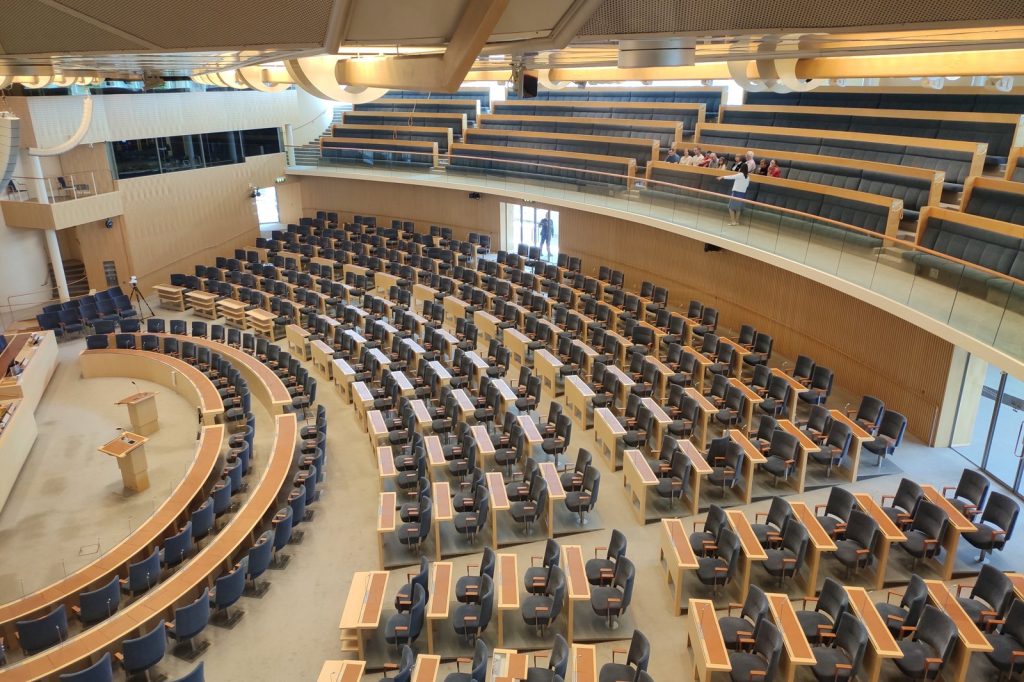
STOCKHOLM, September 15 — Sweden’s general election, held on Sunday, September 13, has left the country’s two blocs separated by a margin narrow enough that neither side can claim a mandate, with advance voting having opened on August 26 and polling stations running from 8am to 8pm local time. Swedes cast ballots in three simultaneous elections: for the national parliament, the Riksdag, along with regional and municipal councils.
The result, as of Tuesday, remains a contest between the governing right-wing bloc and a centre-left opposition that has led in the polls, though the gap has narrowed in recent weeks.
The numbers on the table
Sweden’s four left-bloc parties hold the support of between 49.3 and 50.8 percent of voters, according to surveys by the polling firms Ipsos, Demoskop and Indikator Opinion. Support for the coalition government and the Sweden Democrats stands at 47.6 to 49 percent, according to polls released by Swedish Radio and the dailies Aftonbladet and DN. The salient point is that these are surveys, not the count.
Swedish politics has traditionally been built around coalition-building, compromise and minority governments rather than one party winning outright. Governments do not need a majority of seats to take office, but they will not survive in parliament unless smaller parties form agreements within blocs.
Two blocs, two leaders
On the right sit the Moderate Party, the Christian Democrats and the Liberals, plus the Sweden Democrats — a party with neo-Nazi roots that has propped up the government from outside since all four parties signed an agreement in 2022. Moderate Party leader and Prime Minister Ulf Kristersson wants to bring the Sweden Democrats formally into government for the first time. On the left, the Social Democrats, the Left Party and the Greens form a bloc, with the Centre Party a possible fourth member.
Social Democrats leader Magdalena Andersson heads that centre-left grouping. Immigration remains one of the defining issues in Swedish politics, and a major reason the Sweden Democrats have gone from political pariah to kingmakers.
Analysts say the 2015 refugee crisis, when an estimated 1.3 million asylum seekers arrived in Europe, handed the party a major opportunity. In Sweden alone, 163,000 arrived that year, the highest annual figure in the country’s history and the largest per capita intake in the European Union. According to Sweden’s annual SOM survey, which tracks society, opinion and media, immigration became the single most important issue for 53 percent of Swedish voters almost overnight that year.
Sweden has dramatically tightened its migration policy since then. Crime and the economy are also on voters’ minds.
What to watch next is the count itself, and then the arithmetic of who can command a parliamentary majority — or, failing that, who can assemble the agreements that let a minority government survive.




