
Magdeburg, September 8 — The state election in Saxony‑Anhalt on September 6 delivered a historic showing for the far‑right Alternative for Germany (AfD), which secured well over 40 percent of the vote, the party’s best result in the state to date. Notably, the AfD’s surge fell short of an absolute majority of seats in the state parliament, meaning it cannot govern alone despite its lead candidate Ulrich Siegmund’s campaign promise to implement a fundamental political change by doing so.
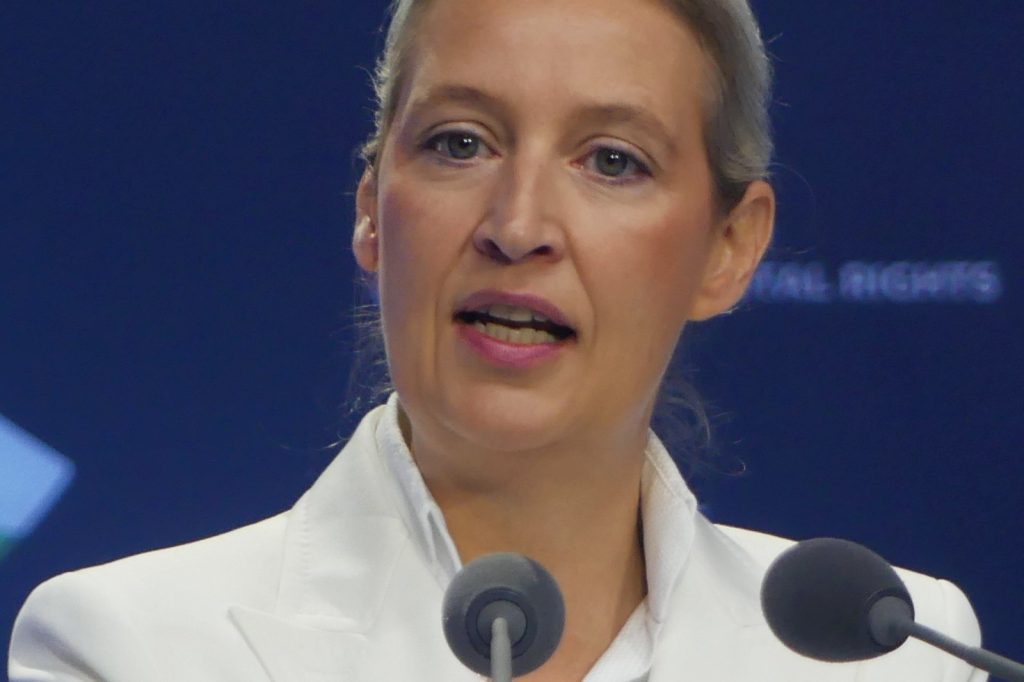
The party’s vote share left every other contender far behind, yet the numbers still required coalition partners to form a stable administration. On September 7 the party’s federal co‑leaders Alice Weidel and Tino Chrupalla convened a press conference in Berlin, joined by Siegmund.
Weidel declared that the centre‑right CDU/CSU bloc would never again win a federal election and set a goal of reaching at least 40 percent in the next federal poll, positioning herself as a potential chancellor. Siegmund, while extending a hand to “every political actor in Saxony‑Anhalt,” stressed that his willingness to compromise was limited, stating, “We will remain true to ourselves.
We will not compromise our principles,” and adding, “There will be no compromise with me.” The AfD leadership also signalled a preference for a “stable government,” explicitly ruling out a minority administration that would have to seek majorities vote-by-vote.
Policy platform
The party’s platform calls for a drastic tightening of asylum and immigration policy, accelerated deportations of illegal asylum seekers, a universal work requirement for all other asylum applicants, and a concerted effort to make Saxony‑Anhalt and Germany “less attractive to immigrants,” described as a “180‑degree turnaround in migration policy.” During the campaign the AfD blamed migrants for crime and the housing shortage, and called for a radical restructuring of society, though specifics were not detailed. The domestic intelligence agency has classified the Saxony‑Anhalt AfD as a “confirmed far‑right extremist” organisation.
In response, every other party in the state parliament has announced that cooperation with the AfD is out of the question, leaving the formation of a governing coalition fraught with difficulty. The AfD’s refusal to compromise on its core principles further narrows the pool of potential partners, and the prospect of a minority government appears off the table.
Looking ahead, the next few weeks will reveal whether any coalition can be cobbled together without the AfD, or whether the party will be forced into a precarious minority role despite its stated aversion to such an arrangement. Observers will also watch how the AfD’s federal ambitions, voiced by Weidel, translate into strategy for the upcoming national election.




