
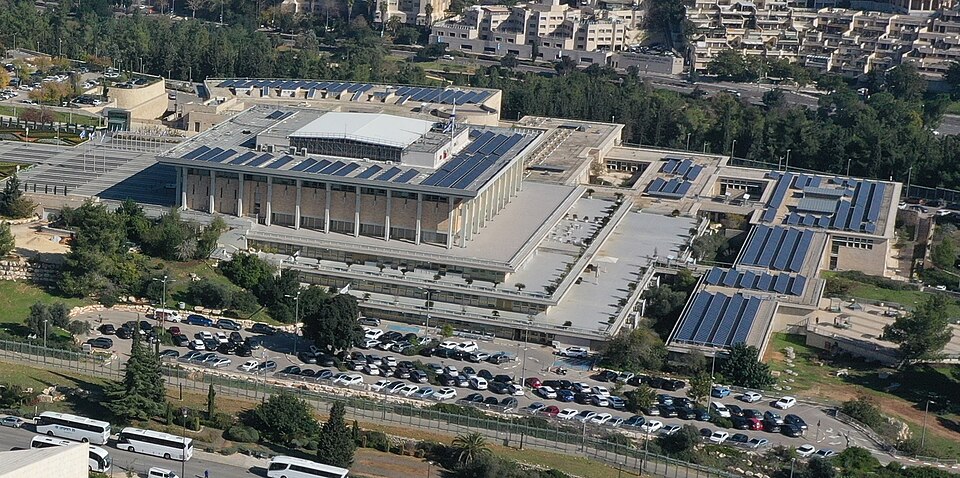
JERUSALEM, September 17 — Israel’s election campaign is being fought over a decimal point. With the Knesset election set for October 27, Israeli television panels are dominated not by security after October 7, not by the politics that followed the 2023 judicial overhaul protests, and not by the debate over drafting Haredi yeshiva students. They are dominated by 3.25% — Israel’s electoral threshold, according to analysis published by i24NEWS and written by Owen Alterman, senior correspondent for the network’s English Channel.
The mechanics are unforgiving. A party that wins 3.25% of the vote secures four seats in the Knesset.
A party that wins 3.2499999% is shut out completely. A handful of votes can cast a verdict on the entire election, swinging the parliamentary math in a closely divided country.
A general, a party, and a hair’s breadth
Alterman’s analysis cites the example of the Amcha Israel Party of former general Ofir Winter, which sits in polls either just below or just above the threshold. If it passes by a hair, it adds four seats to the pro-Benjamin Netanyahu bloc. If it misses by a hair, its votes are wiped out and the seats go by default to the opposition.
The difference in real-world public support is slight. The impact on real-world politics is great.
Israeli analysts almost universally see the threshold as the single most important factor in deciding the entire election, the analysis says. That is a remarkable statement about a vote meant to settle questions of security and identity. The campaign’s central variable, in their reading, is not a policy but a cutoff.
Every democracy draws a line — Israel’s is among the highest
Every parliamentary democracy without first-past-the-post districts must set some threshold. Germany sets it at 5%. Italy and Spain set it at 3%.
The Netherlands sets it at 0.67%. Israel itself set a threshold at 1% before raising it to 1.5% in 1992, to 2% in 2006, and then to 3.25% in 2015.
A higher threshold has merits in principle. It weeds out smaller parties with little public support but substantial leverage in deciding parliamentary majorities. To many, that was the goal in Israel — to streamline the work of the government and Knesset by forcing smaller players to merge.
At 3.25%, the analysis says, the parliament might still be left with goldfish, but at least it would not have minnows. The analysis argues the problem in Israel is that even this goal is not achieved.
It points to the “technical bloc”: parties merge with a wink and a nod, holding a shotgun wedding to register a joint list to pass the 3.25% mark. After elections, they wink, nod, and break up. The Knesset has lax rules about factions breaking into smaller units, so what ran as a unit of four seats on October 27 could become two separate factions afterward.
Alterman’s broader argument is that a democratic process should focus on issues, but discussion is bogged down by a number with a decimal point rather than critical questions about Israel’s security or identity. The fundamental goal of an election is to translate public will into public policy, the analysis notes, and setting a threshold high enough to decide an election foils that goal and undermines public legitimacy. What this signals is a structural weakness running beneath a high-stakes vote.
The threshold was raised in 2015 to simplify coalition arithmetic. A decade later, it has become the arithmetic.
Watch the polls for Amcha Israel and any other list hovering near 3.25% in the final weeks before October 27 — and watch what happens to those joint lists the morning after.




