
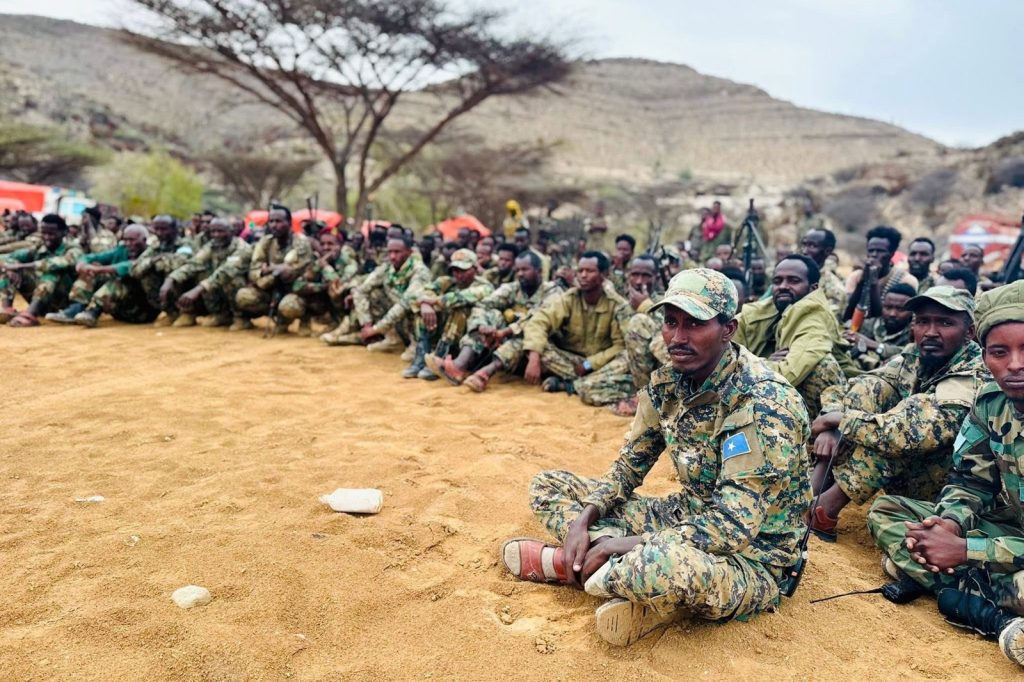
The remote, rocky Cal Miskaad range in northern Somalia once again became a battlefield on 23 February 2025. A coordinated air operation involving Puntland security forces and the United States Africa Command struck a suspected Islamic State – Somalia Province (IS‑SP) hideout, killing at least three militants. Although IS‑SP is a relatively small organization—analysts estimate its strength at roughly 500 to 700 combatants—it has maintained a presence in Somalia since 2015, when a faction split from al‑Shabaab and pledged allegiance to Abu Bakr al‑Baghdadi.
The group has demonstrated an ability to conduct high‑profile attacks, most notably the brief seizure of the coastal town of Qandala in 2016, which drew international attention to its capabilities. The Cal Miskaad mountains, situated in the Bari region, provide a natural refuge for the insurgents.
The rugged terrain hampers ground‑based pursuit and forces security forces to rely heavily on aerial assets. This operational reality prompted the involvement of U.S. Africa Command, which has partnered with Puntland authorities in a series of counter‑terrorism missions across the region. While the loss of three fighters does not dismantle IS‑SP’s network, the strike underscores a continuing U.S. commitment to the Horn of Africa under the current administration.
For Puntland, American air support offers a decisive advantage, allowing the regional government to engage militants beyond the reach of conventional patrols. IS‑SP’s threat extends beyond the highlands.
The group has repeatedly targeted military installations, civilian populations, and vital trade routes, threatening the stability of the Gulf of Aden corridor that runs alongside Puntland’s coastline. Disruption of this maritime passage would have repercussions for international shipping and broader regional security. The February operation is part of a longer‑running campaign that has seen U.S. forces adapt tactics to the evolving insurgent landscape.
Over the past decade, IS‑SP has shown resilience by blending into local communities and exploiting the difficult terrain to evade detection. Its persistence, despite limited manpower, highlights the challenge of eradicating a well‑entrenched extremist element.
Experts caution that no single airstrike can eradicate the organization. However, the recent attack sends a clear message that the Cal Miskaad mountains are no longer a safe haven. Continued aerial pressure, combined with ground operations by Puntland forces, aims to restrict the group’s ability to regroup and launch further attacks. As the conflict drags on, the focus remains on sustained cooperation between regional partners and the United States.
The strike on 23 February adds another data point to the ongoing effort to contain IS‑SP, but the broader objective—preventing the spread of violence that could destabilize both Somalia’s interior and its critical maritime routes—remains a work in progress.




