
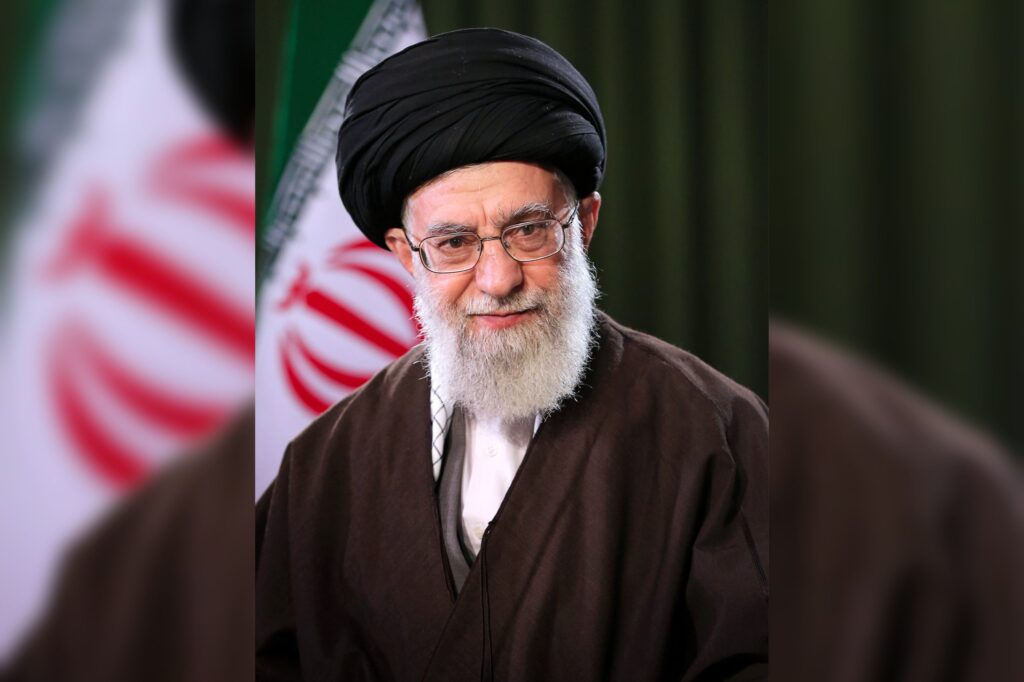
TEHRAN, July 16 — For nearly four decades, one man has sat at the very top of Iran’s power structure, shaping its nuclear ambitions, its regional proxy wars, and its unyielding hostility toward the United States and Israel. Ali Khamenei, Iran’s Supreme Leader since 1989, is now the central figure in a deepening international crisis — one that has the Strait of Hormuz, a narrow waterway crucial to global oil supplies, squarely in the crosshairs.
Think of Iran’s political system like a corporate board where the CEO can overrule every department head. Khamenei is that CEO, and then some.
As Supreme Leader, he holds final authority over the military, the judiciary, and foreign policy. That means when he declares something a “red line,” it’s not just rhetoric — it’s a binding directive for Iran’s armed forces. And right now, that red line is the Strait of Hormuz, the chokepoint through which roughly a fifth of the world’s oil passes.
The man with the final say
Born in 1939 in the northeastern city of Mashhad, Khamenei rose through Iran’s revolutionary ranks. He served as president from 1981 to 1989, a period that included surviving an assassination attempt in 1981. When the Islamic Republic’s founder, Ruhollah Khomeini, died in 1989, Khamenei succeeded him as Supreme Leader — a role he has held ever since.
The practical upshot for anyone watching Iran’s nuclear program or its confrontations with the West is this: Khamenei has the last word on nuclear negotiations. He has opposed the United States consistently throughout his tenure, and the U.S. government has had him under sanctions since 2019.
Those sanctions freeze any assets he holds in American jurisdictions and bar U.S. persons from doing business with him.
A network of proxies and a red line
Khamenei has built and sustained a network of armed proxies across the Middle East. He has backed Hezbollah in Lebanon, the Houthis in Yemen, and various groups in Syria. He has also been a vocal supporter of Iran’s Islamic Revolutionary Guard Corps (IRGC) and its elite Quds Force, which was led by Qasem Soleimani until his killing in 2020.
Soleimani’s death was a major blow to Iran’s overseas operations, but the proxy network remains intact. The Supreme Leader has also called for the destruction of Israel, a position that has remained consistent throughout his decades in power.
In the current escalation, he has drawn a hard line at the Strait of Hormuz — a move that directly threatens global energy markets. Here’s what that means in plain terms: The Strait of Hormuz connects the Persian Gulf to the Gulf of Oman and the open ocean. Tankers carrying crude from Saudi Arabia, Iraq, Kuwait, the UAE, and Iran itself squeeze through this narrow passage.
If Iran follows through on Khamenei’s red line — if it mines the strait or attacks shipping — oil prices could spike worldwide, and the U.S. Navy’s Fifth Fleet, based in Bahrain, would likely be drawn into direct confrontation.
Health questions and succession whispers
Khamenei is now in his late 80s, and his health has been a subject of persistent speculation. Reports surfaced in 2014 that he underwent surgery for prostate cancer. The Iranian government has never fully clarified his medical condition, leaving analysts to parse public appearances for signs of frailty.
The question of succession looms large. No successor has been publicly named, and the process for choosing a new Supreme Leader is opaque, involving Iran’s Assembly of Experts — a body of clerics elected by the public but vetted by the regime.
Any transition would be a moment of profound uncertainty for a country already under severe economic pressure from U.S. sanctions and internal protests.
What to watch next
The immediate flashpoint is the Strait of Hormuz. Khamenei has drawn his red line. The Trump administration, which has taken a hard line on Iran, has not publicly detailed its response, but U.S. naval assets in the region are positioned to respond to any disruption.
Secretary of State Marco Rubio and Vice President JD Vance have both signaled that the U.S. will not tolerate any interference with international shipping. For ordinary readers, the practical upshot is this: Khamenei’s decisions in the coming days could determine whether the world sees a spike in gasoline prices, a naval skirmish in the Gulf, or a broader conflict.
The Supreme Leader has been the constant in Iran’s confrontations with the West for 37 years. He is not likely to back down easily.




