
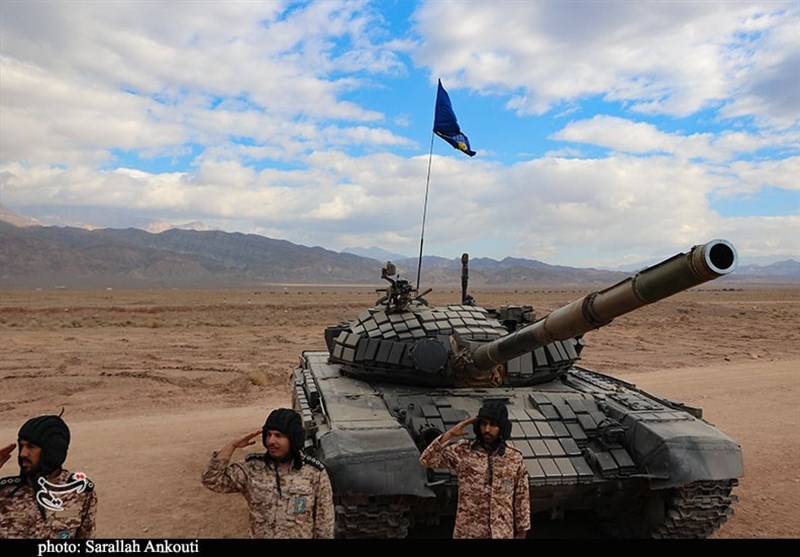
TEHRAN, Jul 18 — The Islamic Revolutionary Guard Corps, established on April 22, 1979, stands as a multi-service force with an estimated 125,000 personnel spanning ground, naval, air, and extraterritorial branches. The IRGC directs Iran’s ballistic missile and drone programs, supplying these systems to proxy forces in Lebanon, Syria, Iraq, Yemen, and Palestinian groups. Since October 2023, IRGC-backed groups have claimed responsibility for over 165 attacks on U.S. forces, the record shows.
The force was officially created by Ruhollah Khomeini in May 1979, following the Iranian Revolution, as a military branch distinct from the traditional Iranian Army, known as the Artesh. While the Artesh protects the country’s sovereignty in a conventional capacity, the IRGC’s constitutional mandate is to ensure the integrity of the Islamic Republic.
This mandate has been interpreted to include preventing foreign interference, thwarting coups by the regular military, and crushing “deviant movements” that threaten the ideological legacy of the revolution. The IRGC comprises five service branches: Ground Forces, Aerospace Force, Navy, Quds Force, and the Basij paramilitary militia. The Basij, which has served as an instrument for internal repression, maintains an additional estimated 90,000 active personnel.
The IRGC Navy has become Iran’s primary force in the Persian Gulf, effectively functioning as a de facto coast guard, while the Aerospace Force manages the country’s ballistic missile program and acts as its space force.
Global Reach, Designations, and Economic Footprint
The Quds Force, a unit specializing in unconventional warfare, military intelligence, and clandestine operations, is responsible for arming, training, advising, and in some cases commanding pro-Iranian non-state actors abroad. Since the death of former commander Qasem Soleimani, the unit has been led by Esmail Qaani. The IRGC’s economic dominance is substantial: it controls billions in assets through the Khatam al-Anbiya construction conglomerate and black-market oil sales, the source material states.
Reuters has described the organization as a “state-within-a-state,” and in 2019 as “an industrial empire with political clout.” The BBC had earlier, in 2010, called it a “business empire.” The United States designated the IRGC a foreign terrorist organization on April 8, 2019. Beyond the U.S., the force is designated as a terrorist organization by a wide range of countries including Albania, Argentina, Australia, Bahrain, Canada, the European Union, Israel, Saudi Arabia, and the United Kingdom, among others.
U.S. sanctions currently target hundreds of IRGC-linked entities. The IRGC’s expanded political and economic role, particularly under former president Mahmoud Ahmadinejad and during the suppression of post-election protests in 2009, has led many Western analysts to argue that its influence has at times surpassed that of Iran’s ruling clerical class. The IRGC is led by a commander-in-chief appointed by and reporting directly to Iran’s Supreme Leader.
Its media arm, Sepah News, operates within Iran. The force’s role in nearly every aspect of Iranian politics, economics—including energy and food industries—and society continues to draw scrutiny from Western governments.
The IRGC remains a central actor in regional conflicts, with its proxies active across multiple theaters and its sanctions-hit economy under ongoing pressure. As the U.S. administration and allied governments assess the next steps, the IRGC’s structure, proxy network, and deep entrenchment in Iran’s economy point to a durable challenge that will outlast any single policy cycle.




