
Raisi’s Directives and Domestic Pressures
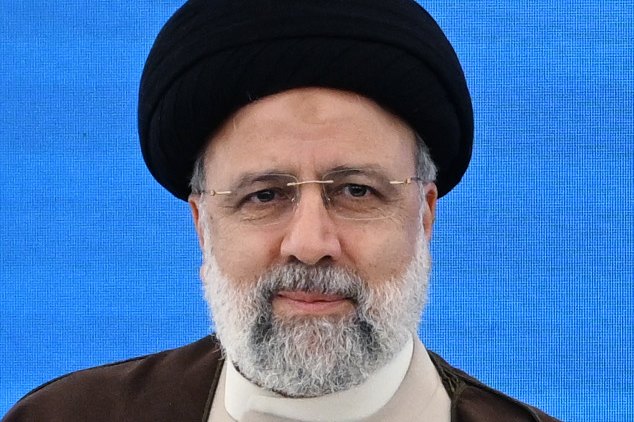
Ebrahim Raisi, a conservative cleric, has served as president of Iran since August 2021. He was elected in a vote that saw 62 percent turnout, though international observers and domestic critics noted the election was marred by a lack of meaningful opposition. Prior to assuming the presidency, Raisi served as head of Iran’s judiciary from 2019 to 2021. His tenure as president has been marked by several significant developments. Under his leadership, Iran has increased its uranium enrichment, drawing condemnation from Western powers. He also oversaw the government’s response to widespread protests that erupted in 2022 following the death of Mahsa Amini while in the custody of morality police—a wave of demonstrations that represented one of the most serious challenges to the Islamic Republic’s authority in years.
Raisi himself has been under U.S. sanctions since 2019 for human rights abuses, including his role in the 1988 executions of political prisoners. Those sanctions remain in place, restricting his access to international financial systems and limiting his government’s ability to conduct foreign trade. The president has consistently condemned these measures as a form of economic warfare. His order for the IRGC to prepare for retaliation signals an escalation in rhetoric, though the region remains on alert. The president is widely regarded as a protégé of Supreme Leader Ayatollah Ali Khamenei and is considered a potential successor to the 85-year-old cleric. This relationship has positioned Raisi as a central figure in Iran’s internal power dynamics, even as the country faces external pressure on multiple fronts.
Shifting Alliances and the Strait of Hormuz Factor
Under Raisi’s leadership, Iran has deepened its ties with both Russia and China. These relationships have provided Tehran with economic and military support as it navigates the sanctions regime. The partnership with Moscow has been particularly notable since Russia’s invasion of Ukraine, with Iran supplying drones and other military equipment to Russian forces. The president’s latest directive adds a new layer of risk to a waterway of immense strategic value: the Strait of Hormuz.
The Strait of Hormuz is the narrow waterway that connects the Persian Gulf to the Gulf of Oman and the open ocean. On its northern shore lies Iran; on the southern shore sit Oman and the United Arab Emirates. It is a maritime choke point that provides the only sea passage for vessels entering or leaving the Persian Gulf. For decades, the strait has been a major artery for global energy shipments. A large share of the world’s seaborne oil and liquefied natural gas passes through its waters each year. The economies of several Gulf states—including Iraq, Kuwait, Qatar, Bahrain, and the United Arab Emirates—depend on this route to export their production. Any sustained disruption can send shock waves through international markets.
Iran has repeatedly asserted its ability to block the strait during moments of tension, though it has not carried out such a closure for an extended period in modern conflicts. The threats have often been linked to disputes over Iran’s nuclear program and foreign sanctions. The waterway’s vulnerability became a central focus during the Iran War of 2026, when an Iranian blockade triggered a full-blown crisis in the region. The strait’s significance extends beyond oil and gas; it is also a key military transit corridor and a flashpoint for regional power rivalries.
The current order by President Raisi for the Islamic Revolutionary Guard Corps to prepare retaliation injects new uncertainty into a waterway already defined by its strategic fragility. For readers, any escalation involving the strait carries direct implications for fuel prices, shipping costs, and broader geopolitical stability. While the situation remains fluid, no immediate military action has been reported, and early findings suggest that diplomatic channels have not yet been exhausted. The region remains on alert.




